• 文献检索
  • 文档翻译
  • 深度研究
  • 学术资讯
  • Suppr Zotero 插件Zotero 插件
  • 邀请有礼
  • 套餐&价格
  • 历史记录
应用&插件
Suppr Zotero 插件Zotero 插件浏览器插件Mac 客户端Windows 客户端微信小程序
定价
高级版会员购买积分包购买API积分包
服务
文献检索文档翻译深度研究API 文档MCP 服务
关于我们
关于 Suppr公司介绍联系我们用户协议隐私条款
关注我们

Suppr 超能文献

核心技术专利:CN118964589B侵权必究
粤ICP备2023148730 号-1Suppr @ 2026

文献检索

告别复杂PubMed语法,用中文像聊天一样搜索,搜遍4000万医学文献。AI智能推荐,让科研检索更轻松。

立即免费搜索

文件翻译

保留排版,准确专业,支持PDF/Word/PPT等文件格式,支持 12+语言互译。

免费翻译文档

深度研究

AI帮你快速写综述,25分钟生成高质量综述,智能提取关键信息,辅助科研写作。

立即免费体验

DeepAVP-TPPred:使用变换图像的局部描述符和二叉树生长算法鉴定抗病毒肽。

DeepAVP-TPPred: identification of antiviral peptides using transformed image-based localized descriptors and binary tree growth algorithm.

机构信息

Institute of Fundamental and Frontier Sciences, University of Electronic Science and Technology of China, Chengdu, Sichuan 610054, China.

Department of Computer Science, Abdul Wali Khan University Mardan, Mardan 23200, Pakistan.

出版信息

Bioinformatics. 2024 May 2;40(5). doi: 10.1093/bioinformatics/btae305.

DOI:10.1093/bioinformatics/btae305
PMID:38710482
原文链接:https://pmc.ncbi.nlm.nih.gov/articles/PMC11256913/
Abstract

MOTIVATION

Despite the extensive manufacturing of antiviral drugs and vaccination, viral infections continue to be a major human ailment. Antiviral peptides (AVPs) have emerged as potential candidates in the pursuit of novel antiviral drugs. These peptides show vigorous antiviral activity against a diverse range of viruses by targeting different phases of the viral life cycle. Therefore, the accurate prediction of AVPs is an essential yet challenging task. Lately, many machine learning-based approaches have developed for this purpose; however, their limited capabilities in terms of feature engineering, accuracy, and generalization make these methods restricted.

RESULTS

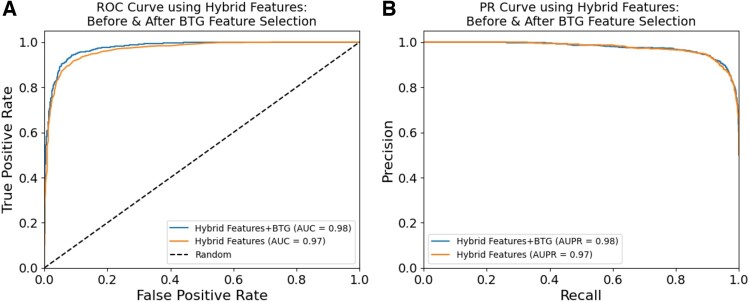
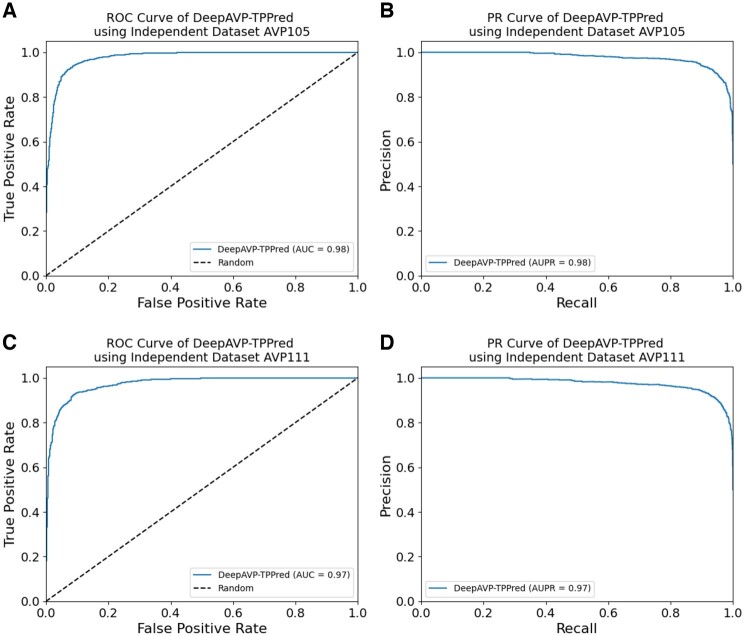
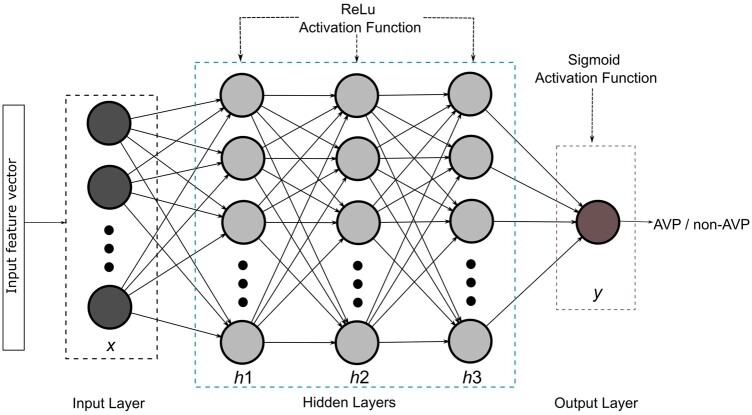
In the present study, we aim to develop an efficient machine learning-based approach for the identification of AVPs, referred to as DeepAVP-TPPred, to address the aforementioned problems. First, we extract two new transformed feature sets using our designed image-based feature extraction algorithms and integrate them with an evolutionary information-based feature. Next, these feature sets were optimized using a novel feature selection approach called binary tree growth Algorithm. Finally, the optimal feature space from the training dataset was fed to the deep neural network to build the final classification model. The proposed model DeepAVP-TPPred was tested using stringent 5-fold cross-validation and two independent dataset testing methods, which achieved the maximum performance and showed enhanced efficiency over existing predictors in terms of both accuracy and generalization capabilities.

AVAILABILITY AND IMPLEMENTATION

https://github.com/MateeullahKhan/DeepAVP-TPPred.

摘要

动机

尽管抗病毒药物和疫苗的制造已经非常广泛,但病毒感染仍然是人类的主要疾病。抗病毒肽 (AVP) 作为新型抗病毒药物的潜在候选药物已经出现。这些肽通过针对病毒生命周期的不同阶段,对多种病毒表现出强烈的抗病毒活性。因此,准确预测 AVP 是一项必不可少但具有挑战性的任务。最近,已经开发了许多基于机器学习的方法来实现这一目标;然而,由于其在特征工程、准确性和泛化能力方面的局限性,这些方法受到限制。

结果

在本研究中,我们旨在开发一种有效的基于机器学习的 AVP 识别方法,称为 DeepAVP-TPPred,以解决上述问题。首先,我们使用我们设计的基于图像的特征提取算法提取两个新的转换特征集,并将它们与基于进化信息的特征集成。接下来,使用一种称为二叉树增长算法的新特征选择方法对这些特征集进行优化。最后,将来自训练数据集的最佳特征空间输入到深度神经网络中以构建最终的分类模型。所提出的模型 DeepAVP-TPPred 通过严格的 5 折交叉验证和两种独立的数据集测试方法进行了测试,与现有预测器相比,在准确性和泛化能力方面均表现出了最佳性能和增强的效率。
可用性和实现

https://github.com/MateeullahKhan/DeepAVP-TPPred。

https://cdn.ncbi.nlm.nih.gov/pmc/blobs/9f67/11256913/4bdaad8ec9c4/btae305f7.jpg
https://cdn.ncbi.nlm.nih.gov/pmc/blobs/9f67/11256913/a7e03427ea83/btae305f1.jpg
https://cdn.ncbi.nlm.nih.gov/pmc/blobs/9f67/11256913/bbe10c77a8c1/btae305f2.jpg
https://cdn.ncbi.nlm.nih.gov/pmc/blobs/9f67/11256913/bce70c987613/btae305f3.jpg
https://cdn.ncbi.nlm.nih.gov/pmc/blobs/9f67/11256913/ca12cfcaccf2/btae305f4.jpg
https://cdn.ncbi.nlm.nih.gov/pmc/blobs/9f67/11256913/5758d090a579/btae305f5.jpg
https://cdn.ncbi.nlm.nih.gov/pmc/blobs/9f67/11256913/4a294bd03dd4/btae305f6.jpg
https://cdn.ncbi.nlm.nih.gov/pmc/blobs/9f67/11256913/4bdaad8ec9c4/btae305f7.jpg
https://cdn.ncbi.nlm.nih.gov/pmc/blobs/9f67/11256913/a7e03427ea83/btae305f1.jpg
https://cdn.ncbi.nlm.nih.gov/pmc/blobs/9f67/11256913/bbe10c77a8c1/btae305f2.jpg
https://cdn.ncbi.nlm.nih.gov/pmc/blobs/9f67/11256913/bce70c987613/btae305f3.jpg
https://cdn.ncbi.nlm.nih.gov/pmc/blobs/9f67/11256913/ca12cfcaccf2/btae305f4.jpg
https://cdn.ncbi.nlm.nih.gov/pmc/blobs/9f67/11256913/5758d090a579/btae305f5.jpg
https://cdn.ncbi.nlm.nih.gov/pmc/blobs/9f67/11256913/4a294bd03dd4/btae305f6.jpg
https://cdn.ncbi.nlm.nih.gov/pmc/blobs/9f67/11256913/4bdaad8ec9c4/btae305f7.jpg

相似文献

1
DeepAVP-TPPred: identification of antiviral peptides using transformed image-based localized descriptors and binary tree growth algorithm.DeepAVP-TPPred:使用变换图像的局部描述符和二叉树生长算法鉴定抗病毒肽。
Bioinformatics. 2024 May 2;40(5). doi: 10.1093/bioinformatics/btae305.
2
DeepAVP: A Dual-Channel Deep Neural Network for Identifying Variable-Length Antiviral Peptides.深 AV 肽:一种用于识别可变长度抗病毒肽的双通道深度神经网络。
IEEE J Biomed Health Inform. 2020 Oct;24(10):3012-3019. doi: 10.1109/JBHI.2020.2977091. Epub 2020 Feb 28.
3
FFMAVP: a new classifier based on feature fusion and multitask learning for identifying antiviral peptides and their subclasses.FFMAVP:一种基于特征融合和多任务学习的新型分类器,用于识别抗病毒肽及其子类。
Brief Bioinform. 2023 Sep 22;24(6). doi: 10.1093/bib/bbad353.
4
Meta-iAVP: A Sequence-Based Meta-Predictor for Improving the Prediction of Antiviral Peptides Using Effective Feature Representation.Meta-iAVP:一种基于序列的元预测器,用于使用有效的特征表示来改进抗病毒肽的预测。
Int J Mol Sci. 2019 Nov 15;20(22):5743. doi: 10.3390/ijms20225743.
5
A two-stage computational framework for identifying antiviral peptides and their functional types based on contrastive learning and multi-feature fusion strategy.基于对比学习和多特征融合策略的抗病毒肽及其功能类型识别的两阶段计算框架。
Brief Bioinform. 2024 Mar 27;25(3). doi: 10.1093/bib/bbae208.
6
Deepstacked-AVPs: predicting antiviral peptides using tri-segment evolutionary profile and word embedding based multi-perspective features with deep stacking model.深度堆叠 AVPs:使用三片段进化特征和基于单词嵌入的多视角特征与深度堆叠模型预测抗病毒肽。
BMC Bioinformatics. 2024 Mar 7;25(1):102. doi: 10.1186/s12859-024-05726-5.
7
HybAVPnet: A Novel Hybrid Network Architecture for Antiviral Peptides Prediction.HybAVPnet:一种用于抗病毒肽预测的新型混合网络架构。
IEEE/ACM Trans Comput Biol Bioinform. 2024 Sep-Oct;21(5):1358-1365. doi: 10.1109/TCBB.2024.3385635. Epub 2024 Oct 9.
8
In Silico Approaches for the Prediction and Analysis of Antiviral Peptides: A Review.计算机方法在抗病毒肽预测和分析中的应用:综述
Curr Pharm Des. 2021;27(18):2180-2188. doi: 10.2174/1381612826666201102105827.
9
Prediction for understanding the effectiveness of antiviral peptides.预测抗病毒肽的有效性。
Comput Biol Chem. 2021 Dec;95:107588. doi: 10.1016/j.compbiolchem.2021.107588. Epub 2021 Oct 8.
10
Better understanding and prediction of antiviral peptides through primary and secondary structure feature importance.通过一级和二级结构特征重要性,更好地理解和预测抗病毒肽。
Sci Rep. 2020 Nov 6;10(1):19260. doi: 10.1038/s41598-020-76161-8.

引用本文的文献

1
Long sequence temporal knowledge tracing for student performance prediction via integrating LSTM and informer.通过整合长短期记忆网络(LSTM)和Informer进行学生成绩预测的长序列时间知识追踪
PLoS One. 2025 Sep 9;20(9):e0330433. doi: 10.1371/journal.pone.0330433. eCollection 2025.
2
BPFun: a deep learning framework for bioactive peptide function prediction using multi-label strategy by transformer-driven and sequence rich intrinsic information.BPFun:一种用于生物活性肽功能预测的深度学习框架,采用基于Transformer驱动和富含序列固有信息的多标签策略。
BMC Bioinformatics. 2025 Jul 21;26(1):187. doi: 10.1186/s12859-025-06190-5.
3

本文引用的文献

1
HybAVPnet: A Novel Hybrid Network Architecture for Antiviral Peptides Prediction.HybAVPnet:一种用于抗病毒肽预测的新型混合网络架构。
IEEE/ACM Trans Comput Biol Bioinform. 2024 Sep-Oct;21(5):1358-1365. doi: 10.1109/TCBB.2024.3385635. Epub 2024 Oct 9.
2
Blood pressure estimation and its recalibration assessment using wrist cuff blood pressure monitor.使用腕式袖带血压监测仪进行血压估计及其重新校准评估。
Biomed Eng Lett. 2023 Mar 23;13(2):221-233. doi: 10.1007/s13534-023-00271-1. eCollection 2023 May.
3
AI4AVP: an antiviral peptides predictor in deep learning approach with generative adversarial network data augmentation.
NeXtMD: a new generation of machine learning and deep learning stacked hybrid framework for accurate identification of anti-inflammatory peptides.
NeXtMD:用于精确识别抗炎肽的新一代机器学习与深度学习堆叠混合框架。
BMC Biol. 2025 Jul 15;23(1):212. doi: 10.1186/s12915-025-02314-8.
4
Advancing the accuracy of clathrin protein prediction through multi-source protein language models.通过多源蛋白质语言模型提高网格蛋白蛋白质预测的准确性。
Sci Rep. 2025 Jul 8;15(1):24403. doi: 10.1038/s41598-025-08510-4.
5
Classification of Acid and Alkaline Enzymes Based on Normalized Van der Waals Volume Features.基于归一化范德华体积特征的酸碱酶分类
Proteomics Clin Appl. 2025 Jul;19(4):e70009. doi: 10.1002/prca.70009. Epub 2025 May 31.
6
Optimizing lipocalin sequence classification with ensemble deep learning models.使用集成深度学习模型优化脂钙蛋白序列分类
PLoS One. 2025 Apr 16;20(4):e0319329. doi: 10.1371/journal.pone.0319329. eCollection 2025.
7
pNPs-CapsNet: Predicting Neuropeptides Using Protein Language Models and FastText Encoding-Based Weighted Multi-View Feature Integration with Deep Capsule Neural Network.pNPs-CapsNet:使用蛋白质语言模型和基于FastText编码的加权多视图特征集成与深度胶囊神经网络预测神经肽
ACS Omega. 2025 Mar 18;10(12):12403-12416. doi: 10.1021/acsomega.4c11449. eCollection 2025 Apr 1.
8
Classification of pulmonary diseases from chest radiographs using deep transfer learning.使用深度迁移学习从胸部X光片对肺部疾病进行分类。
PLoS One. 2025 Mar 17;20(3):e0316929. doi: 10.1371/journal.pone.0316929. eCollection 2025.
9
Behind the mask: Random and selective masking in transformer models applied to specialized social science texts.面具背后:应用于专业社会科学文本的Transformer模型中的随机掩码和选择性掩码
PLoS One. 2025 Feb 21;20(2):e0318421. doi: 10.1371/journal.pone.0318421. eCollection 2025.
10
XGBoost-enhanced ensemble model using discriminative hybrid features for the prediction of sumoylation sites.使用判别性混合特征的XGBoost增强集成模型用于预测SUMO化位点。
BioData Min. 2025 Feb 3;18(1):12. doi: 10.1186/s13040-024-00415-8.
AI4AVP:一种采用生成对抗网络数据增强的深度学习方法的抗病毒肽预测器。
Bioinform Adv. 2022 Oct 26;2(1):vbac080. doi: 10.1093/bioadv/vbac080. eCollection 2022.
4
PScL-DDCFPred: an ensemble deep learning-based approach for characterizing multiclass subcellular localization of human proteins from bioimage data.PScL-DDCFPred:一种基于集成深度学习的方法,用于从生物图像数据中描述人类蛋白质的多类亚细胞定位。
Bioinformatics. 2022 Aug 10;38(16):4019-4026. doi: 10.1093/bioinformatics/btac432.
5
Toward a next-generation diagnostic tool: A review on emerging isothermal nucleic acid amplification techniques for the detection of SARS-CoV-2 and other infectious viruses.迈向新一代诊断工具:新兴等温核酸扩增技术在 SARS-CoV-2 和其他传染病病毒检测中的应用综述。
Anal Chim Acta. 2022 May 29;1209:339338. doi: 10.1016/j.aca.2021.339338. Epub 2021 Dec 1.
6
TPpred-ATMV: therapeutic peptide prediction by adaptive multi-view tensor learning model.TPpred-ATMV:基于自适应多视图张量学习模型的治疗性肽预测。
Bioinformatics. 2022 May 13;38(10):2712-2718. doi: 10.1093/bioinformatics/btac200.
7
Prediction for understanding the effectiveness of antiviral peptides.预测抗病毒肽的有效性。
Comput Biol Chem. 2021 Dec;95:107588. doi: 10.1016/j.compbiolchem.2021.107588. Epub 2021 Oct 8.
8
A great ape perspective on the origins and evolution of human viruses.从巨猿视角看人类病毒的起源与演化。
Adv Virus Res. 2021;110:1-26. doi: 10.1016/bs.aivir.2021.06.001. Epub 2021 Jul 8.
9
AVPIden: a new scheme for identification and functional prediction of antiviral peptides based on machine learning approaches.AVPIden:一种基于机器学习方法的新型抗病毒肽鉴定和功能预测方案。
Brief Bioinform. 2021 Nov 5;22(6). doi: 10.1093/bib/bbab263.
10
Review of antiviral peptides for use against zoonotic and selected non-zoonotic viruses.抗动物源及部分非动物源病毒的抗病毒肽研究进展
Peptides. 2021 Aug;142:170570. doi: 10.1016/j.peptides.2021.170570. Epub 2021 May 14.