Institute of Systems, Molecular & Integrative Biology, Department of Pharmacology and Therapeutics, University of Liverpool, Liverpool, UK.
Department of Computer Science, University of Liverpool, Liverpool, UK.
NPJ Syst Biol Appl. 2024 May 6;10(1):48. doi: 10.1038/s41540-024-00374-0.
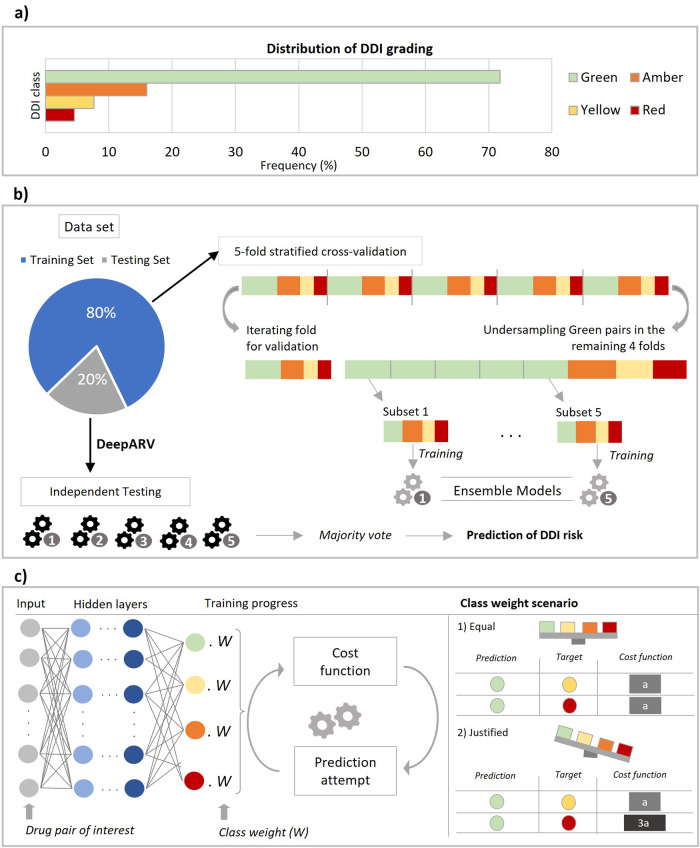
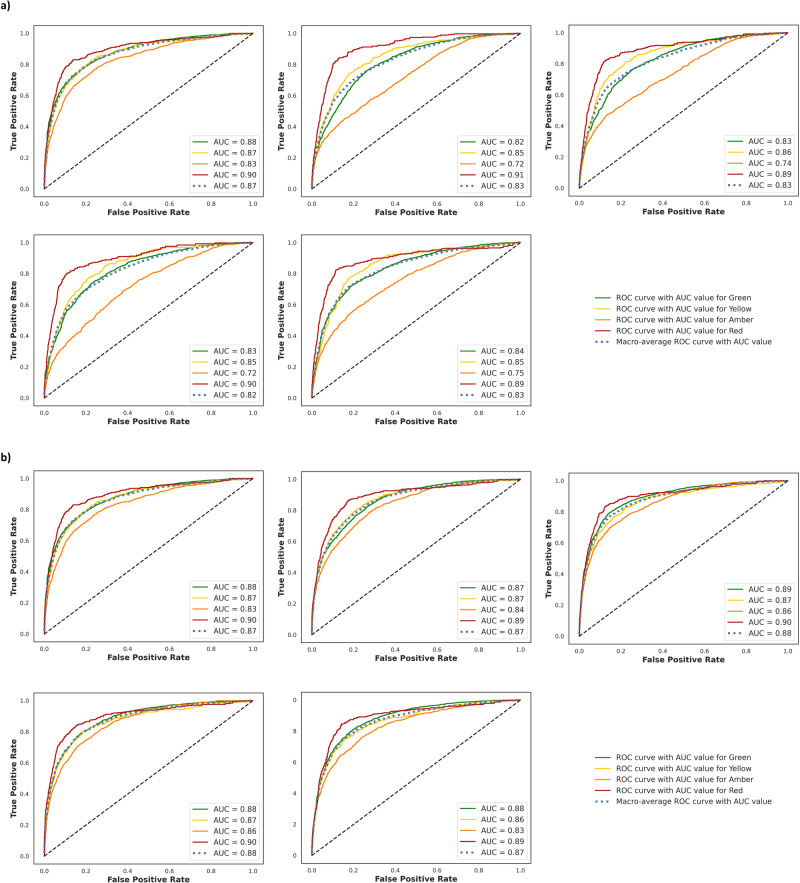
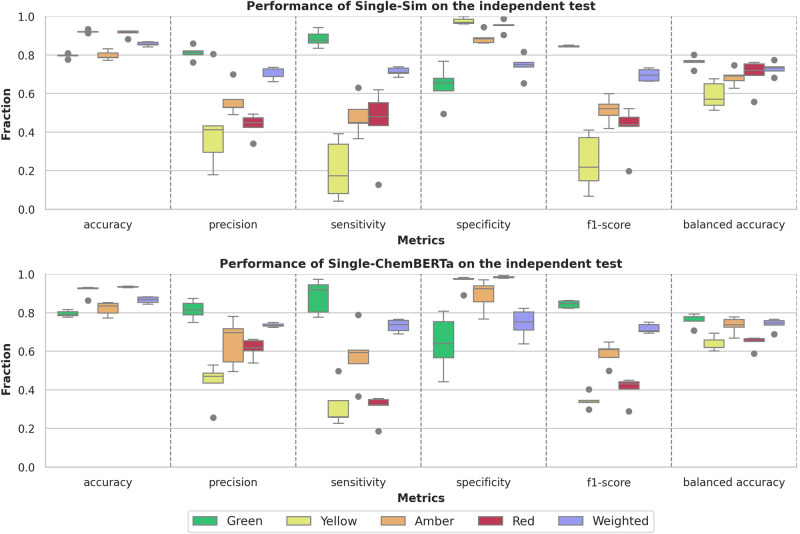
Drug-drug interaction (DDI) may result in clinical toxicity or treatment failure of antiretroviral therapy (ARV) or comedications. Despite the high number of possible drug combinations, only a limited number of clinical DDI studies are conducted. Computational prediction of DDIs could provide key evidence for the rational management of complex therapies. Our study aimed to assess the potential of deep learning approaches to predict DDIs of clinical relevance between ARVs and comedications. DDI severity grading between 30,142 drug pairs was extracted from the Liverpool HIV Drug Interaction database. Two feature construction techniques were employed: 1) drug similarity profiles by comparing Morgan fingerprints, and 2) embeddings from SMILES of each drug via ChemBERTa, a transformer-based model. We developed DeepARV-Sim and DeepARV-ChemBERTa to predict four categories of DDI: i) Red: drugs should not be co-administered, ii) Amber: interaction of potential clinical relevance manageable by monitoring/dose adjustment, iii) Yellow: interaction of weak relevance and iv) Green: no expected interaction. The imbalance in the distribution of DDI severity grades was addressed by undersampling and applying ensemble learning. DeepARV-Sim and DeepARV-ChemBERTa predicted clinically relevant DDI between ARVs and comedications with a weighted mean balanced accuracy of 0.729 ± 0.012 and 0.776 ± 0.011, respectively. DeepARV-Sim and DeepARV-ChemBERTa have the potential to leverage molecular structures associated with DDI risks and reduce DDI class imbalance, effectively increasing the predictive ability on clinically relevant DDIs. This approach could be developed for identifying high-risk pairing of drugs, enhancing the screening process, and targeting DDIs to study in clinical drug development.
药物-药物相互作用(DDI)可能导致抗逆转录病毒治疗(ARV)或伴随药物的临床毒性或治疗失败。尽管可能有很多种药物组合,但只有有限数量的临床 DDI 研究进行。计算预测 DDI 可以为合理管理复杂治疗提供关键证据。我们的研究旨在评估深度学习方法预测 ARV 和伴随药物之间临床相关 DDI 的潜力。从利物浦 HIV 药物相互作用数据库中提取了 30142 对药物对的 DDI 严重程度分级。采用了两种特征构建技术:1)通过比较 Morgan 指纹比较药物相似性概况,2)通过基于转换器的模型 ChemBERTa 对每个药物的 SMILES 进行嵌入。我们开发了 DeepARV-Sim 和 DeepARV-ChemBERTa 来预测四类 DDI:i)红色:药物不应联合使用,ii)琥珀色:有潜在临床相关性的相互作用可通过监测/剂量调整来管理,iii)黄色:相互作用相关性弱,iv)绿色:无预期相互作用。通过欠采样和应用集成学习解决了 DDI 严重程度分级分布不平衡的问题。DeepARV-Sim 和 DeepARV-ChemBERTa 预测 ARV 和伴随药物之间具有临床相关性的 DDI,加权平均平衡准确性分别为 0.729±0.012 和 0.776±0.011。DeepARV-Sim 和 DeepARV-ChemBERTa 有可能利用与 DDI 风险相关的分子结构,并减少 DDI 类不平衡,有效提高对临床相关 DDI 的预测能力。这种方法可用于识别高风险药物组合,增强筛选过程,并针对临床药物开发中的 DDI 进行研究。