Department of Colorectal Surgery, Portsmouth Hospitals University NHS Trust, Portsmouth, UK.
Department of General Surgery, Gateshead Health NHS Foundation Trust, Gateshead, UK.
Surg Endosc. 2024 Jun;38(6):3368-3377. doi: 10.1007/s00464-024-10829-4. Epub 2024 May 6.
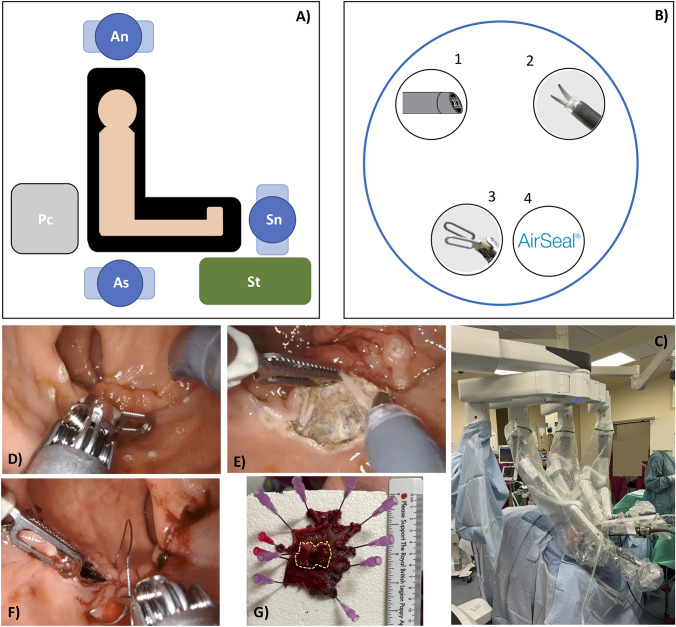
Transanal minimally invasive surgery (TAMIS) is an advanced technique for excision of early rectal cancers. Robotic TAMIS (r-TAMIS) has been introduced as technical improvement and potential alternative to total mesorectal excision (TME) in early rectal cancers and in frail patients. This study reports the perioperative and short-term oncological outcomes of r-TAMIS for local excision of early-stage rectal cancers.
Retrospective analysis of a prospectively collected r-TAMIS database (July 2021-July 2023). Demographics, clinicopathological features, short-term outcomes, recurrences, and survival were investigated.
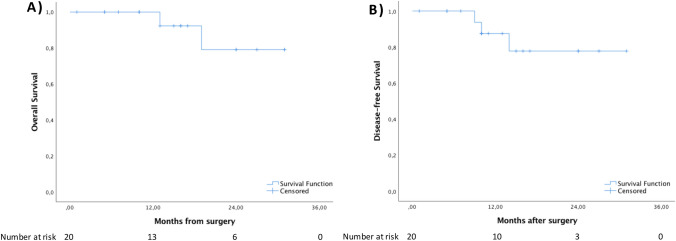
Twenty patients were included. Median age and body mass index were 69.5 (62.0-77.7) years and 31.0 (21.0-36.5) kg/m. Male sex was prevalent (n = 12, 60.0%). ASA III accounted for 66.7%. Median distance from anal verge was 7.5 (5.0-11.7) cm. Median operation time was 90.0 (60.0-112.5) minutes. Blood loss was minimal. There were no conversions. Median postoperative stay was 2.0 (1.0-3.0) days. Minor and major complication rates were 25.0% and 0%, respectively. Seventeen (85.0%) patients had an adenocarcinoma whilst three patients had an adenoma. R0 rate was 90.0%. Most tumours were pT1 (55.0%), followed by pT2 (25.0%). One patient (5.0%) had a pT3 tumour. Specimen and tumour maximal median diameter were 51.0 (41.0-62.0) mm and 21.5 (17.2-42.0) mm, respectively. Median specimen area was 193.1 (134.3-323.3) cm. Median follow-up was 15.5 (10.0-24.0) months. One patient developed local recurrence (5.0%).
r-TAMIS, with strict postoperative surveillance, is a safe and feasible approach for local excision of early rectal cancer and may have a role in surgically unfit and elderly patients who refuse or cannot undergo TME surgery. Future prospective multicentre large-scale studies are needed to report the long-term oncological outcomes.
经肛门微创手术(TAMIS)是一种用于切除早期直肠癌的先进技术。机器人 TAMIS(r-TAMIS)已被引入,作为早期直肠癌和体弱患者全直肠系膜切除术(TME)的技术改进和潜在替代方法。本研究报告了 r-TAMIS 用于局部切除早期直肠癌的围手术期和短期肿瘤学结果。
回顾性分析前瞻性收集的 r-TAMIS 数据库(2021 年 7 月至 2023 年 7 月)。调查人口统计学、临床病理特征、短期结果、复发和生存情况。
纳入 20 例患者。中位年龄和体重指数分别为 69.5(62.0-77.7)岁和 31.0(21.0-36.5)kg/m。男性(n=12,60.0%)多见。ASA III 占 66.7%。中位肛缘距离为 7.5(5.0-11.7)cm。中位手术时间为 90.0(60.0-112.5)分钟。出血量少。无中转开腹。中位术后住院时间为 2.0(1.0-3.0)天。小并发症和大并发症发生率分别为 25.0%和 0%。17 例(85.0%)患者为腺癌,3 例为腺瘤。R0 率为 90.0%。大多数肿瘤为 T1 期(55.0%),其次为 T2 期(25.0%)。1 例(5.0%)患者为 T3 期肿瘤。标本和肿瘤最大直径中位数分别为 51.0(41.0-62.0)mm 和 21.5(17.2-42.0)mm,标本面积中位数为 193.1(134.3-323.3)cm。中位随访时间为 15.5(10.0-24.0)个月。1 例患者发生局部复发(5.0%)。
r-TAMIS 结合严格的术后监测,是一种安全可行的早期直肠癌局部切除方法,可能适用于拒绝或不能接受 TME 手术的手术不适宜和老年患者。需要未来前瞻性多中心大规模研究报告长期肿瘤学结果。