School of Public Health and Preventive Medicine, Monash University, Level 2, 553 St Kilda Road, Melbourne, VIC, 3004, Australia.
Department of Dermatology, Xiangya Hospital, Central South University, Changsha, 410008, Hunan, China.
BMC Med. 2024 May 7;22(1):188. doi: 10.1186/s12916-024-03412-0.
Floods are the most frequent weather-related disaster, causing significant health impacts worldwide. Limited studies have examined the long-term consequences of flooding exposure.
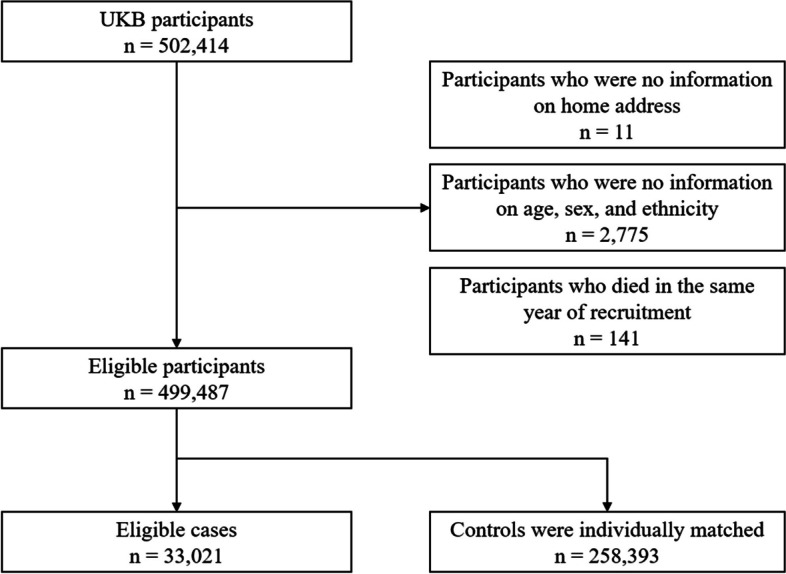
Flood data were retrieved from the Dartmouth Flood Observatory and linked with health data from 499,487 UK Biobank participants. To calculate the annual cumulative flooding exposure, we multiplied the duration and severity of each flood event and then summed these values for each year. We conducted a nested case-control analysis to evaluate the long-term effect of flooding exposure on all-cause and cause-specific mortality. Each case was matched with eight controls. Flooding exposure was modelled using a distributed lag non-linear model to capture its nonlinear and lagged effects.
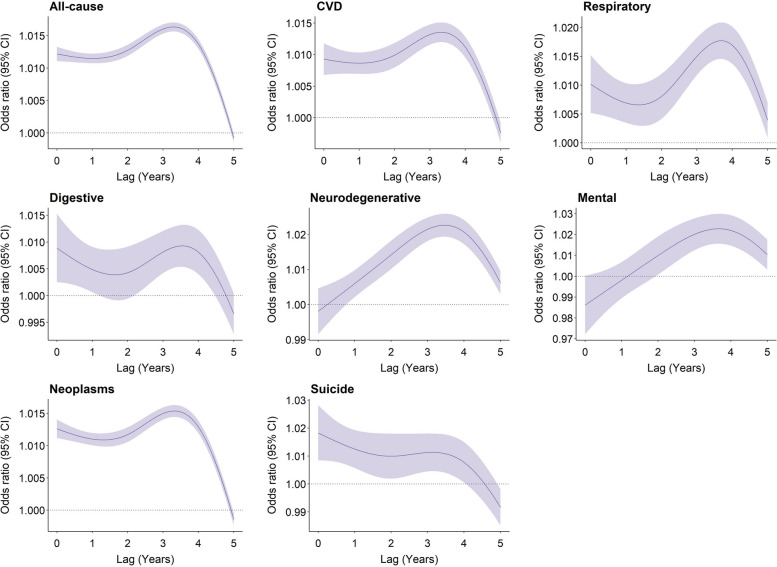
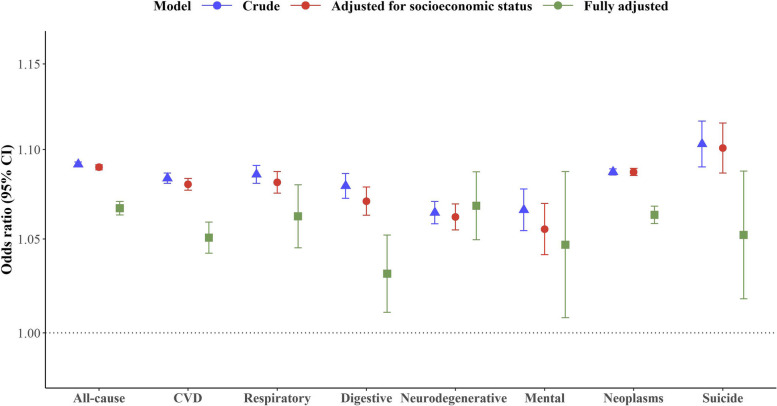
The risk of all-cause mortality increased by 6.7% (odds ratio (OR): 1.067, 95% confidence interval (CI): 1.063-1.071) for every unit increase in flood index after confounders had been controlled for. The mortality risk from neurological and mental diseases was negligible in the current year, but strongest in the lag years 3 and 4. By contrast, the risk of mortality from suicide was the strongest in the current year (OR: 1.018, 95% CI: 1.008-1.028), and attenuated to lag year 5. Participants with higher levels of education and household income had a higher estimated risk of death from most causes whereas the risk of suicide-related mortality was higher among participants who were obese, had lower household income, engaged in less physical activity, were non-moderate alcohol consumers, and those living in more deprived areas.
Long-term exposure to floods is associated with an increased risk of mortality. The health consequences of flooding exposure would vary across different periods after the event, with different profiles of vulnerable populations identified for different causes of death. These findings contribute to a better understanding of the long-term impacts of flooding exposure.
洪水是最常见的与天气相关的灾害,在全球范围内造成了重大的健康影响。有限的研究已经检查了洪水暴露的长期后果。
洪水数据从达特茅斯洪水观测站检索,并与来自 499487 名英国生物银行参与者的健康数据相关联。为了计算每年的累积洪水暴露量,我们将每次洪水事件的持续时间和严重程度相乘,然后将这些值相加得到每年的值。我们进行了嵌套病例对照分析,以评估洪水暴露对全因和病因特异性死亡率的长期影响。每个病例都与 8 个对照相匹配。洪水暴露使用分布式滞后非线性模型进行建模,以捕捉其非线性和滞后效应。
在控制混杂因素后,洪水指数每增加一个单位,全因死亡率的风险增加 6.7%(比值比(OR):1.067,95%置信区间(CI):1.063-1.071)。神经和精神疾病的死亡率在当年几乎可以忽略不计,但在滞后 3 年和 4 年最强。相比之下,自杀死亡率在当年最强(OR:1.018,95%CI:1.008-1.028),并在滞后 5 年减弱。教育程度和家庭收入较高的参与者因大多数原因死亡的风险估计较高,而肥胖、家庭收入较低、身体活动较少、非适度饮酒和生活在较贫困地区的参与者自杀相关死亡率较高。
长期暴露于洪水与死亡率增加有关。洪水暴露的健康后果会在事件发生后的不同时期有所不同,不同脆弱人群的特征因不同的死亡原因而有所不同。这些发现有助于更好地了解洪水暴露的长期影响。