Department of Geriatrics, Shenzhen Longhua District Central Hospital, Shenzhen, Guangdong, China.
Department of Cardiology, Affiliated Hospital of Shandong University of Traditional Chinese Medicine, Jinan, Shandong, China.
Cardiovasc Diabetol. 2024 May 9;23(1):163. doi: 10.1186/s12933-024-02265-4.
Sepsis is a severe form of systemic inflammatory response syndrome that is caused by infection. Sepsis is characterized by a marked state of stress, which manifests as nonspecific physiological and metabolic changes in response to the disease. Previous studies have indicated that the stress hyperglycemia ratio (SHR) can serve as a reliable predictor of adverse outcomes in various cardiovascular and cerebrovascular diseases. However, there is limited research on the relationship between the SHR and adverse outcomes in patients with infectious diseases, particularly in critically ill patients with sepsis. Therefore, this study aimed to explore the association between the SHR and adverse outcomes in critically ill patients with sepsis.
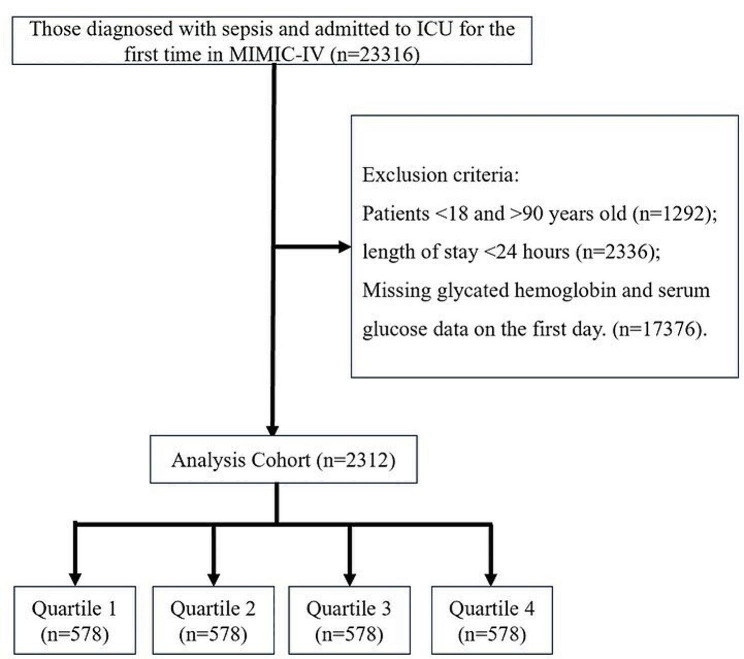
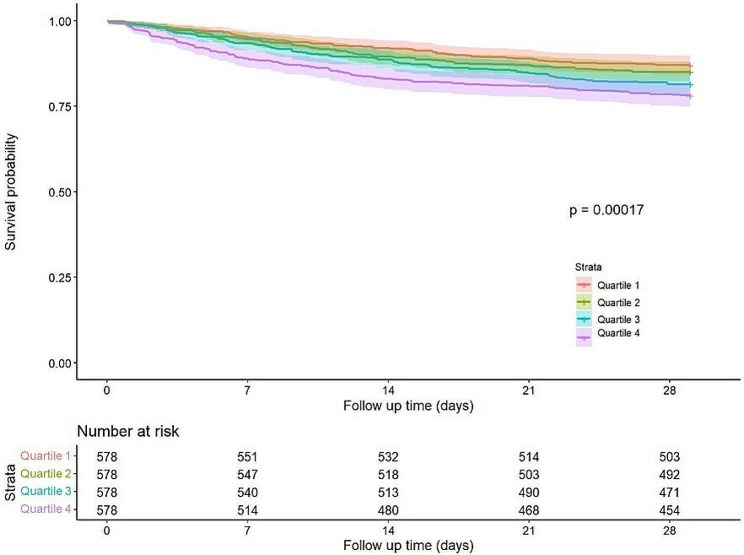
Clinical data from 2312 critically ill patients with sepsis were extracted from the MIMIC-IV (2.2) database. Based on the quartiles of the SHR, the study population was divided into four groups. The primary outcome was 28-day all-cause mortality, and the secondary outcome was in-hospital mortality. The relationship between the SHR and adverse outcomes was explored using restricted cubic splines, Cox proportional hazard regression, and Kaplan‒Meier curves. The predictive ability of the SHR was assessed using the Boruta algorithm, and a prediction model was established using machine learning algorithms.
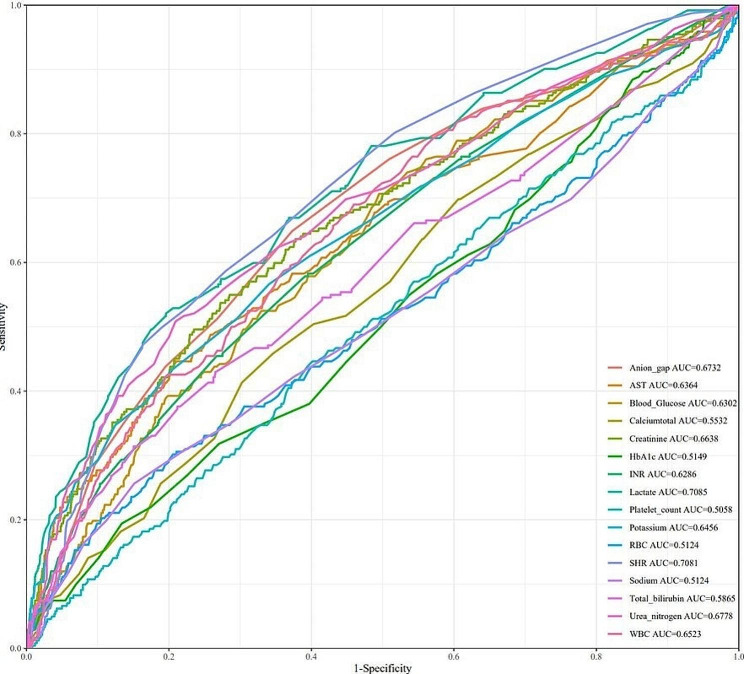
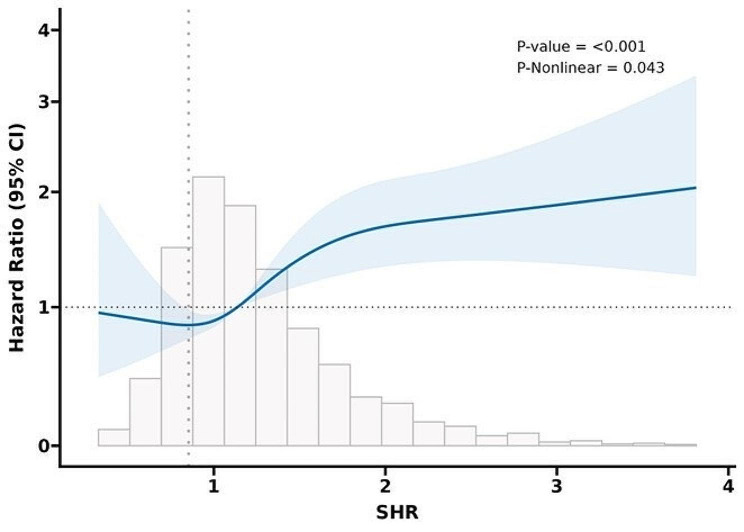
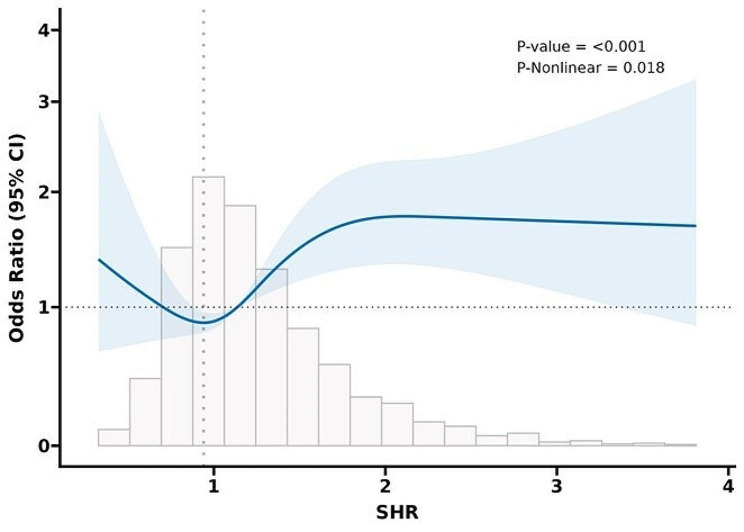
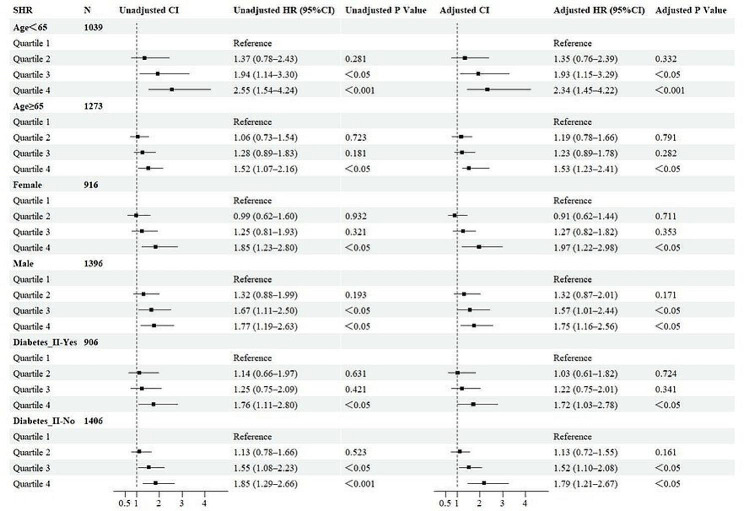
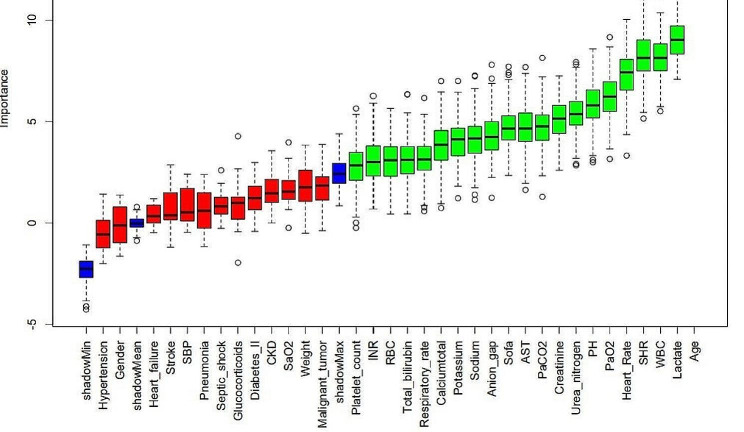
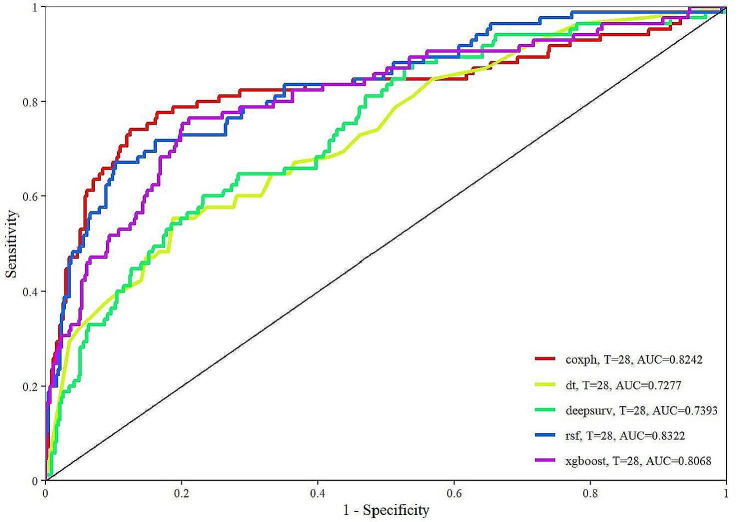
Data from 2312 patients who were diagnosed with sepsis were analyzed. Restricted cubic splines demonstrated a "U-shaped" association between the SHR and survival rate, indicating that an increase in the SHR is related to an increased risk of adverse events. A higher SHR was significantly associated with an increased risk of 28-day mortality and in-hospital mortality in patients with sepsis (HR > 1, P < 0.05) compared to a lower SHR. Boruta feature selection showed that SHR had a higher Z score, and the model built using the rsf algorithm showed the best performance (AUC = 0.8322).
The SHR exhibited a U-shaped relationship with 28-day all-cause mortality and in-hospital mortality in critically ill patients with sepsis. A high SHR is significantly correlated with an increased risk of adverse events, thus indicating that is a potential predictor of adverse outcomes in patients with sepsis.
脓毒症是一种由感染引起的严重全身炎症反应综合征。脓毒症的特征是明显的应激状态,表现为疾病引起的非特异性生理和代谢变化。先前的研究表明,应激性高血糖比值(SHR)可以作为各种心血管和脑血管疾病不良结局的可靠预测指标。然而,关于 SHR 与感染性疾病患者不良结局之间的关系的研究有限,特别是在脓毒症危重症患者中。因此,本研究旨在探讨 SHR 与脓毒症危重症患者不良结局之间的关系。
从 MIMIC-IV(2.2)数据库中提取了 2312 例脓毒症危重症患者的临床数据。根据 SHR 的四分位数,将研究人群分为四组。主要结局为 28 天全因死亡率,次要结局为住院死亡率。采用限制性立方样条、Cox 比例风险回归和 Kaplan-Meier 曲线探讨 SHR 与不良结局的关系。采用 Boruta 算法评估 SHR 的预测能力,并采用机器学习算法建立预测模型。
对 2312 例诊断为脓毒症的患者进行数据分析。限制性立方样条显示 SHR 与生存率之间呈“U 形”关系,表明 SHR 升高与不良事件风险增加相关。与 SHR 较低的患者相比,较高的 SHR 与脓毒症患者 28 天死亡率和住院死亡率增加显著相关(HR>1,P<0.05)。Boruta 特征选择显示 SHR 的 Z 分数较高,并且使用 rsf 算法构建的模型表现出最佳性能(AUC=0.8322)。
SHR 与脓毒症危重症患者 28 天全因死亡率和住院死亡率呈 U 形关系。高 SHR 与不良事件风险增加显著相关,表明其可能是脓毒症患者不良结局的预测指标。