Affiliated Luqiao Hospital, School of Medicine, Hangzhou City University, Hangzhou, Zhejiang, China, 310015.
School of Medicine, Hangzhou City University, Hangzhou, Zhejiang, China, 310015.
Int J Biol Sci. 2024 Apr 15;20(7):2440-2453. doi: 10.7150/ijbs.85984. eCollection 2024.
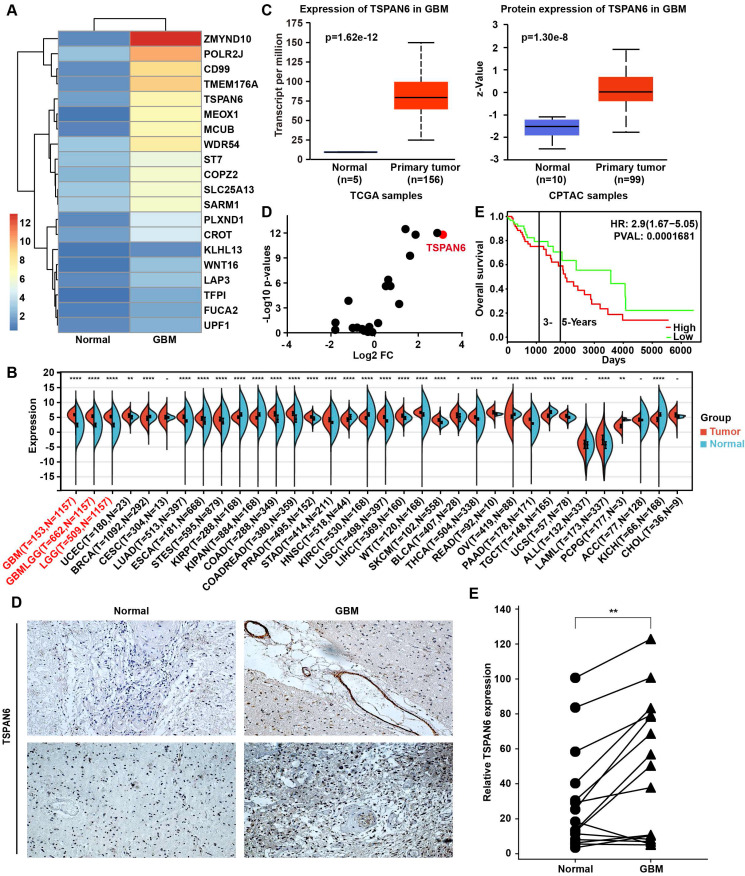
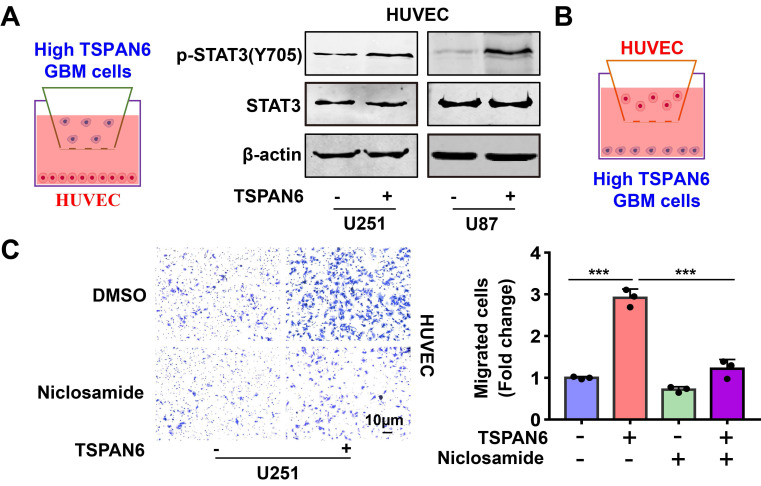
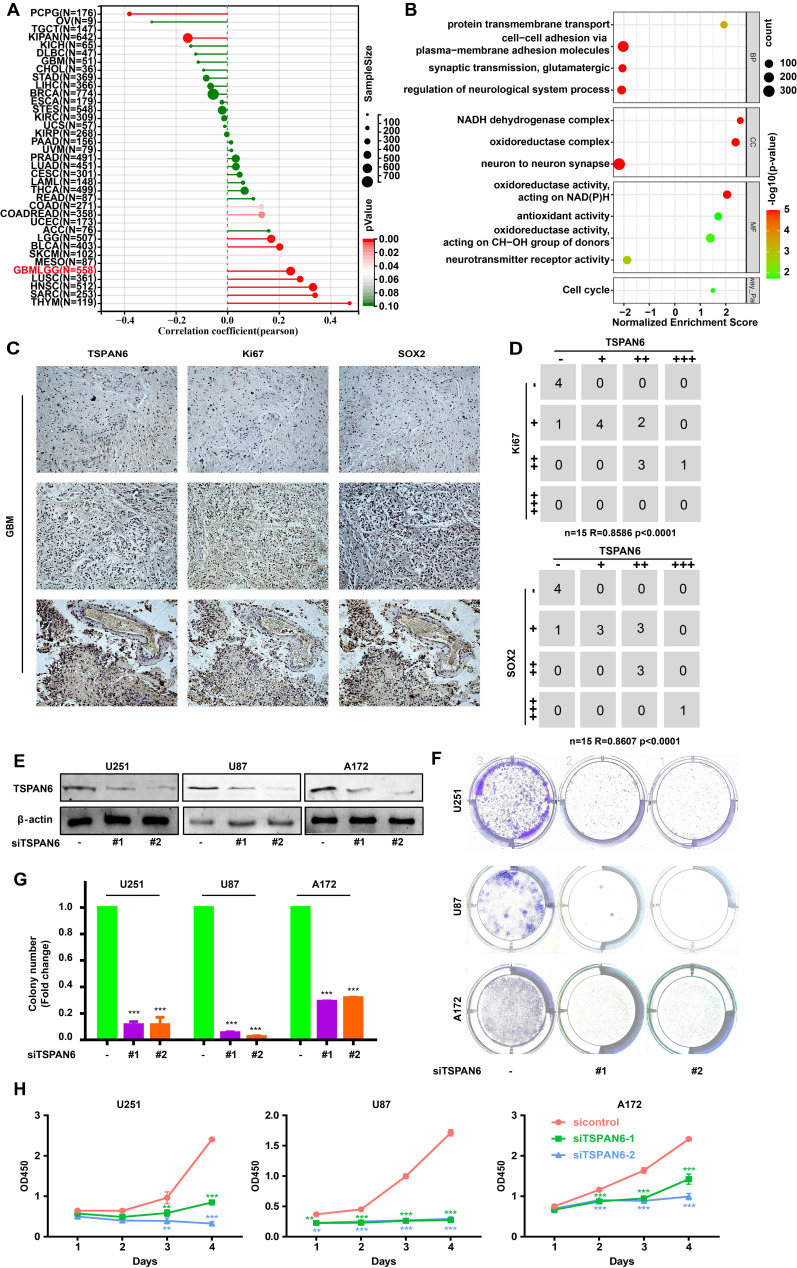
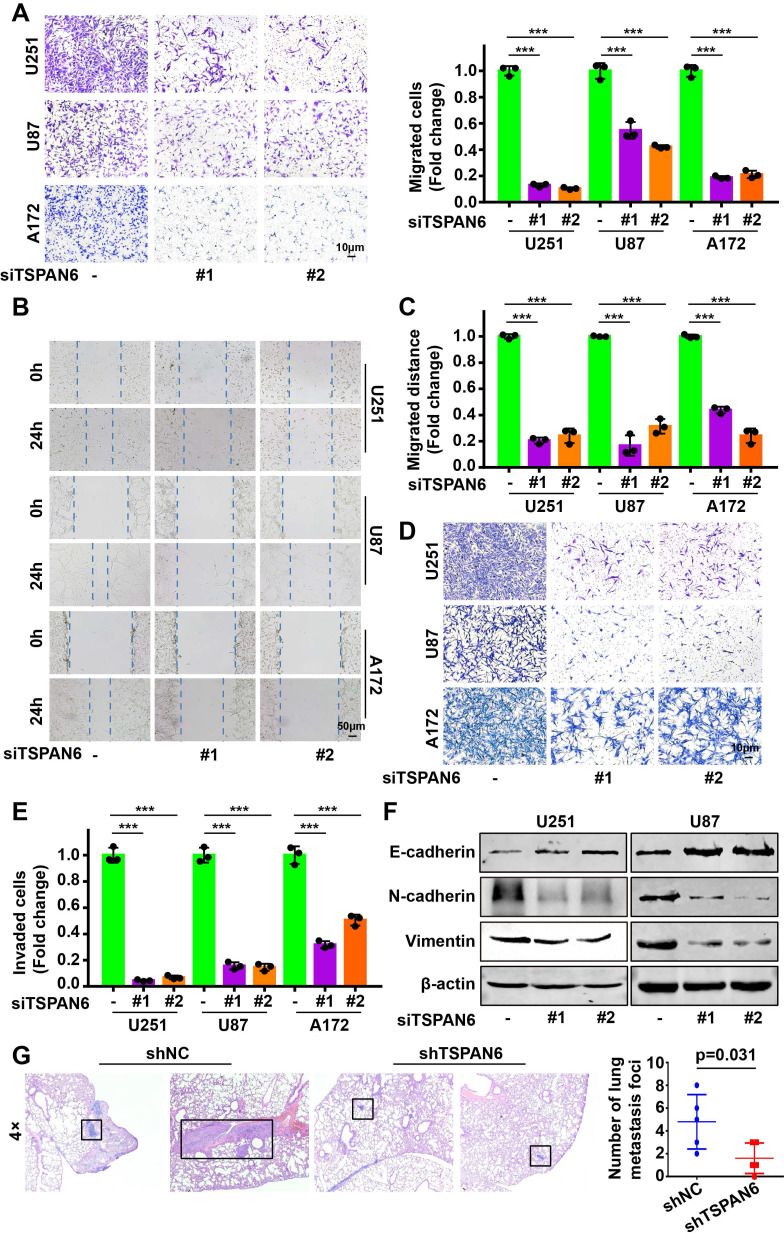
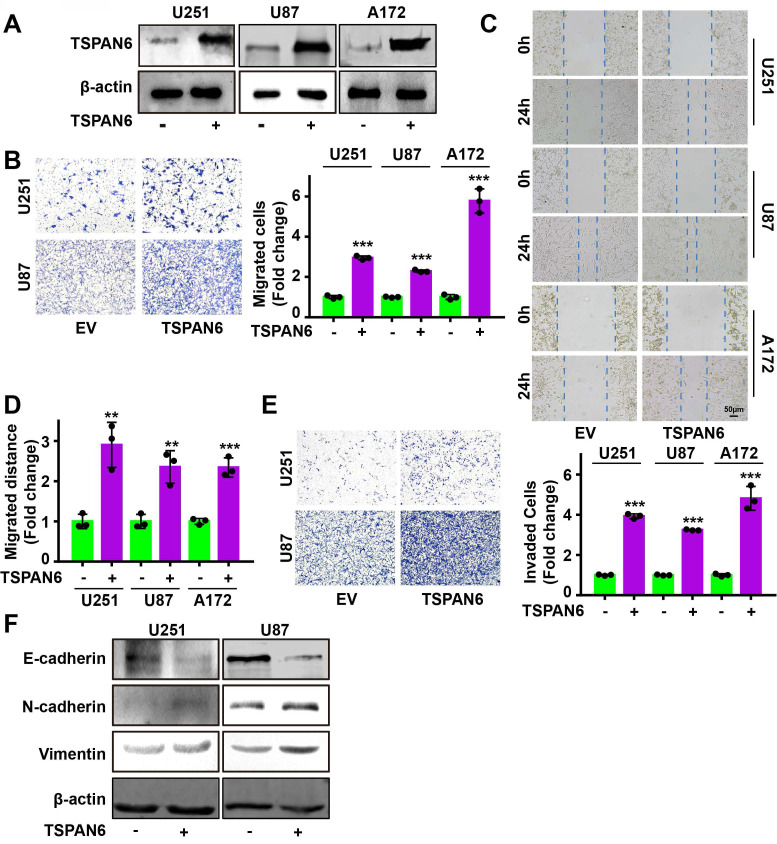
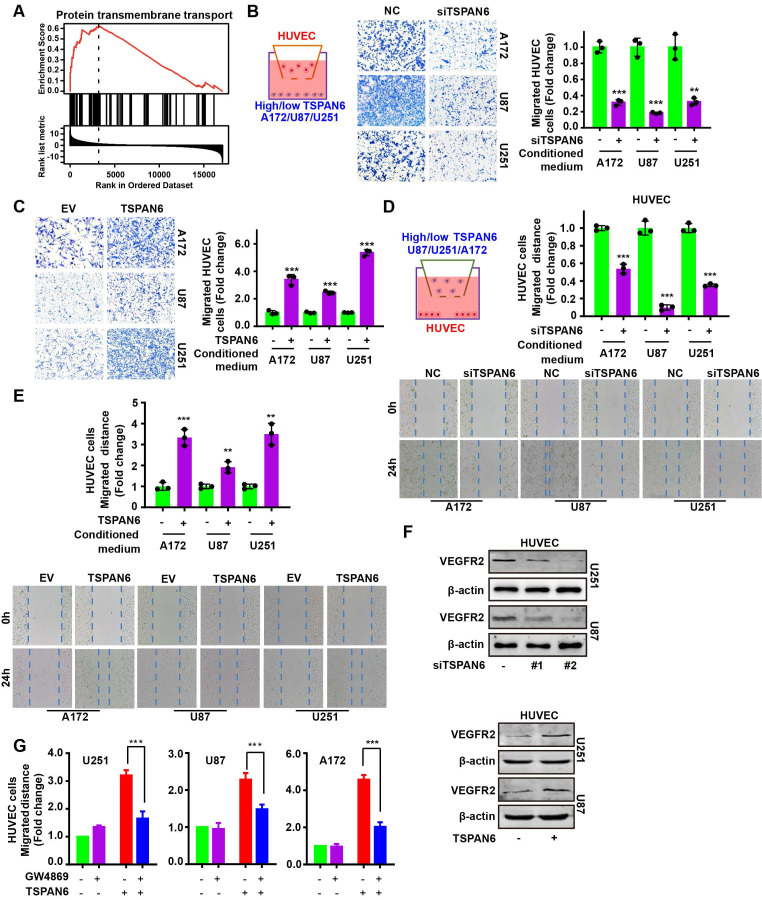
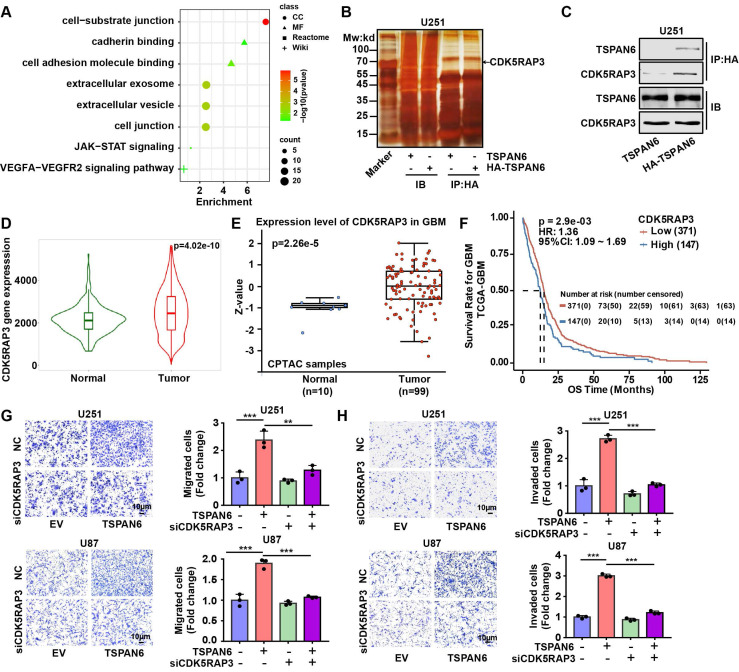
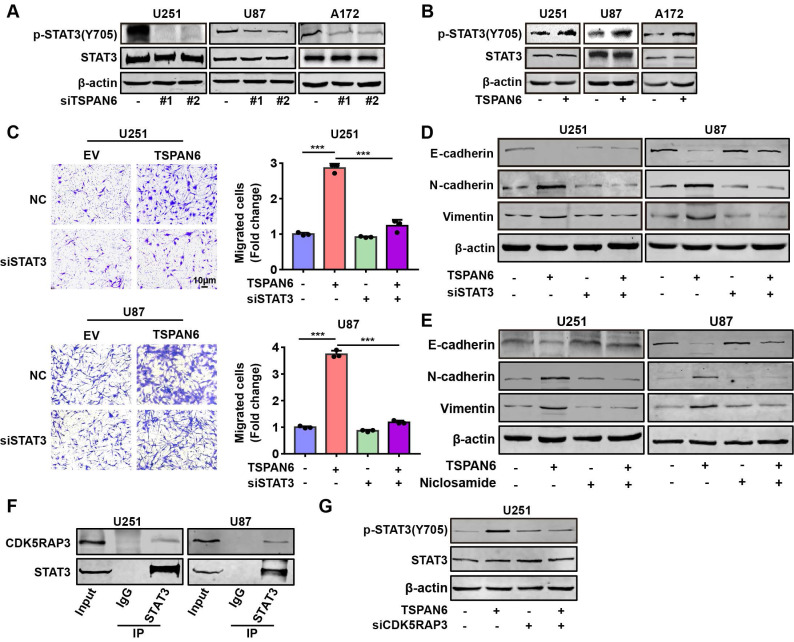
Glioblastoma is the prevailing and highly malignant form of primary brain neoplasm with poor prognosis. Exosomes derived from glioblastoma cells act a vital role in malignant progression via regulating tumor microenvironment (TME), exosomal tetraspanin protein family members (TSPANs) are important actors of cell communication in TME. Among all the TSPANs, TSPAN6 exhibited predominantly higher expression levels in comparison to normal tissues. Meanwhile, glioblastoma patients with high level of TSPAN6 had shorter overall survival compared with low level of TSPAN6. Furthermore, TSPAN6 promoted the malignant progression of glioblastoma via promoting the proliferation and metastatic potential of glioblastoma cells. More interestingly, TSPAN6 overexpression in glioblastoma cells promoted the migration of vascular endothelial cell, and exosome secretion inhibitor reversed the migrative ability of vascular endothelial cells enhanced by TSPAN6 overexpressing glioblastoma cells, indicating that TSPAN6 might reinforce angiogenesis via exosomes in TME. Mechanistically, TSPAN6 enhanced the malignant progression of glioblastoma by interacting with CDK5RAP3 and regulating STAT3 signaling pathway. In addition, TSPAN6 overexpression in glioblastoma cells enhanced angiogenesis via regulating TME and STAT3 signaling pathway. Collectively, TSPAN6 has the potential to serve as both a therapeutic target and a prognostic biomarker for the treatment of glioblastoma.
胶质母细胞瘤是原发性脑肿瘤中普遍存在且高度恶性的形式,预后不良。源自胶质母细胞瘤细胞的外泌体通过调节肿瘤微环境(TME)在恶性进展中发挥重要作用,外泌体四跨膜蛋白家族成员(TSPANs)是 TME 中细胞通讯的重要参与者。在所有的 TSPANs 中,TSPAN6 的表达水平明显高于正常组织。同时,TSPAN6 水平较高的胶质母细胞瘤患者的总生存期明显短于 TSPAN6 水平较低的患者。此外,TSPAN6 通过促进胶质母细胞瘤细胞的增殖和转移潜能,促进胶质母细胞瘤的恶性进展。更有趣的是,TSPAN6 在胶质母细胞瘤细胞中的过表达促进了血管内皮细胞的迁移,而外泌体分泌抑制剂逆转了 TSPAN6 过表达胶质母细胞瘤细胞增强的血管内皮细胞迁移能力,表明 TSPAN6 可能通过 TME 中的外泌体增强血管生成。在机制上,TSPAN6 通过与 CDK5RAP3 相互作用并调节 STAT3 信号通路来增强胶质母细胞瘤的恶性进展。此外,TSPAN6 过表达在胶质母细胞瘤细胞中通过调节 TME 和 STAT3 信号通路增强血管生成。总的来说,TSPAN6 有可能成为胶质母细胞瘤治疗的治疗靶点和预后生物标志物。