Lee Sangil, Skains Rachel M, Magidson Phillip D, Qadoura Nadine, Liu Shan W, Southerland Lauren T
Department of Emergency Medicine University of Iowa Carver College of Medicine Iowa City Iowa USA.
University of Alabama at Birmingham Birmingham Alabama USA.
J Am Coll Emerg Physicians Open. 2024 May 8;5(3):e13182. doi: 10.1002/emp2.13182. eCollection 2024 Jun.
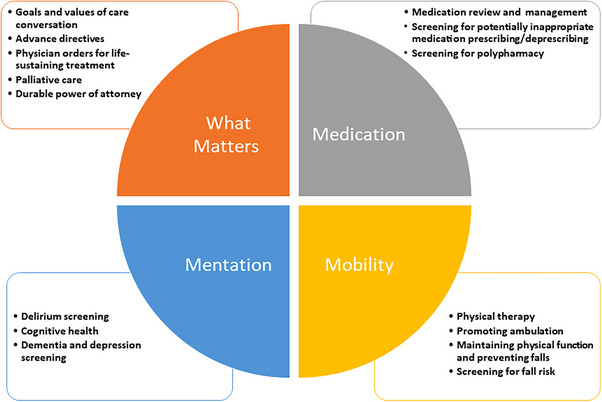
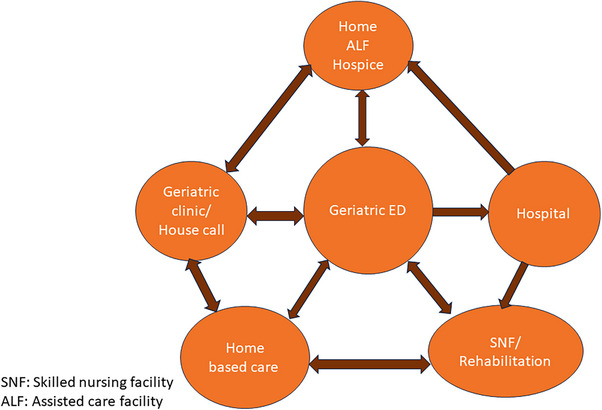
Healthcare systems face significant challenges in meeting the unique needs of older adults, particularly in the acute setting. Age-friendly healthcare is a comprehensive approach using the 4Ms framework-what matters, medications, mentation, and mobility-to ensure that healthcare settings are responsive to the needs of older patients. The Age-Friendly Emergency Department (AFED) is a crucial component of a holistic age-friendly health system. Our objective is to provide an overview of the AFED model, its core principles, and the benefits to older adults and healthcare clinicians. The AFED optimizes the delivery of emergency care by integrating age-specific considerations into various aspects of (1) ED physical infrastructure, (2) clinical care policies, and (3) care transitions. Physical infrastructure incorporates environmental modifications to enhance patient safety, including adequate lighting, nonslip flooring, and devices for sensory and ambulatory impairment. Clinical care policies address the physiological, cognitive, and psychosocial needs of older adults while preserving focus on emergency issues. Care transitions include communication and involving community partners and case management services. The AFED prioritizes collaboration between interdisciplinary team members (ED clinicians, geriatric specialists, nurses, physical/occupational therapists, and social workers). By adopting an age-friendly approach, EDs have the potential to improve patient-centered outcomes, reduce adverse events and hospitalizations, and enhance functional recovery. Moreover, healthcare clinicians benefit from the AFED model through increased satisfaction, multidisciplinary support, and enhanced training in geriatric care. Policymakers, healthcare administrators, and clinicians must collaborate to standardize guidelines, address barriers to AFEDs, and promote the adoption of age-friendly practices in the ED.
医疗保健系统在满足老年人的独特需求方面面临重大挑战,尤其是在急症环境中。关爱老年人的医疗保健是一种采用4M框架(即重要事项、药物、认知和活动能力)的全面方法,以确保医疗保健环境能够响应老年患者的需求。关爱老年人的急诊科(AFED)是整体关爱老年人健康系统的关键组成部分。我们的目标是概述AFED模式、其核心原则以及对老年人和医疗保健临床医生的益处。AFED通过将针对特定年龄的考虑因素整合到以下三个方面来优化急诊护理的提供:(1)急诊科的物理基础设施,(2)临床护理政策,以及(3)护理过渡。物理基础设施包括环境改造以提高患者安全性,包括充足的照明、防滑地板以及针对感官和行动障碍的设备。临床护理政策在关注紧急问题的同时,满足老年人的生理、认知和社会心理需求。护理过渡包括沟通以及让社区合作伙伴和病例管理服务参与进来。AFED将跨学科团队成员(急诊科临床医生﹑老年病专家、护士、物理/职业治疗师和社会工作者)之间的协作放在首位。通过采用关爱老年人的方法急诊科有潜力改善以患者为中心的结果,减少不良事件和住院次数,并促进功能恢复。此外,医疗保健临床医生通过提高满意度、多学科支持以及加强老年护理培训而从AFED模式中受益。政策制定者、医疗保健管理人员和临床医生必须合作,以规范指南,消除AFED的障碍,并促进在急诊科采用关爱老年人的做法。