Department of Clinical and Molecular Medicine, "La Sapienza" University, 00189 Rome, Italy.
Cells. 2024 Apr 30;13(9):763. doi: 10.3390/cells13090763.
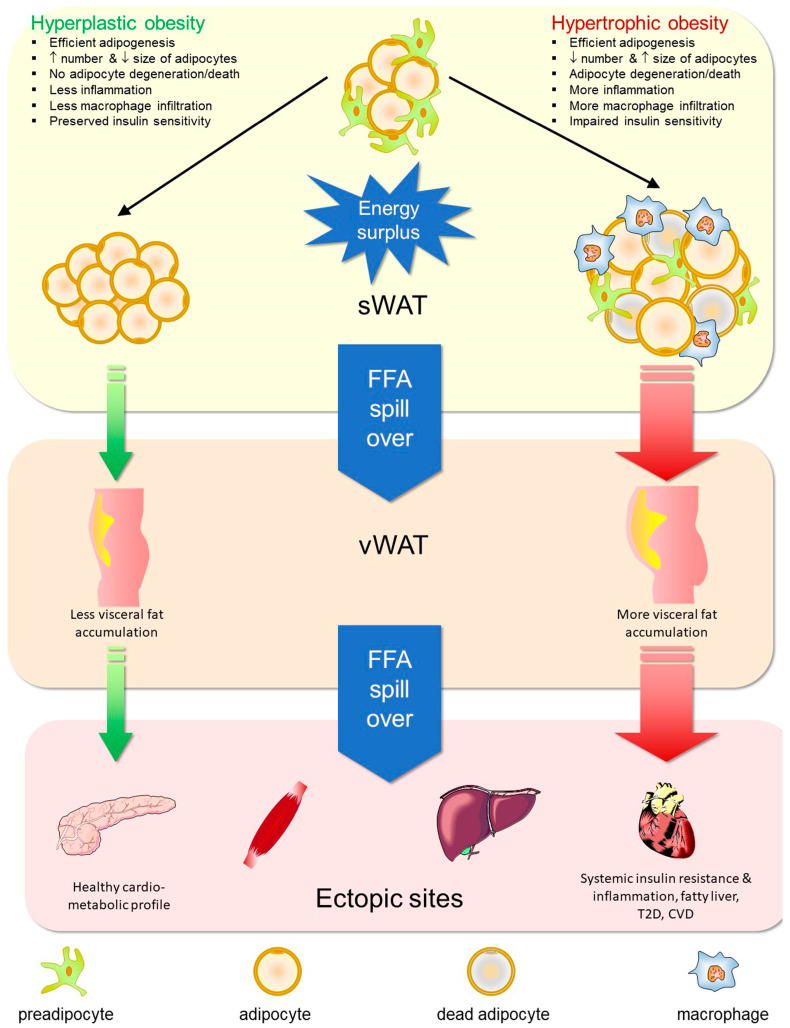
The adipose organ adapts and responds to internal and environmental stimuli by remodeling both its cellular and extracellular components. Under conditions of energy surplus, the subcutaneous white adipose tissue (WAT) is capable of expanding through the enlargement of existing adipocytes (hypertrophy), followed by de novo adipogenesis (hyperplasia), which is impaired in hypertrophic obesity. However, an impaired hyperplastic response may result from various defects in adipogenesis, leading to different WAT features and metabolic consequences, as discussed here by reviewing the results of the studies in animal models with either overexpression or knockdown of the main molecular regulators of the two steps of the adipogenesis process. Moreover, impaired WAT remodeling with aging has been associated with various age-related conditions and reduced lifespan expectancy. Here, we delve into the latest advancements in comprehending the molecular and cellular processes underlying age-related changes in WAT function, their involvement in common aging pathologies, and their potential as therapeutic targets to influence both the health of elderly people and longevity. Overall, this review aims to encourage research on the mechanisms of WAT maladaptation common to conditions of both excessive and insufficient fat tissue. The goal is to devise adipocyte-targeted therapies that are effective against both obesity- and age-related disorders.
脂肪组织通过重塑其细胞和细胞外成分来适应和响应内部和环境刺激。在能量过剩的情况下,皮下白色脂肪组织(WAT)能够通过扩大现有脂肪细胞(肥大)来扩张,随后是新的脂肪生成(增生),但在肥大性肥胖中这种增生受到损害。然而,增生反应的受损可能是由于脂肪生成过程中的各种缺陷导致的,从而导致不同的 WAT 特征和代谢后果,本文通过回顾在主要分子调节剂过表达或敲低的动物模型中进行的研究结果,讨论了这一点。此外,随着年龄的增长,WAT 重塑受损与各种与年龄相关的疾病和预期寿命缩短有关。在这里,我们深入探讨了理解 WAT 功能随年龄变化的分子和细胞过程的最新进展,它们在常见衰老病理中的参与情况,以及它们作为治疗靶点的潜力,以影响老年人的健康和寿命。总的来说,本综述旨在鼓励研究过度和不足脂肪组织条件下常见的 WAT 适应不良的机制。目标是设计针对脂肪细胞的治疗方法,有效对抗肥胖和与年龄相关的疾病。