Department of Molecular and Cellular Sports Medicine, German Sports University Cologne, 50933 Cologne, Germany.
Department of Nutritional Sciences, Molecular Nutritional Science, University of Vienna, 1090 Vienna, Austria.
Nutrients. 2024 Apr 30;16(9):1353. doi: 10.3390/nu16091353.
Exercise and the consumption of sugars result in a dysfunction of the intestinal barrier (IB). Here, we determined the effect of sugar in a natural matrix on the intestinal barrier after moderate (A) and intensive endurance exercise (B).
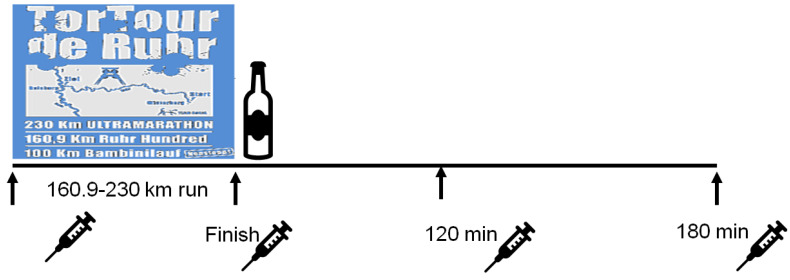
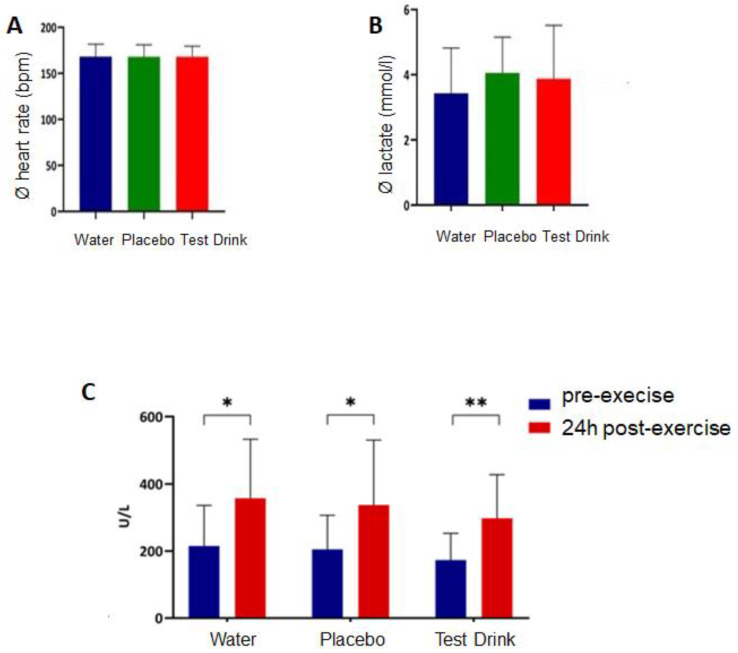
The IB function was determined before (pre) and after running (post), and 120 and 180 min after consuming the drink by measuring serum endotoxin concentrations (lipopolysaccharides-LPS), IL-6, CD14, and i-FABP. In study A, nonspecifically trained participants ( = 24, males and females, age 26 ± 4) ran for one hour at 80% of their individual anaerobic threshold (IAT). After finishing, the runners consumed, in a crossover setup, either 500 mL of water, diluted cloudy apple juice (test drink), or an identical drink (placebo) without the fruit juice matrix (FJM). In study B, the participants ( = 30, males and females, age 50 ± 9) completed an ultra-marathon run, were divided into groups, and consumed one of the above-mentioned drinks.
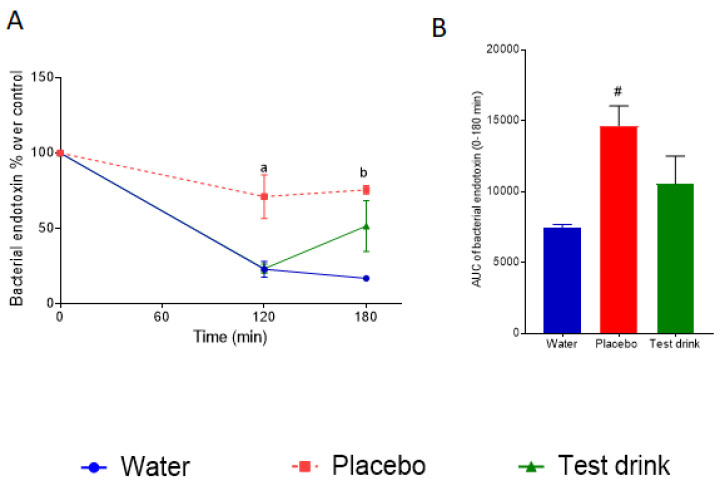
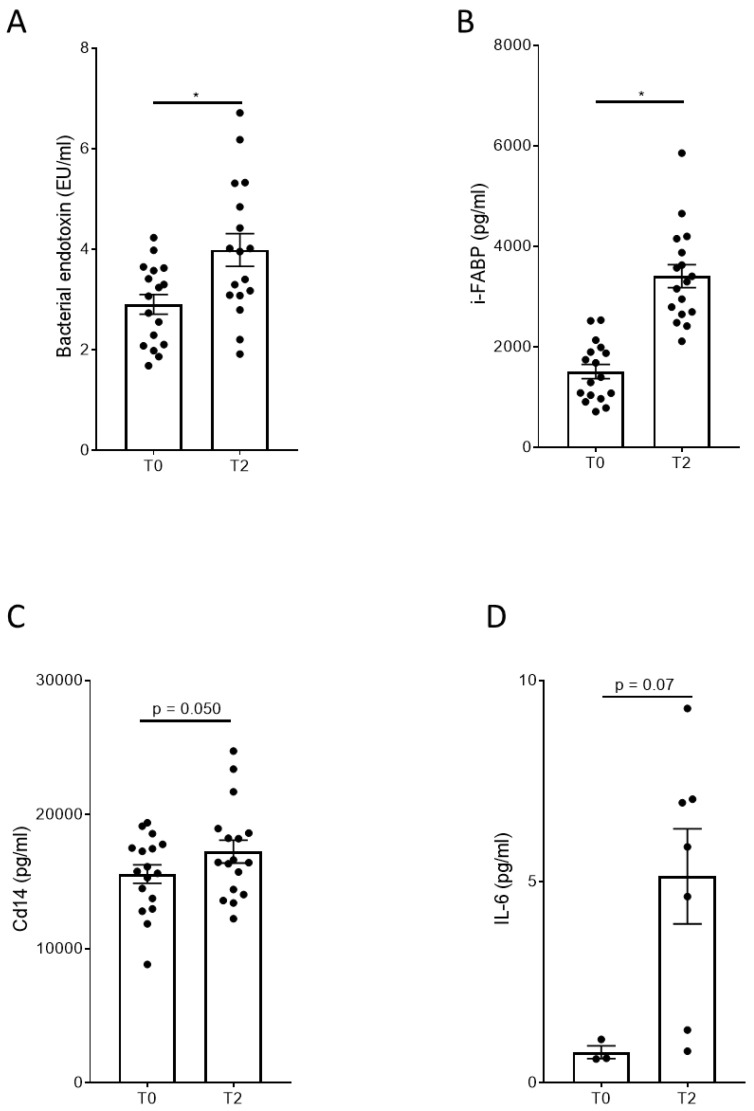
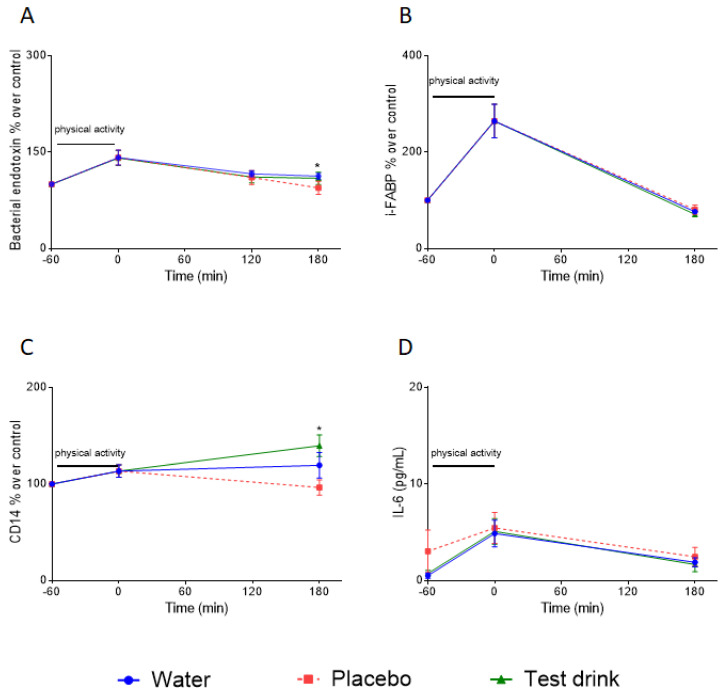
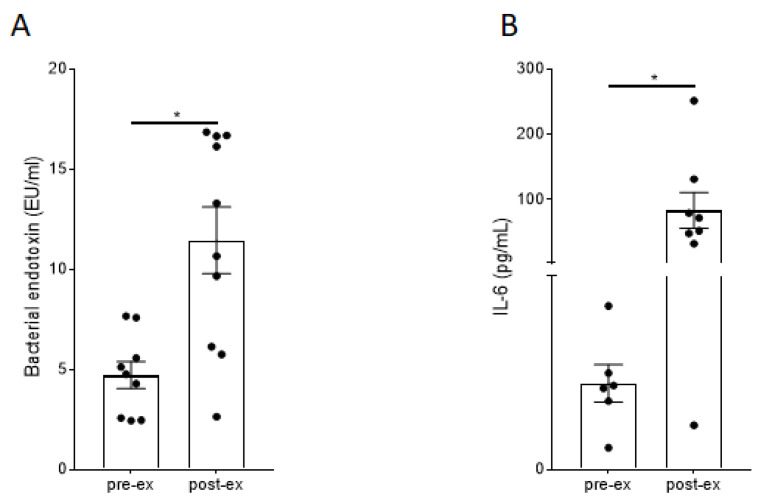
Study A: Exercise resulted in a significant increase in serum LPS, i-FABP, and IL-6, which decreased fast after finishing. No impact of the different drinks on LPS i-FABP, or IL-6 could be observed, but there was an impact on CD14. Study B: The ultra-marathon resulted in a strong increase in serum LPS, which decreased fast after finishing in the water and test drink groups, but not in the placebo group.
The consumed drinks did not affect the kinetics of IB regeneration after moderate exercise, but impacted CD14 serum concentrations, indicating possible beneficial effects of the FJM on the immune system. After an ultra-marathon, IB function regenerates very fast. The intake of sugar (placebo) seems to have had a negative impact on IB regeneration, which was diminished by the presence of the FJM.
运动和糖的摄入会导致肠道屏障(IB)功能障碍。在这里,我们确定了在中等(A)和高强度耐力运动(B)后,天然基质中的糖对肠道屏障的影响。
在跑步前(pre)和跑步后(post)以及饮用饮料后 120 和 180 分钟,通过测量血清内毒素浓度(脂多糖-LPS)、IL-6、CD14 和 i-FABP 来确定 IB 功能。在研究 A 中,非特异性训练的参与者(=24,男性和女性,年龄 26±4)以个人无氧阈值(IAT)的 80%跑步一小时。跑步结束后,跑步者以交叉设计的方式饮用 500 毫升水、稀释的混浊苹果汁(测试饮料)或不含果汁基质(FJM)的相同饮料(安慰剂)。在研究 B 中,参与者(=30,男性和女性,年龄 50±9)完成了超长马拉松跑,分为几组,并饮用了上述饮料之一。
研究 A:运动导致血清 LPS、i-FABP 和 IL-6 显著增加,运动结束后迅速下降。不同饮料对 LPS、i-FABP 或 IL-6 没有影响,但对 CD14 有影响。研究 B:超长马拉松导致血清 LPS 强烈增加,在水和测试饮料组中,运动结束后迅速下降,但在安慰剂组中没有下降。
在中等强度运动后,饮用的饮料不会影响 IB 再生的动力学,但会影响 CD14 血清浓度,表明 FJM 对免疫系统可能有有益影响。超长马拉松后,IB 功能恢复非常快。糖(安慰剂)的摄入似乎对 IB 再生有负面影响,而 FJM 的存在则减轻了这种影响。