Volpe-Fix Andressa Roehrig, de França Elias, Silvestre Jean Carlos, Thomatieli-Santos Ronaldo Vagner
Postgraduate Program in Psychobiology, Universidade Federal de São Paulo, Sao Paulo 05508-070, Brazil.
Interdisciplinary Postgraduate Program in Health Sciences, Universidade Federal de São Paulo, Sao Paulo 05508-070, Brazil.
Foods. 2023 Feb 21;12(5):916. doi: 10.3390/foods12050916.
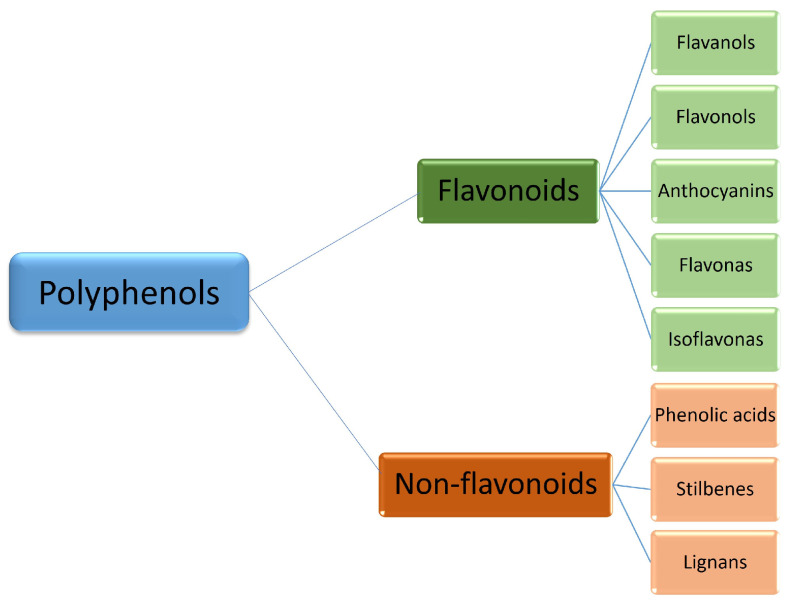
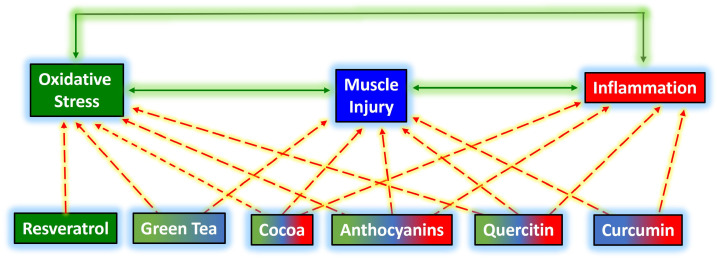
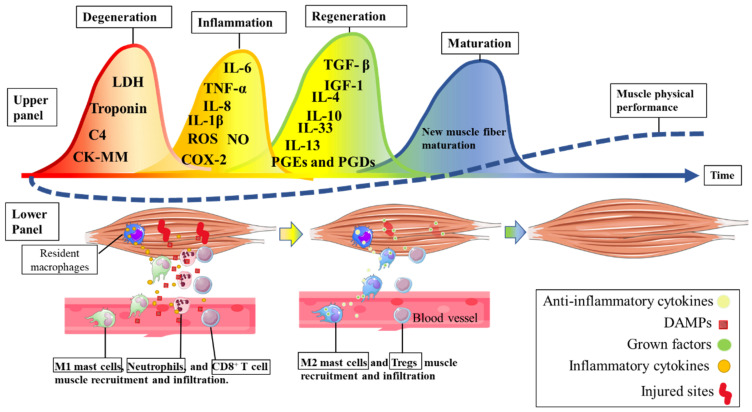
Food bioactive compounds (FBC) comprise a vast class of substances, including polyphenols, with different chemical structures, and they exert physiological effects on individuals who consume them, such as antioxidant and anti-inflammatory action. The primary food sources of the compounds are fruits, vegetables, wines, teas, seasonings, and spices, and there are still no daily recommendations for their intake. Depending on the intensity and volume, physical exercise can stimulate oxidative stress and muscle inflammation to generate muscle recovery. However, little is known about the role that polyphenols may have in the process of injury, inflammation, and muscle regeneration. This review aimed to relate the effects of supplementation with mentation with some polyphenols in oxidative stress and post-exercise inflammatory markers. The consulted papers suggest that supplementation with 74 to 900 mg of cocoa, 250 to 1000 mg of green tea extract for around 4 weeks, and 90 mg for up to 5 days of curcumin can attenuate cell damage and inflammation of stress markers of oxidative stress during and after exercise. However, regarding anthocyanins, quercetins, and resveratrol, the results are conflicting. Based on these findings, the new reflection that was made is the possible impact of supplementation associating several FBCs simultaneously. Finally, the benefits discussed here do not consider the existing divergences in the literature. Some contradictions are inherent in the few studies carried out so far. Methodological limitations, such as supplementation time, doses used, forms of supplementation, different exercise protocols, and collection times, create barriers to knowledge consolidation and must be overcome.
食品生物活性化合物(FBC)包含一大类物质,包括具有不同化学结构的多酚类,它们对食用者具有生理作用,如抗氧化和抗炎作用。这些化合物的主要食物来源是水果、蔬菜、葡萄酒、茶、调味料和香料,目前仍没有关于其摄入量的每日建议。根据运动强度和运动量,体育锻炼会刺激氧化应激和肌肉炎症,以促进肌肉恢复。然而,关于多酚类在损伤、炎症和肌肉再生过程中可能发挥的作用,人们知之甚少。本综述旨在阐述补充某些多酚类对氧化应激和运动后炎症标志物的影响。查阅的文献表明,补充74至900毫克可可、250至1000毫克绿茶提取物约4周以及90毫克姜黄素长达5天,可减轻运动期间和运动后氧化应激应激标志物的细胞损伤和炎症。然而,关于花青素、槲皮素和白藜芦醇,结果存在矛盾。基于这些发现,新的思考是同时补充几种FBC可能产生的影响。最后,这里讨论的益处并未考虑文献中存在的分歧。目前进行的少数研究中存在一些固有的矛盾。方法学上的局限性,如补充时间、使用剂量、补充形式、不同的运动方案和采集时间,为知识整合造成了障碍,必须加以克服。