Department of Medicine III, Ludwig Maximilian University (LMU) University Hospital, LMU Munich, Munich, Germany.
Department of Psychiatry and Psychotherapy, LMU University Hospital, LMU Munich, Munich, Germany.
Eur Arch Psychiatry Clin Neurosci. 2024 Dec;274(8):1923-1934. doi: 10.1007/s00406-024-01821-z. Epub 2024 May 13.
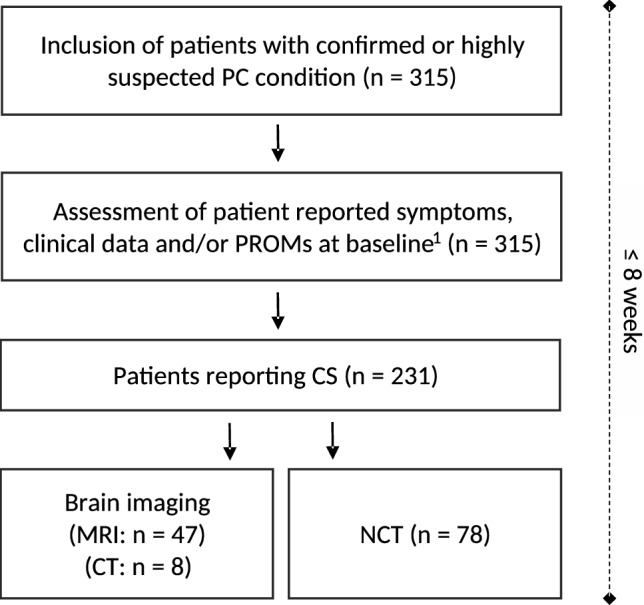
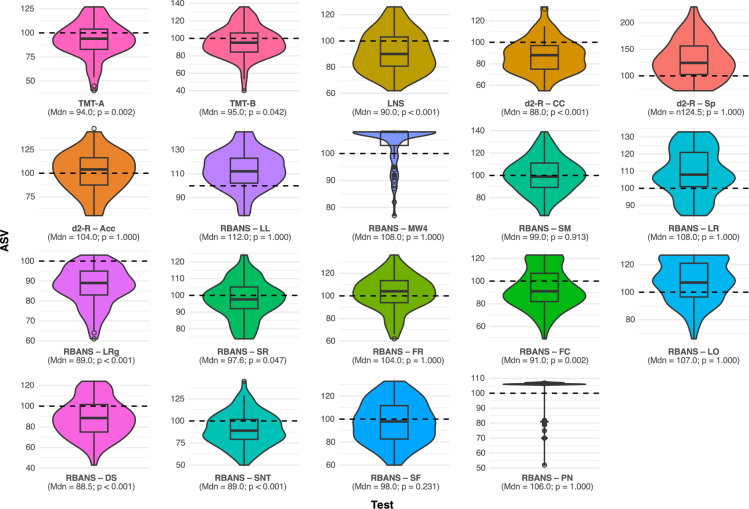
Cognitive symptoms (CS) belong to the most common manifestations of the Post COVID-19 (PC) condition. We sought to objectify CS in PC patients using routine diagnostic assessments: neurocognitive testing (NCT) and brain imaging (BI). Further, we investigated possible associations of CS with patient reported outcomes (PROs), and risk factors for developing CS. Clinical data and PROs of 315 PC patients were assessed at a mean of 6 months after SARS-CoV-2 infection. 231 (73.3%) patients reported any sort of CS. Among them, 78 underwent NCT and 55 received BI. In NCT, the cognitive domains most affected were the working memory, attention, and concentration. Nonetheless, pathological thresholds were exceeded only in few cases. Neurocognitive performance did not differ significantly between patients complaining of severe (n = 26) versus non-severe (n = 52) CS. BI findings were abnormal in 8 (14.5%) cases with CS but were most likely not related to PC. Patients reporting high severity of CS scored worse in the PHQ-9, FSS, WHOQOL-BREF, were more likely to report impaired sleep, and had a higher prevalence of psychiatric diagnoses. Overall, NCT could confirm mild impairment in some but not all PC patients with CS, while BI studies were abnormal in only few cases. CS severity did not affect NCT results, but severe CS were associated with symptoms of depression (PHQ-9), fatigue (FSS), reduced quality of life (WHOQOL-BREF) and higher prevalence of psychiatric illnesses. These findings support the importance of NCT, BI, and neuro-psychological assessment in the work-up of PC patients reporting CS. TRIAL REGISTRATION: Trial registration number and date of registration: DRKS00030974, 22 Dec 2022, retrospectively registered.
认知症状(CS)属于新冠病毒感染后(PC)最常见的表现之一。我们试图使用常规诊断评估来客观评估 PC 患者的 CS:神经认知测试(NCT)和脑成像(BI)。此外,我们还研究了 CS 与患者报告的结局(PROs)之间的可能关联,以及 CS 发生的危险因素。在 SARS-CoV-2 感染后平均 6 个月,对 315 名 PC 患者的临床数据和 PROs 进行了评估。231 名(73.3%)患者报告有任何类型的 CS。其中,78 名患者接受了 NCT,55 名患者接受了 BI。在 NCT 中,受影响最严重的认知域是工作记忆、注意力和集中力。尽管如此,只有少数情况下才超过了病理性阈值。抱怨严重 CS(n=26)和非严重 CS(n=52)的患者之间,神经认知表现无显著差异。有 CS 的 8 名患者(14.5%)的 BI 结果异常,但最有可能与 PC 无关。报告 CS 严重程度高的患者在 PHQ-9、FSS、WHOQOL-BREF 中的得分更差,更有可能报告睡眠受损,且有更高的精神科诊断患病率。总的来说,NCT 可以在一些但不是所有有 CS 的 PC 患者中确认轻度损伤,而 BI 研究仅在少数情况下异常。CS 严重程度不影响 NCT 结果,但严重 CS 与抑郁症状(PHQ-9)、疲劳(FSS)、生活质量降低(WHOQOL-BREF)和更高的精神科疾病患病率相关。这些发现支持在报告 CS 的 PC 患者中进行 NCT、BI 和神经心理评估的重要性。试验注册:注册号和注册日期:DRKS00030974,2022 年 12 月 22 日,回顾性注册。