Institute for Health Metrics and Evaluation, University of Washington, Seattle, WA, USA.
Department of Health Metrics Sciences, School of Medicine, University of Washington, Seattle, WA, USA.
Nat Commun. 2024 May 14;15(1):4082. doi: 10.1038/s41467-024-47632-7.
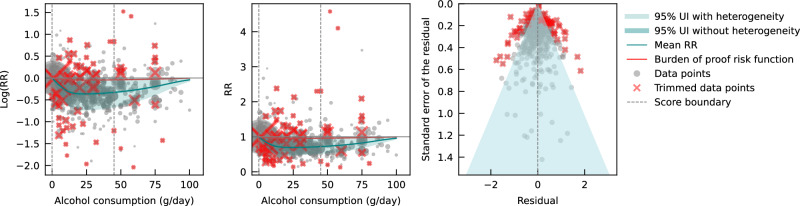
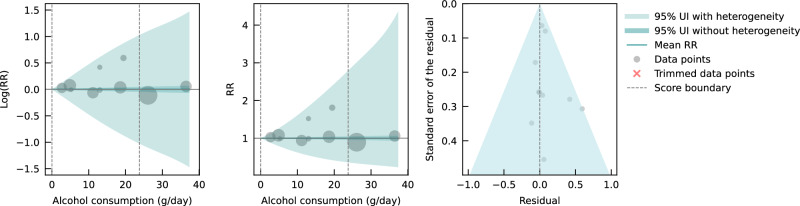
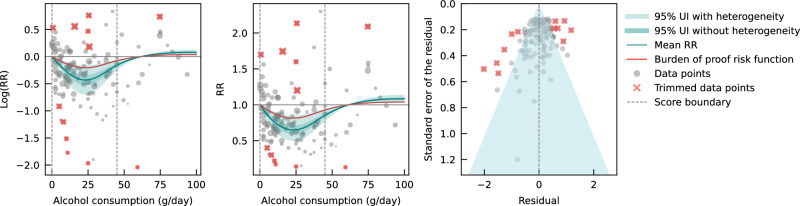
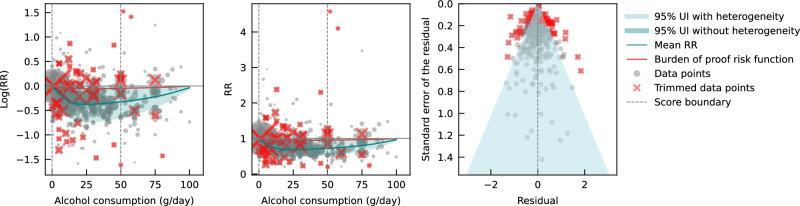
Cohort and case-control data have suggested an association between low to moderate alcohol consumption and decreased risk of ischemic heart disease (IHD), yet results from Mendelian randomization (MR) studies designed to reduce bias have shown either no or a harmful association. Here we conducted an updated systematic review and re-evaluated existing cohort, case-control, and MR data using the burden of proof meta-analytical framework. Cohort and case-control data show low to moderate alcohol consumption is associated with decreased IHD risk - specifically, intake is inversely related to IHD and myocardial infarction morbidity in both sexes and IHD mortality in males - while pooled MR data show no association, confirming that self-reported versus genetically predicted alcohol use data yield conflicting findings about the alcohol-IHD relationship. Our results highlight the need to advance MR methodologies and emulate randomized trials using large observational databases to obtain more definitive answers to this critical public health question.
队列研究和病例对照数据表明,低至中度饮酒与缺血性心脏病 (IHD) 风险降低之间存在关联,但旨在减少偏倚的孟德尔随机化 (MR) 研究结果表明,这种关联要么不存在,要么存在有害影响。在这里,我们使用证据负担荟萃分析框架更新了系统评价并重新评估了现有的队列、病例对照和 MR 数据。队列研究和病例对照数据表明,低至中度饮酒与降低 IHD 风险相关,具体来说,在两性中,饮酒与 IHD 和心肌梗死发病率呈反比关系,而男性的 IHD 死亡率则呈反比关系,而汇总的 MR 数据则表明没有关联,这证实了自我报告的饮酒量与遗传预测的饮酒量数据在酒精与 IHD 关系方面得出了相互矛盾的结果。我们的研究结果强调需要推进 MR 方法学,并使用大型观察性数据库模拟随机试验,以对这一关键的公共卫生问题得出更明确的答案。