Zhu Congcong, Tong Tong, Farrell John J, Martin Eden R, Bush William S, Pericak-Vance Margaret A, Wang Li-San, Schellenberg Gerard D, Haines Jonathan L, Lunetta Kathryn L, Farrer Lindsay A, Zhang Xiaoling
Department of Medicine (Biomedical Genetics), Boston University Chobanian and Avedisian School of Medicine, Boston, MA, USA.
Bioinformatics Program, Boston University, Boston, MA, USA.
J Alzheimers Dis Rep. 2024 Apr 8;8(1):575-587. doi: 10.3233/ADR-230120. eCollection 2024.
Mitochondrial DNA (mtDNA) is a double-stranded circular DNA and has multiple copies in each cell. Excess heteroplasmy, the coexistence of distinct variants in copies of mtDNA within a cell, may lead to mitochondrial impairments. Accurate determination of heteroplasmy in whole-genome sequencing (WGS) data has posed a significant challenge because mitochondria carrying heteroplasmic variants cannot be distinguished during library preparation. Moreover, sequencing errors, contamination, and nuclear mtDNA segments can reduce the accuracy of heteroplasmic variant calling.
To efficiently and accurately call mtDNA homoplasmic and heteroplasmic variants from the large-scale WGS data generated from the Alzheimer's Disease Sequencing Project (ADSP), and test their association with Alzheimer's disease (AD).
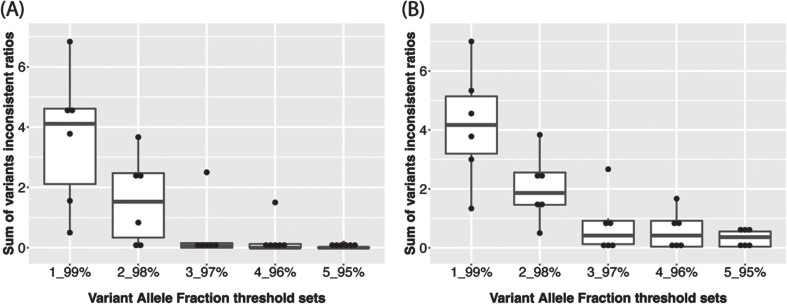
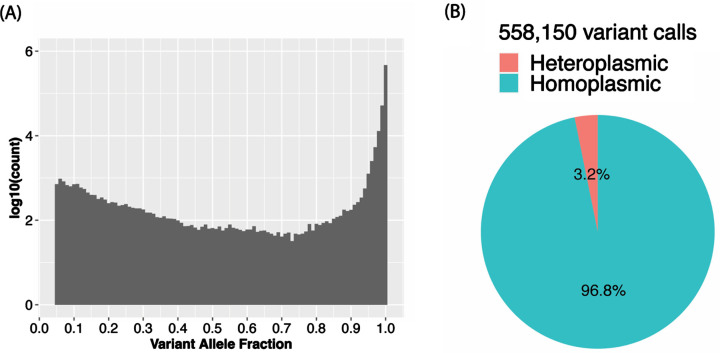
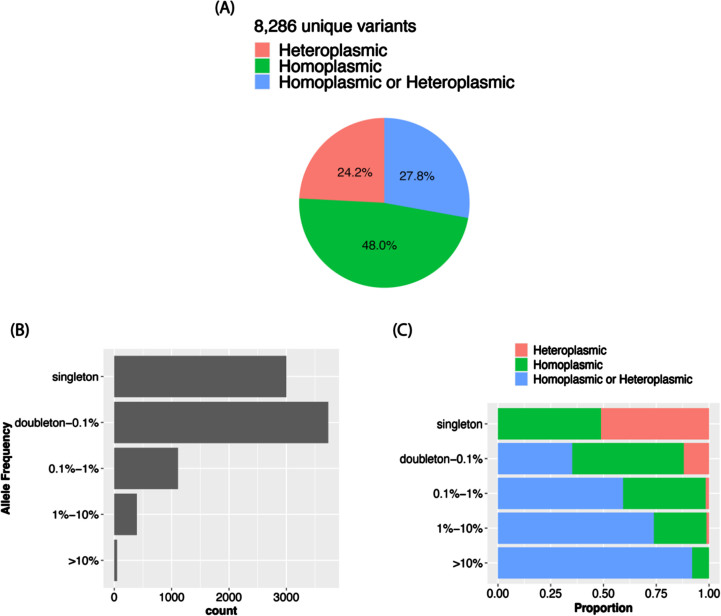
In this study, we present MitoH3-a comprehensive computational pipeline for calling mtDNA homoplasmic and heteroplasmic variants and inferring haplogroups in the ADSP WGS data. We first applied MitoH3 to 45 technical replicates from 6 subjects to define a threshold for detecting heteroplasmic variants. Then using the threshold of 5% ≤variant allele fraction≤95%, we further applied MitoH3 to call heteroplasmic variants from a total of 16,113 DNA samples with 6,742 samples from cognitively normal controls and 6,183 from AD cases.
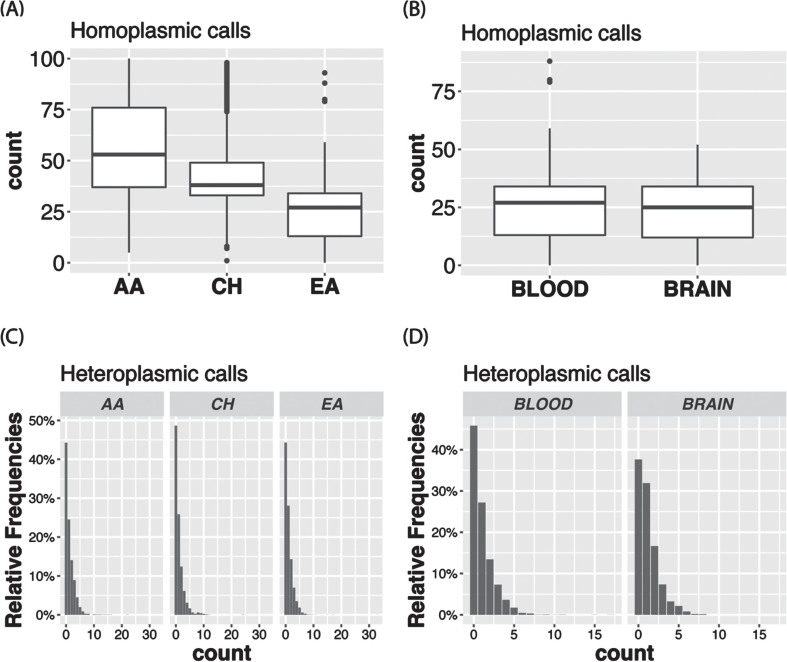
This pipeline is available through the Singularity container engine. For 4,311 heteroplasmic variants identified from 16,113 samples, no significant variant count difference was observed between AD cases and controls.
Our streamlined pipeline, MitoH3, enables computationally efficient and accurate analysis of a large number of samples.
线粒体DNA(mtDNA)是一种双链环状DNA,在每个细胞中有多个拷贝。细胞内mtDNA拷贝中不同变体的共存即过量异质性,可能导致线粒体损伤。在全基因组测序(WGS)数据中准确测定异质性是一项重大挑战,因为在文库制备过程中携带异质变体的线粒体无法区分。此外,测序错误、污染和核mtDNA片段会降低异质变体检测的准确性。
从阿尔茨海默病测序项目(ADSP)生成的大规模WGS数据中高效准确地检测mtDNA纯质和异质变体,并测试它们与阿尔茨海默病(AD)的关联。
在本研究中,我们提出了MitoH3——一种用于在ADSP WGS数据中检测mtDNA纯质和异质变体并推断单倍群的综合计算流程。我们首先将MitoH3应用于6名受试者的45个技术重复样本,以定义检测异质变体的阈值。然后使用5%≤变异等位基因频率≤95%的阈值,我们进一步应用MitoH3从总共16113个DNA样本中检测异质变体,其中6742个样本来自认知正常对照,6183个样本来自AD病例。
该流程可通过奇点容器引擎获得。在从16113个样本中鉴定出的4311个异质变体中,AD病例和对照之间未观察到显著的变体数量差异。
我们简化的流程MitoH3能够对大量样本进行高效准确的计算分析。