Department of ECE, University of Houston, Houston, Texas, United States of America.
Department of Biomedical Engineering, New York University, New York City, New York, United States of America.
PLoS One. 2024 May 15;19(5):e0300786. doi: 10.1371/journal.pone.0300786. eCollection 2024.
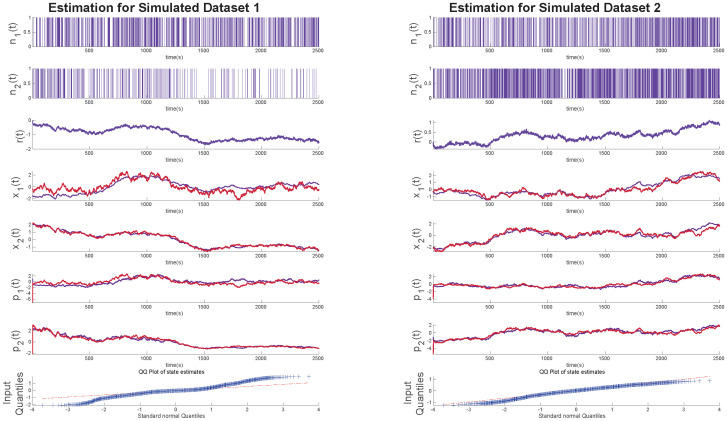
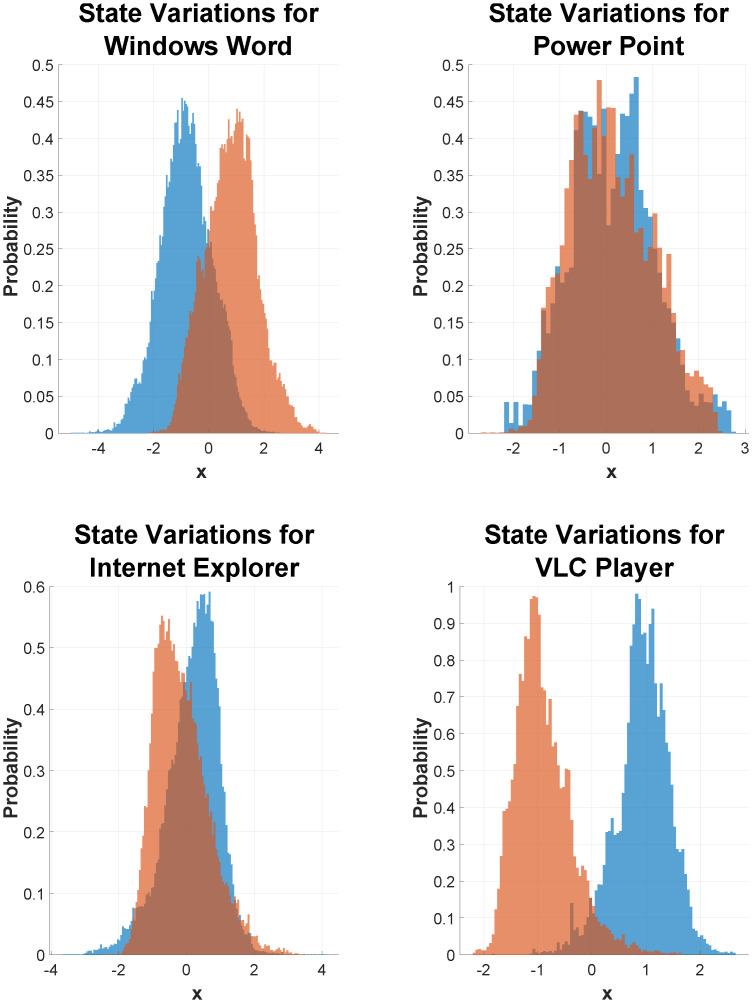
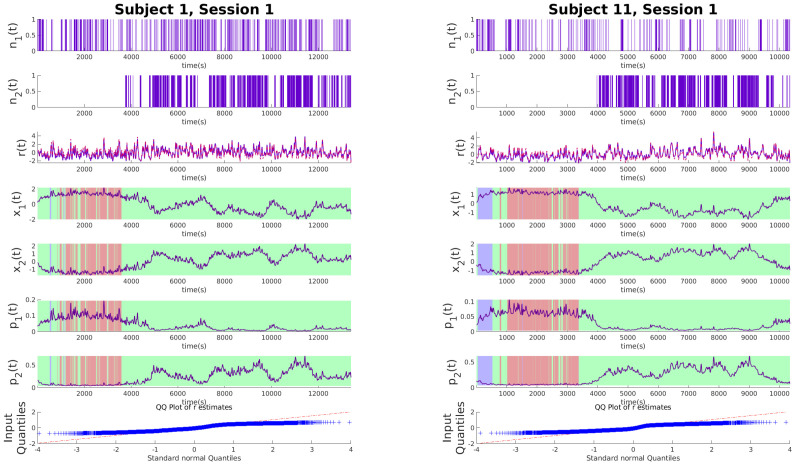
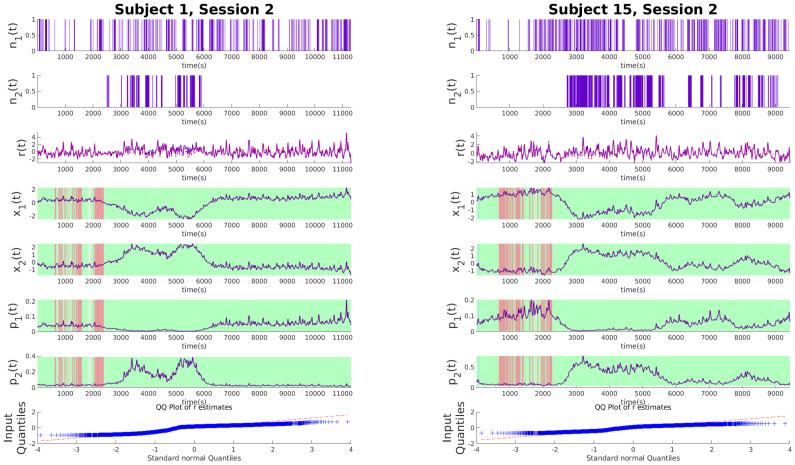
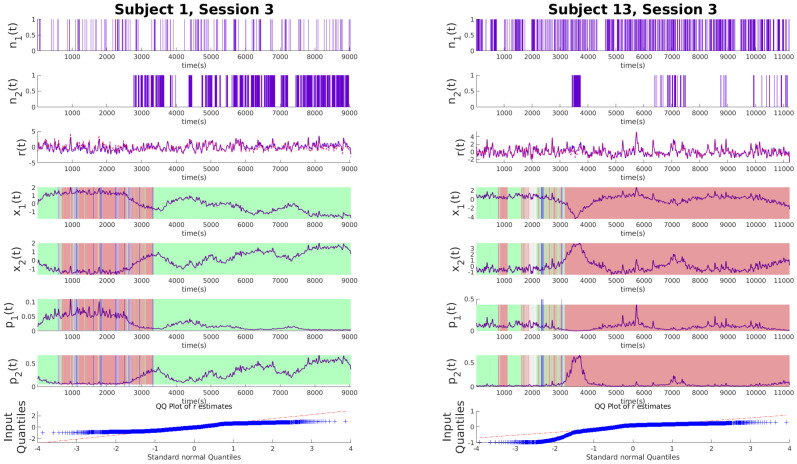
Cognitive Arousal, frequently elicited by environmental stressors that exceed personal coping resources, manifests in measurable physiological markers, notably in galvanic skin responses. This effect is prominent in cognitive tasks such as composition, where fluctuations in these biomarkers correlate with individual expressiveness. It is crucial to understand the nexus between cognitive arousal and expressiveness. However, there has not been a concrete study that investigates this inter-relation concurrently. Addressing this, we introduce an innovative methodology for simultaneous monitoring of these elements. Our strategy employs Bayesian analysis in a multi-state filtering format to dissect psychomotor performance (captured through typing speed), galvanic skin response or skin conductance (SC), and heart rate variability (HRV). This integrative analysis facilitates the quantification of expressive behavior and arousal states. At the core, we deploy a state-space model connecting one latent psychological arousal condition to neural activities impacting sweating (inferred through SC responses) and another latent state to expressive behavior during typing. These states are concurrently evaluated with model parameters using an expectation-maximization algorithms approach. Assessments using both computer-simulated data and experimental data substantiate the validity of our approach. Outcomes display distinguishable latent state patterns in expressive typing and arousal across different computer software used in office management, offering profound implications for Human-Computer Interaction (HCI) and productivity analysis. This research marks a significant advancement in decoding human productivity dynamics, with extensive repercussions for optimizing performance in telecommuting scenarios.
认知唤醒通常由超过个人应对资源的环境压力源引发,表现在可测量的生理标记上,特别是在皮肤电反应中。这种效应在认知任务中很明显,如写作,这些生物标志物的波动与个体的表达力相关。理解认知唤醒和表达力之间的关系至关重要。然而,目前还没有一项具体的研究同时调查这种相互关系。针对这一问题,我们引入了一种同时监测这些因素的创新方法。我们的策略采用贝叶斯分析在多状态滤波格式中,以剖析心理运动表现(通过打字速度捕捉)、皮肤电反应或皮肤电导(SC)和心率变异性(HRV)。这种综合分析有助于量化表达行为和唤醒状态。在核心部分,我们部署了一个状态空间模型,将一个潜在的心理唤醒条件连接到影响出汗的神经活动(通过 SC 反应推断),以及另一个潜在的状态连接到打字时的表达行为。这些状态使用期望最大化算法方法,根据模型参数进行同时评估。使用计算机模拟数据和实验数据的评估证实了我们方法的有效性。结果显示,在不同办公管理软件中,表达性打字和唤醒的潜在状态模式具有明显的区别,这为人机交互(HCI)和生产力分析提供了深远的意义。这项研究标志着解码人类生产力动态方面的重大进展,对优化远程办公场景下的性能具有广泛的影响。