Stroke Medicine, National Hospital for Neurology and Neurosurgery, London, UK.
Medical Education, Stepping Hill Hospital, Stockport, UK.
BMJ Open Qual. 2024 May 15;13(2):e002571. doi: 10.1136/bmjoq-2023-002571.
In situ simulation (ISS) enables multiprofessional healthcare teams to train for real emergencies in their own working environment and identify latent patient safety threats. This study aimed to determine ISS impact on teamwork, technical skill performance, healthcare staff perception and latent error identification during simulated medical emergencies.
Unannounced ISS sessions (n=14, n=75 staff members) using a high-fidelity mannequin were conducted in medical, paediatric and rehabilitation wards at Stepping Hill Hospital (Stockport National Health Service Foundation Trust, UK). Each session encompassed a 15 min simulation followed by a 15 min faculty-led debrief.
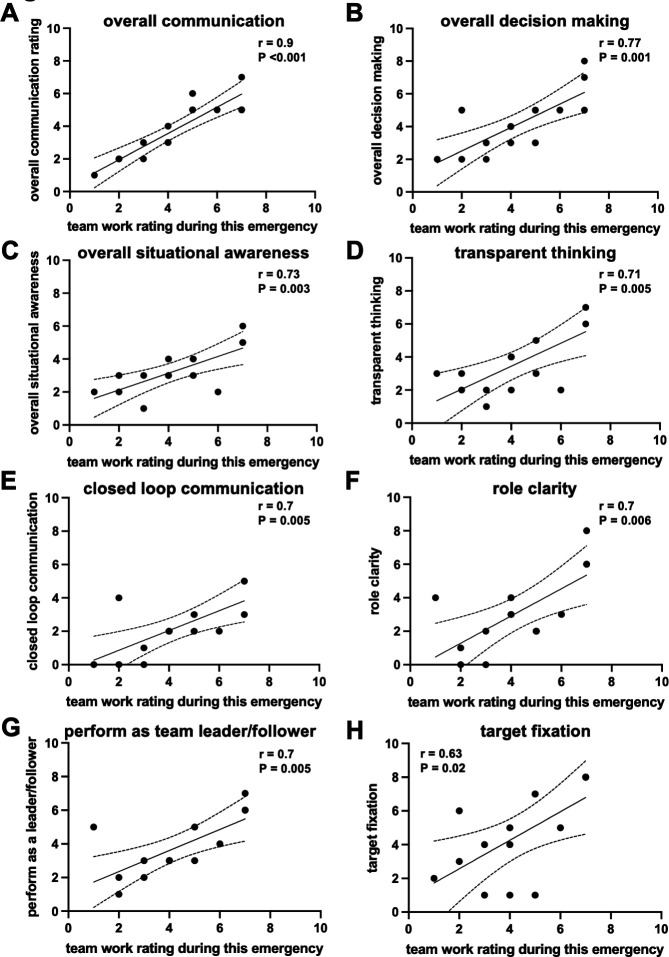
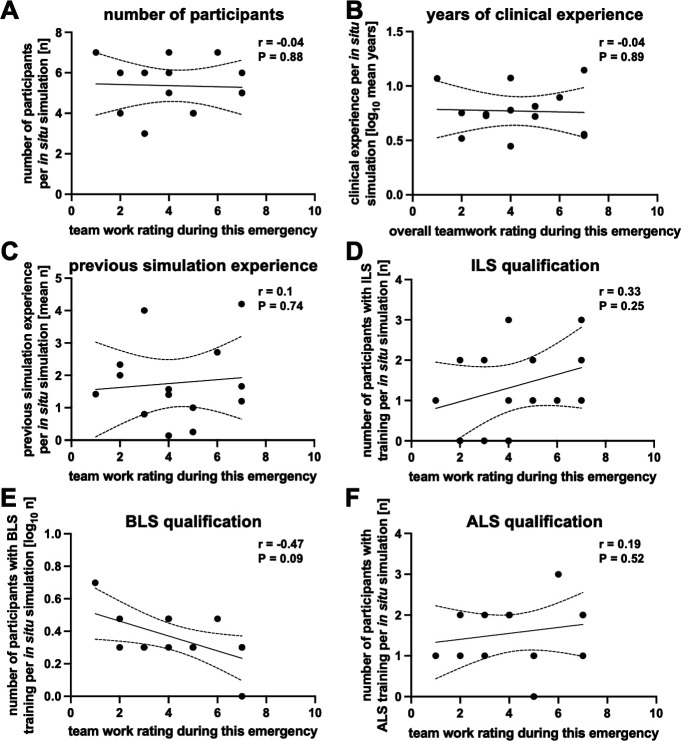
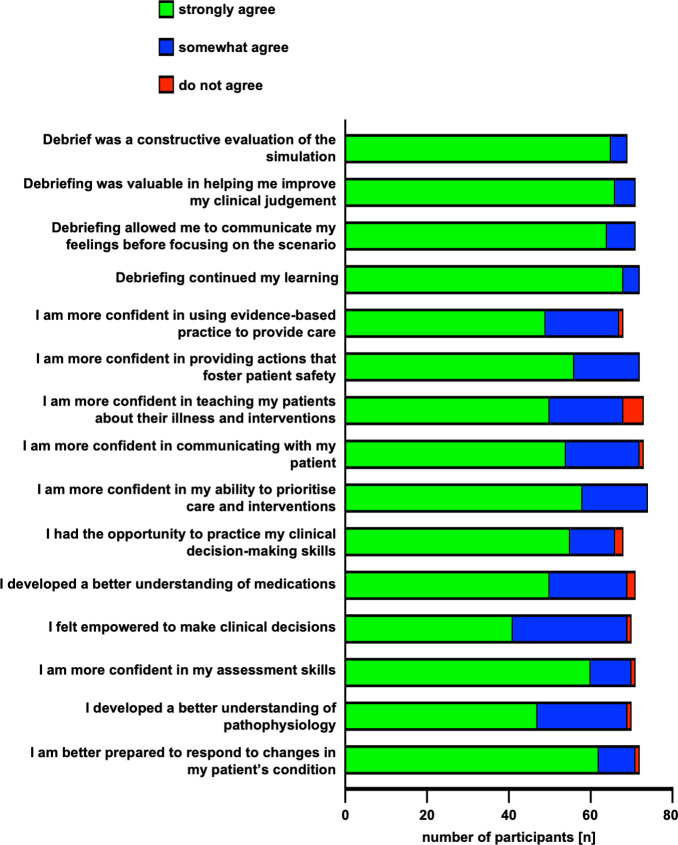
The clinical team score revealed low overall teamwork performances during simulated medical emergencies (mean±SEM: 4.3±0.5). Linear regression analysis revealed that overall communication (r=0.9, p<0.001), decision-making (r=0.77, p<0.001) and overall situational awareness (r=0.73, p=0.003) were the strongest statistically significant predictors of overall teamwork performance. Neither the number of attending healthcare professionals, their professional background, age, gender, degree of clinical experience, level of resuscitation training or previous simulation experience statistically significantly impacted on overall teamwork performance. ISS positively impacted on healthcare staff confidence and clinical training. Identified safety threats included unknown location of intraosseous kits, poor/absent airway management, incomplete A-E assessments, inability to activate the major haemorrhage protocol, unknown location/dose of epinephrine for anaphylaxis management, delayed administration of epinephrine and delayed/absence of attachment of pads to the defibrillator as well as absence of accessing ALS algorithms, poor chest compressions and passive behaviour during simulated cardiac arrests.
Poor demonstration of technical/non-technical skills mandate regular ISS interventions for healthcare professionals of all levels. ISS positively impacts on staff confidence and training and drives identification of latent errors enabling improvements in workplace systems and resources.
现场模拟(ISS)使多专业医疗团队能够在自己的工作环境中针对真实紧急情况进行培训,并识别潜在的患者安全威胁。本研究旨在确定 ISS 对团队合作、技术技能表现、医护人员感知以及模拟医疗紧急情况期间潜在错误识别的影响。
在英国斯托克波特国家卫生服务基金会信托基金的 Stepping Hill 医院的医疗、儿科和康复病房中,使用高保真人体模型进行了未经宣布的 ISS 课程(n=14,n=75 名工作人员)。每次课程包括 15 分钟的模拟,然后是 15 分钟的教师引导讨论。
临床团队的分数显示,在模拟医疗紧急情况下,团队整体协作表现不佳(平均值±SEM:4.3±0.5)。线性回归分析显示,整体沟通(r=0.9,p<0.001)、决策(r=0.77,p<0.001)和整体情境意识(r=0.73,p=0.003)是整体团队合作表现的最强统计学预测指标。参加医疗保健专业人员的数量、其专业背景、年龄、性别、临床经验程度、复苏培训水平或以前的模拟经验均未对整体团队合作表现产生统计学显著影响。ISS 对医护人员的信心和临床培训产生了积极影响。识别出的安全威胁包括骨髓内套件的未知位置、气道管理不佳/缺失、A-E 评估不完整、无法激活大出血方案、过敏反应管理中肾上腺素的未知位置/剂量、肾上腺素给药延迟以及除颤器上的电极片连接延迟/缺失,以及无法访问 ALS 算法、胸部按压质量差和模拟心脏骤停期间的被动行为。
技术/非技术技能表现不佳需要对各级医护人员进行定期的 ISS 干预。ISS 对员工信心和培训产生积极影响,并促使识别潜在错误,从而改进工作场所系统和资源。