Department of Rheumatology, Korea University College of Medicine, Seoul, Korea.
PLoS One. 2024 May 16;19(5):e0303665. doi: 10.1371/journal.pone.0303665. eCollection 2024.
The objective of this study was to evaluate the relationship between the platelet-to-lymphocyte ratio (PLR) and systemic lupus erythematosus (SLE). Additionally, the study aimed to establish an association between PLR and SLE disease activity, specifically lupus nephritis (LN).
We conducted a comprehensive search across Medline, Embase, and Cochrane databases to identify relevant articles. Subsequently, we performed meta-analyses to compare PLR between SLE patients and controls, as well as active and inactive SLE cases, along with LN and non-LN groups. Furthermore, a meta-analysis was conducted on correlation coefficients between PLR and various parameters in SLE patients, including the SLE Disease Activity Index (SLEDAI), C3, C4, anti-dsDNA, erythrocyte sedimentation rate (ESR), and C-reactive protein (CRP).
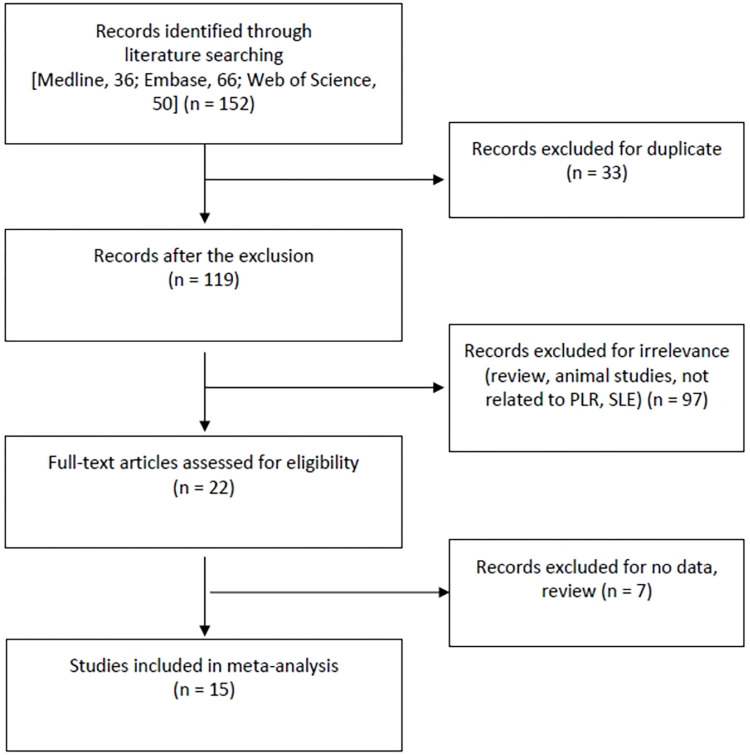
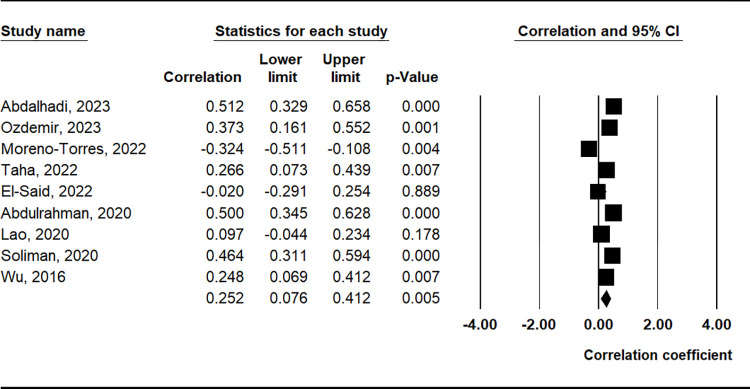
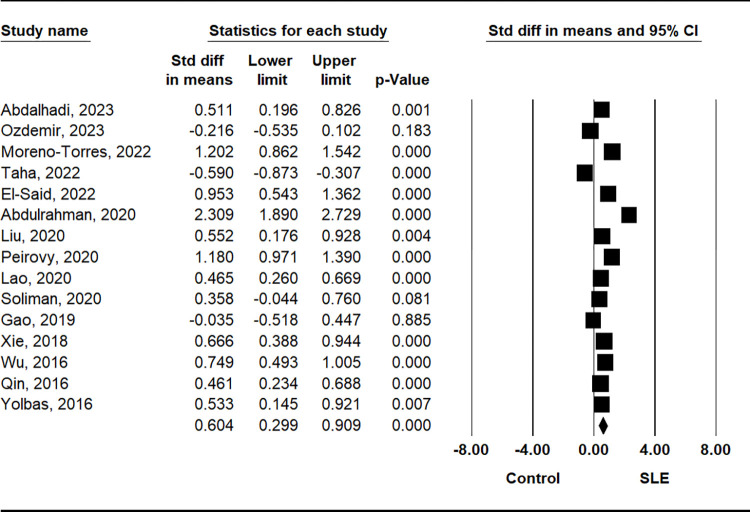
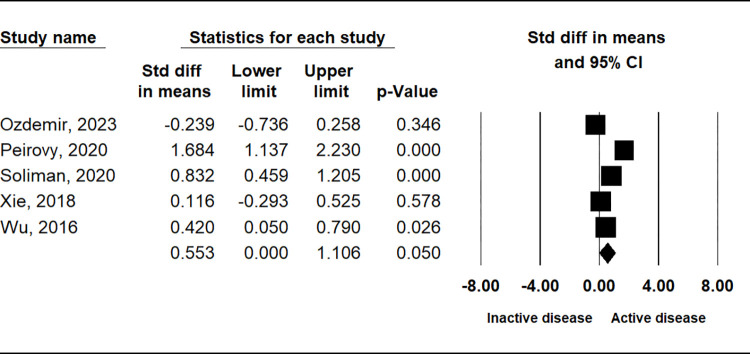
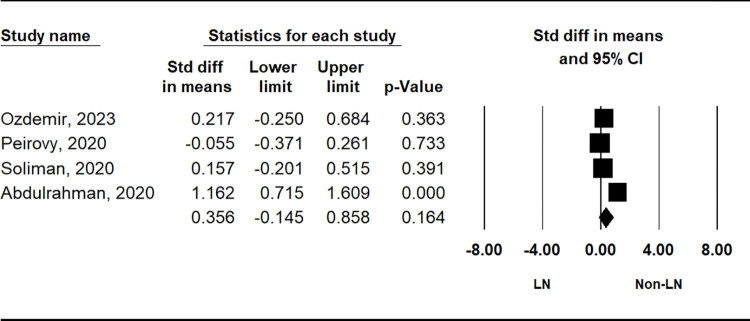
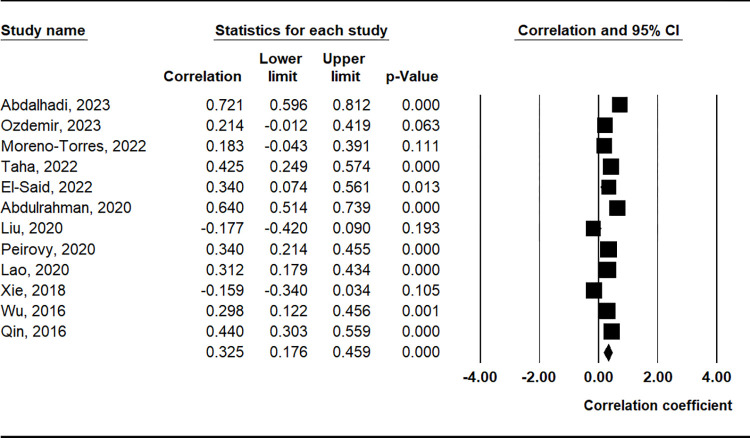
In total, fifteen studies comprising 1,522 SLE patients and 1,424 controls were eligible for inclusion. The meta-analysis demonstrated a significant elevation of PLR in the SLE group compared to the control group (Standardized Mean Difference [SMD] = 0.604, 95% Confidence Interval [CI] = 0.299-0.909, p < 0.001). Upon stratification by ethnicity, an elevated PLR was observed in the SLE group among both Asian and Arab populations. Subgroup analysis based on sample size revealed consistently higher PLR in both small (n < 200) and large sample (n ≥ 200) SLE groups. Moreover, when considering disease activity, there was a noteworthy trend of increased PLR in the active disease group compared to the inactive group (SMD = 0.553, 95% CI = 0.000-1.106, p = 0.050). However, the meta-analysis did not demonstrate a significant distinction in PLR between the LN and non-LN groups. Notably, a positive association was established between PLR and SLEDAI (correlation coefficient = 0.325, 95% CI = 0.176-0.459, p < 0.001). Furthermore, PLR exhibited positive correlations with ESR, CRP, proteinuria, C3, and anti-dsDNA antibody levels.
The outcomes of this meta-analysis underscored the elevated PLR in SLE patients, suggesting its potential as a biomarker for gauging systemic inflammation in SLE. Additionally, PLR exhibited correlations with SLEDAI, as well as with key indicators such as ESR, CRP, proteinuria, C3, and anti-dsDNA antibody levels.
本研究旨在评估血小板与淋巴细胞比值(PLR)与系统性红斑狼疮(SLE)之间的关系。此外,本研究旨在确定 PLR 与 SLE 疾病活动度的关联,特别是狼疮肾炎(LN)。
我们在 Medline、Embase 和 Cochrane 数据库中进行了全面检索,以确定相关文章。随后,我们进行了荟萃分析,以比较 SLE 患者与对照组、活动期和非活动期 SLE 病例以及 LN 与非 LN 组之间的 PLR。此外,我们还对 PLR 与 SLE 患者各项参数之间的相关系数进行了荟萃分析,包括系统性红斑狼疮疾病活动指数(SLEDAI)、C3、C4、抗双链 DNA 抗体、红细胞沉降率(ESR)和 C 反应蛋白(CRP)。
共有 15 项研究纳入了 1522 例 SLE 患者和 1424 例对照者。荟萃分析显示,SLE 组的 PLR 显著高于对照组(标准化均数差 [SMD] = 0.604,95%置信区间 [CI] = 0.299-0.909,p < 0.001)。按种族分层,亚洲和阿拉伯人群的 SLE 组中均观察到 PLR 升高。基于样本量的亚组分析显示,小样本量(n < 200)和大样本量(n ≥ 200)SLE 组的 PLR 均升高。此外,在考虑疾病活动度时,活动期疾病组的 PLR 显著高于非活动期疾病组(SMD = 0.553,95%CI = 0.000-1.106,p = 0.050)。然而,荟萃分析并未显示 PLR 在 LN 与非 LN 组之间存在显著差异。值得注意的是,PLR 与 SLEDAI 之间存在正相关关系(相关系数 = 0.325,95%CI = 0.176-0.459,p < 0.001)。此外,PLR 与 ESR、CRP、蛋白尿、C3 和抗双链 DNA 抗体水平呈正相关。
这项荟萃分析的结果强调了 SLE 患者中 PLR 的升高,提示其可能作为评估 SLE 全身炎症的生物标志物。此外,PLR 与 SLEDAI 以及 ESR、CRP、蛋白尿、C3 和抗双链 DNA 抗体水平等关键指标呈正相关。