Department of Computer Science, Edge Hill University, Ormskirk, Lancashire, United Kingdom.
PLoS One. 2024 May 16;19(5):e0303644. doi: 10.1371/journal.pone.0303644. eCollection 2024.
Parkinson's Disease is the second most common neurological disease in over 60s. Cognitive impairment is a major clinical symptom, with risk of severe dysfunction up to 20 years post-diagnosis. Processes for detection and diagnosis of cognitive impairments are not sufficient to predict decline at an early stage for significant impact. Ageing populations, neurologist shortages and subjective interpretations reduce the effectiveness of decisions and diagnoses. Researchers are now utilising machine learning for detection and diagnosis of cognitive impairment based on symptom presentation and clinical investigation. This work aims to provide an overview of published studies applying machine learning to detecting and diagnosing cognitive impairment, evaluate the feasibility of implemented methods, their impacts, and provide suitable recommendations for methods, modalities and outcomes.
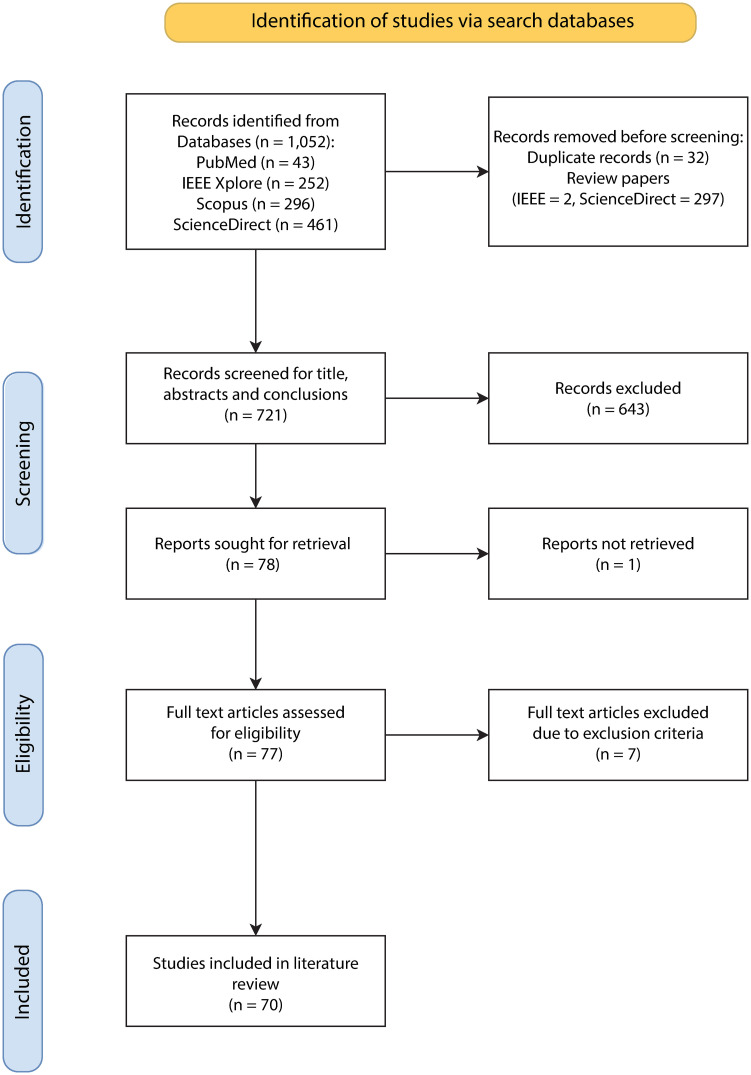
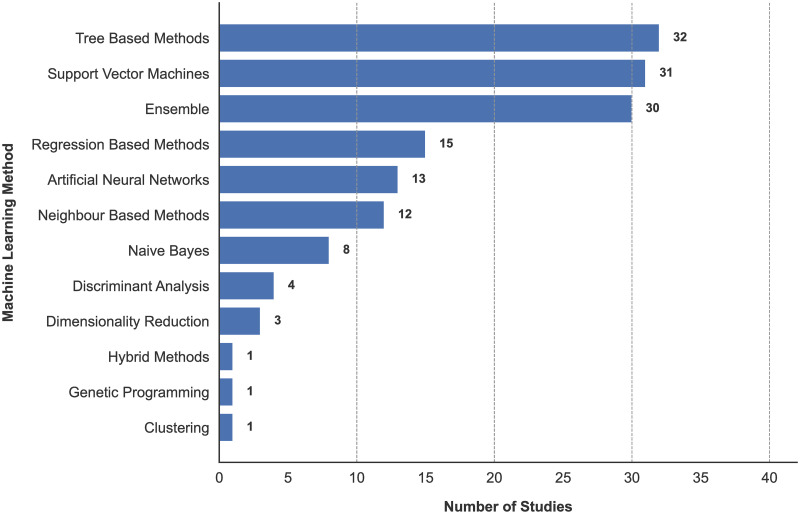
To provide an overview of the machine learning techniques, data sources and modalities used for detection and diagnosis of cognitive impairment in Parkinson's Disease, we conducted a review of studies published on the PubMed, IEEE Xplore, Scopus and ScienceDirect databases. 70 studies were included in this review, with the most relevant information extracted from each. From each study, strategy, modalities, sources, methods and outcomes were extracted.
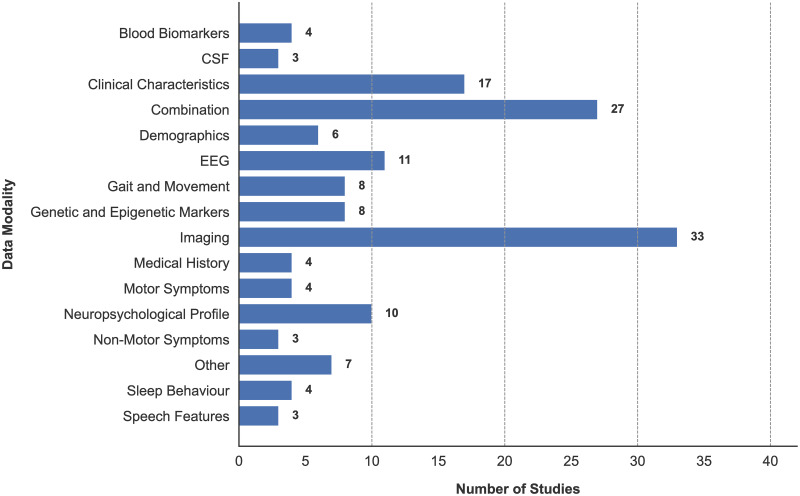
Literatures demonstrate that machine learning techniques have potential to provide considerable insight into investigation of cognitive impairment in Parkinson's Disease. Our review demonstrates the versatility of machine learning in analysing a wide range of different modalities for the detection and diagnosis of cognitive impairment in Parkinson's Disease, including imaging, EEG, speech and more, yielding notable diagnostic accuracy.
Machine learning based interventions have the potential to glean meaningful insight from data, and may offer non-invasive means of enhancing cognitive impairment assessment, providing clear and formidable potential for implementation of machine learning into clinical practice.
帕金森病是 60 岁以上人群中第二常见的神经退行性疾病。认知障碍是其主要的临床症状之一,在诊断后 20 年内,严重功能障碍的风险高达 20%。用于检测和诊断认知障碍的方法还不够完善,无法在早期对认知障碍进行有效预测。人口老龄化、神经科医生短缺以及主观解释降低了决策和诊断的有效性。研究人员现在正在利用机器学习来根据症状表现和临床研究来检测和诊断认知障碍。本研究旨在概述应用机器学习检测和诊断帕金森病认知障碍的已发表研究,评估所实施方法的可行性、影响,并为方法、模式和结果提供合适的建议。
为了概述用于检测和诊断帕金森病认知障碍的机器学习技术、数据源和模式,我们对发表在 PubMed、IEEE Xplore、Scopus 和 ScienceDirect 数据库上的研究进行了综述。本综述共纳入了 70 项研究,并从每项研究中提取了最相关的信息。从每项研究中提取了策略、模式、来源、方法和结果。
文献表明,机器学习技术有可能为帕金森病认知障碍的研究提供有价值的见解。本综述展示了机器学习在分析广泛的不同模式(包括成像、脑电图、言语等)以检测和诊断帕金森病认知障碍方面的多功能性,取得了显著的诊断准确性。
基于机器学习的干预措施有潜力从数据中获取有意义的见解,并可能提供非侵入性的认知障碍评估手段,为将机器学习应用于临床实践提供了明确而强大的潜力。