Naya Kazuaki, Sakuramoto Hideaki, Aikawa Gen, Ouchi Akira, Yoshihara Shun, Ota Yuma, Okamoto Saiko, Fukushima Ayako, Hirashima Haruyoshi
Department of Adult Nursing, Tokyo Healthcare University Wakayama Faculty of Nursing, Wakayama, JPN.
Department of Critical Care and Disaster Nursing, Japanese Red Cross Kyushu International College of Nursing, Munakata, JPN.
Cureus. 2024 Apr 15;16(4):e58344. doi: 10.7759/cureus.58344. eCollection 2024 Apr.
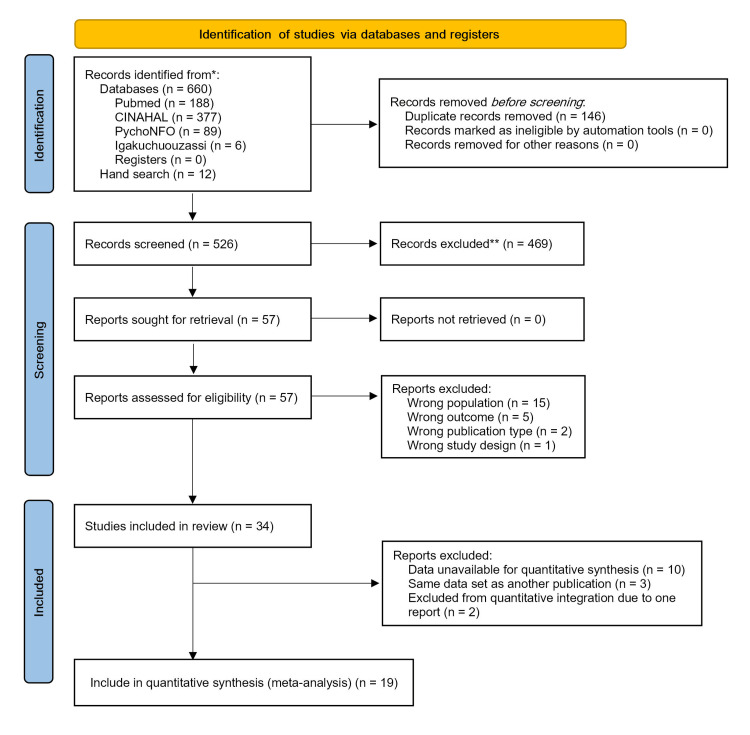
Intensive care units (ICUs) are designed for critically ill patients who often experience high mortality rates owing to the severity of their conditions. Although the primary goal is patient recovery, it is crucial to understand the quality of death in the ICU setting. Nevertheless, there is a notable lack of systematic reviews on measured death quality and its associated factors. This study aims to conduct a quantitative synthesis of evidence regarding the quality of death in the ICU and offers a comprehensive overview of the factors influencing this quality, including its relationship with the post-intensive care syndrome-family (PICS-F). A thorough search without any language restrictions across MEDLINE, CINAHL, PsycINFO, and Igaku Chuo Zasshi databases identified relevant studies published until September 2023. We aggregated the results regarding the quality of death care for patients who died in the ICU across each measurement tool and calculated the point estimates and 95% confidence intervals. The quantitative synthesis encompassed 19 studies, wherein the Quality of Dying and Death-single item (QODD-1) was reported in 13 instances (Point estimate: 7.0, 95% CI: 6.93-7.06). Patient demographic data, including age and gender, as well as the presence or absence of invasive procedures, such as life support devices and cardiopulmonary resuscitation, along with the management of pain and physical symptoms, were found to be associated with a high quality of death. Only one study reported an association between quality of death and PICS-F scores; however, no significant association was identified. The QODD-1 scale emerged as a frequently referenced and valuable metric for evaluating the quality of death in the ICU, and factors associated with the quality of ICU death were identified. However, research gaps persist, particularly regarding the variations in the quality of ICU deaths based on cultural backgrounds and healthcare systems. This review contributes to a better understanding of the quality of death in the ICU and emphasises the need for comprehensive research in this critical healthcare domain.
重症监护病房(ICU)是为重症患者设计的,这些患者往往因其病情严重而死亡率较高。尽管主要目标是患者康复,但了解ICU环境下的死亡质量至关重要。然而,关于测量的死亡质量及其相关因素,明显缺乏系统性综述。本研究旨在对有关ICU死亡质量的证据进行定量综合,并全面概述影响该质量的因素,包括其与重症监护后综合征-家庭版(PICS-F)的关系。通过对MEDLINE、CINAHL、PsycINFO和《医学中央杂志》数据库进行无语言限制的全面检索,确定了截至2023年9月发表的相关研究。我们汇总了使用每种测量工具对在ICU死亡患者的死亡护理质量的研究结果,并计算了点估计值和95%置信区间。定量综合涵盖19项研究,其中有13项研究报告了临终与死亡单项量表(QODD-1)(点估计值:7.0,95%置信区间:6.93-7.06)。患者的人口统计学数据,包括年龄和性别,以及是否进行侵入性操作,如生命支持设备和心肺复苏,以及疼痛和身体症状的管理,都被发现与高质量死亡相关。只有一项研究报告了死亡质量与PICS-F评分之间的关联;然而,未发现显著关联。QODD-1量表成为评估ICU死亡质量的一个经常被引用且有价值的指标,并确定了与ICU死亡质量相关的因素。然而,研究差距仍然存在,特别是在基于文化背景和医疗保健系统的ICU死亡质量差异方面。本综述有助于更好地理解ICU中的死亡质量,并强调在这一关键医疗领域进行全面研究的必要性。