van Rens Matheus F P T, Hugill Kevin, van der Lee Robin, Francia Airene L V, van Loon Fredericus H J, Bayoumi Mohammad A A
Neonatal Intensive Care Unit, Radboud University Medical Center, Amalia Children's Hospital, Nijmegen, Netherlands.
Neonatal Intensive Care Unit, Women's Wellness and Research Center, Hamad Medical Corporation, Doha, Qatar.
Front Pediatr. 2024 May 2;12:1395395. doi: 10.3389/fped.2024.1395395. eCollection 2024.
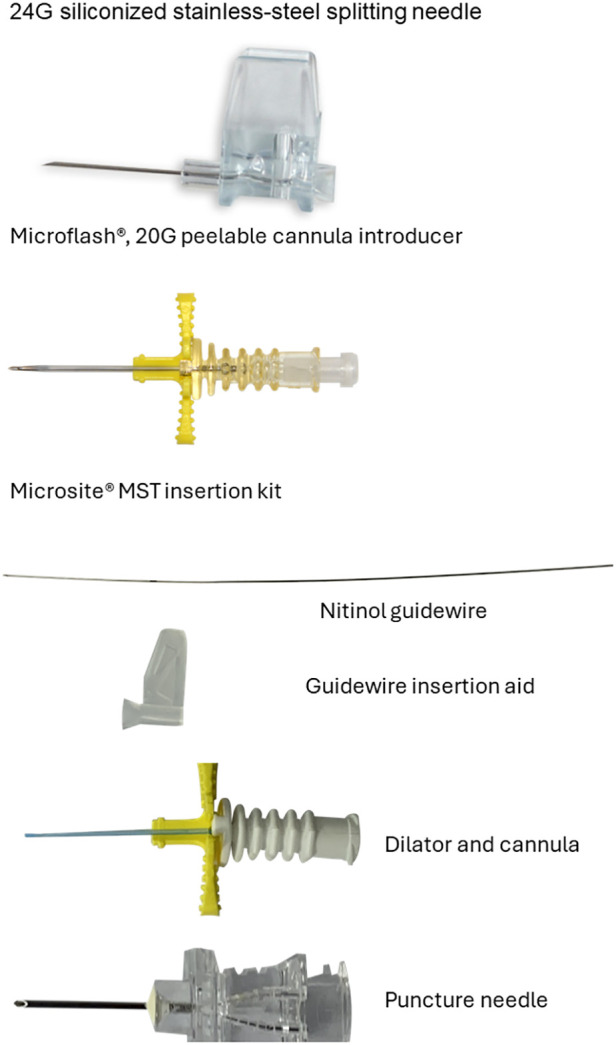
This study aims to assess the comparative effectiveness of a conventional splitting needle or a peelable cannula vs. the modified Seldinger technique (MST) by utilizing a dedicated micro-insertion kit across various clinically significant metrics, including insertion success, complications, and catheter-related infections.
We conducted a retrospective observational cohort study using an anonymized data set spanning 3 years (2017-2019) in a large tertiary-level neonatal intensive care unit in Qatar.
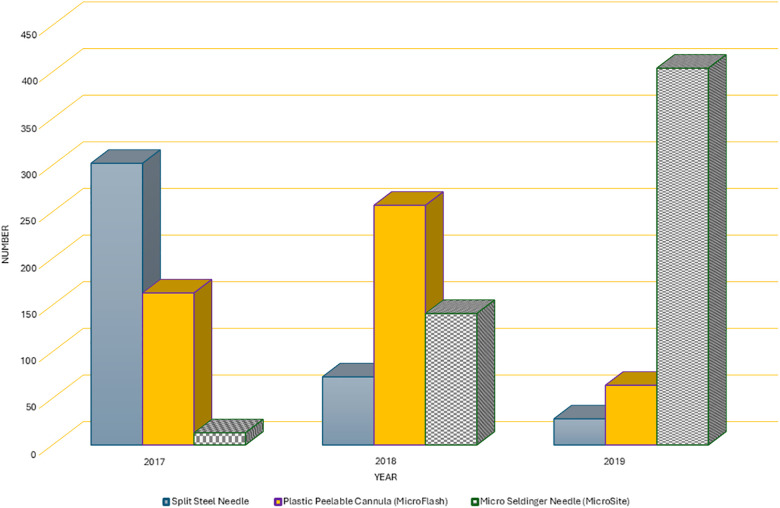
A total of 1,445 peripherally inserted central catheter (PICC) insertion procedures were included in the analysis, of which 1,285 (89%) were successful. The primary indication for insertion was mainly determined by the planned therapy duration, with the saphenous vein being the most frequently selected blood vessel. The patients exposed to MST were generally younger (7 ± 15 days vs. 11 ± 26 days), but exhibited similar mean weights and gestational ages. Although not statistically significant, the MST demonstrated slightly higher overall and first-attempt insertion success rates compared to conventional methods (91 vs. 88%). However, patients undergoing conventional insertion techniques experienced a greater incidence of catheter-related complications ( < 0.001). There were 39 cases of catheter-related bloodstream infections (CLABSI) in the conventional group (3.45/1,000 catheter days) and eight cases in the MST group (1.06/1,000 catheter days), indicating a statistically significant difference ( < 0.001). Throughout the study period, there was a noticeable shift toward the utilization of the MST kit for PICC insertions.
The study underscores the viability of MST facilitated by an all-in-one micro kit for neonatal PICC insertion. Utilized by adept and trained inserters, this approach is associated with improved first-attempt success rates, decreased catheter-related complications, and fewer incidences of CLABSI. However, while these findings are promising, it is imperative to recognize potential confounding factors. Therefore, additional prospective multicenter studies are recommended to substantiate these results and ascertain the comprehensive benefits of employing the all-in-one kit.
本研究旨在通过使用专用微插入套件,在包括插入成功率、并发症和导管相关感染等各种具有临床意义的指标方面,评估传统劈开式穿刺针或可剥离套管与改良塞丁格技术(MST)的相对有效性。
我们在卡塔尔一家大型三级新生儿重症监护病房,使用一个匿名数据集进行了一项回顾性观察队列研究,该数据集涵盖3年(2017 - 2019年)。
分析共纳入1445例外周静脉穿刺中心静脉置管(PICC)操作,其中1285例(89%)成功。插入的主要指征主要由计划的治疗持续时间决定,大隐静脉是最常选择的血管。接受MST的患者通常更年轻(7±15天对11±26天),但平均体重和胎龄相似。虽然无统计学意义,但与传统方法相比,MST的总体和首次尝试插入成功率略高(91%对88%)。然而,接受传统插入技术的患者发生导管相关并发症的发生率更高(<0.001)。传统组有39例导管相关血流感染(CLABSI)(3.45/1000导管日),MST组有8例(1.06/1000导管日),差异有统计学意义(<0.001)。在整个研究期间,PICC插入使用MST套件的情况有明显转变。
该研究强调了由一体化微套件辅助的MST用于新生儿PICC插入的可行性。由熟练且经过培训的插入人员使用,这种方法与提高首次尝试成功率、减少导管相关并发症以及降低CLABSI发生率相关。然而,虽然这些发现很有前景,但必须认识到潜在的混杂因素。因此,建议进行更多前瞻性多中心研究以证实这些结果,并确定使用一体化套件的综合益处。