Todman Henry, Helliwell Richard, King Liz, Blanchard Adam, Gray-Hammerton Charlotte J, Hooton Steven P, Baker Michelle, Margerison Jean, Wilson Paul, Dodd Christine E R, Morris Carol, Raman Sujatha, Hudson Chris, Kreft Jan-Ulrich, Hobman Jon L, Kypraios Theodore, Stekel Dov J
School of Biosciences, University of Nottingham, Sutton Bonington Campus, College Road, Loughborough, Leicestershire LE12 5RD UK.
School of Geography, University of Nottingham, University Park Campus, Nottingham, NG7 2RD UK.
NPJ Antimicrob Resist. 2024;2(1):13. doi: 10.1038/s44259-024-00029-4. Epub 2024 May 14.
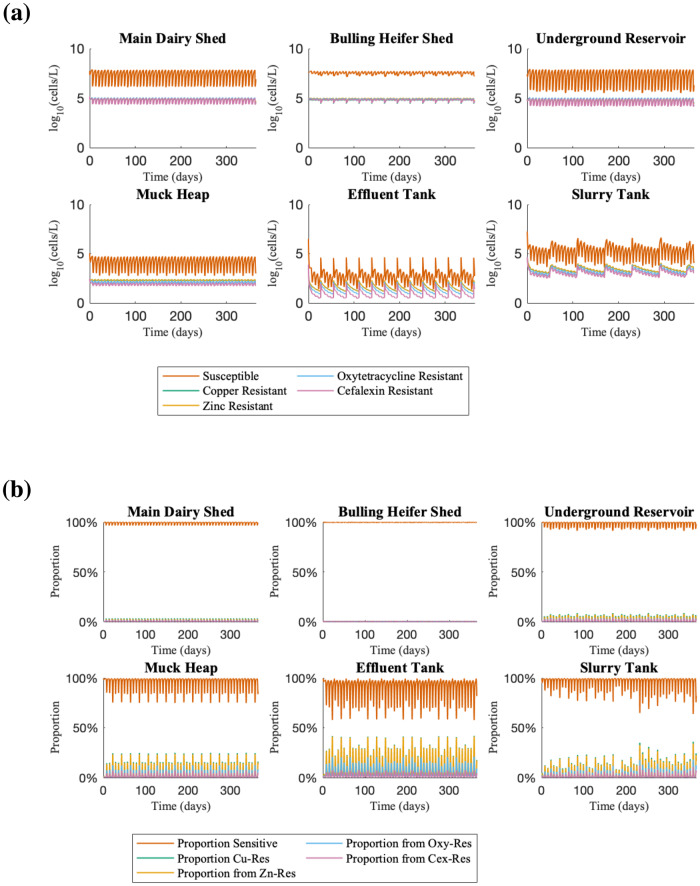
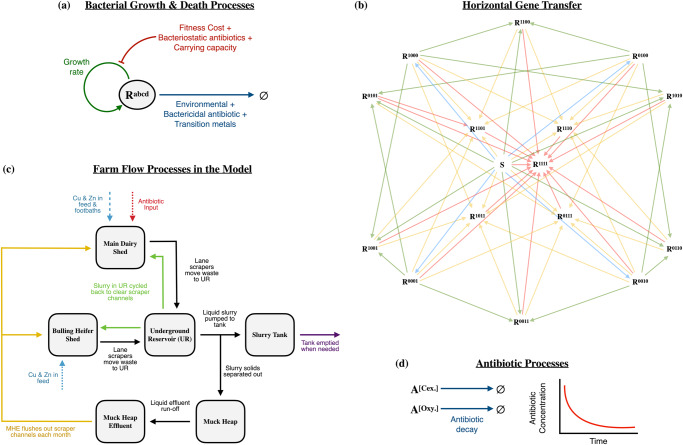
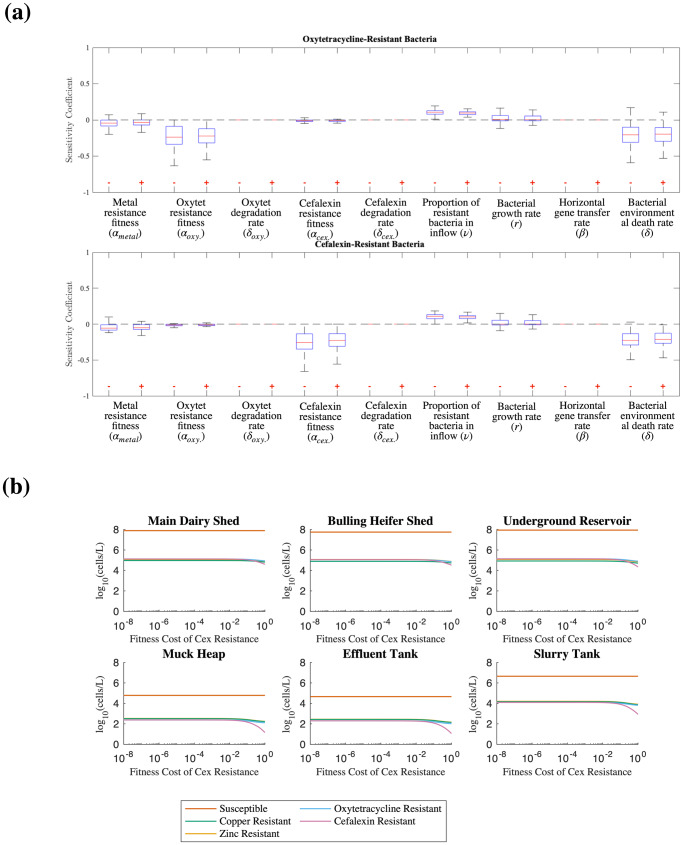
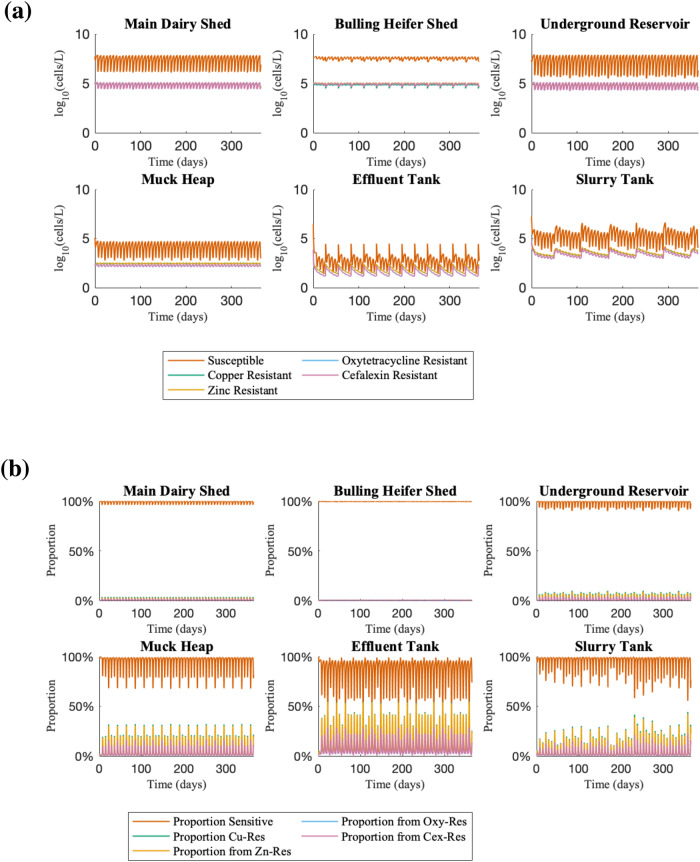
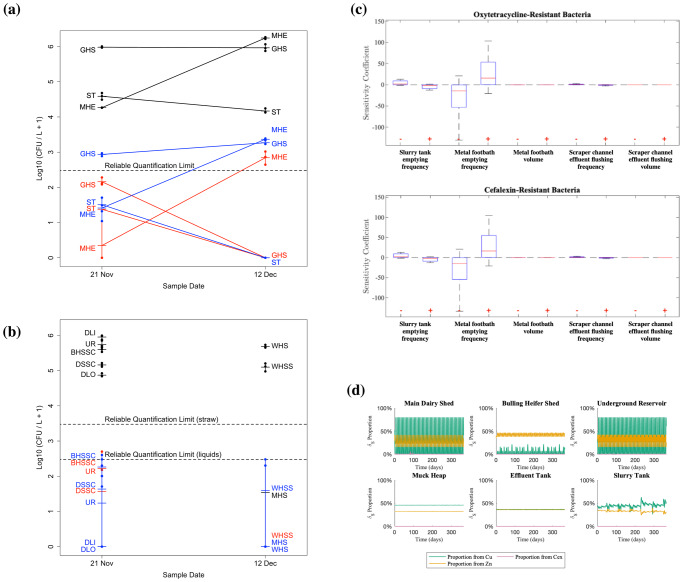
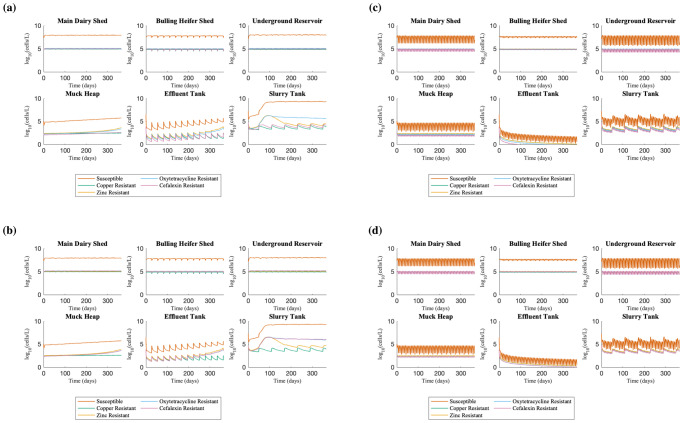
Dairy slurry is a major source of environmental contamination with antimicrobial resistant genes and bacteria. We developed mathematical models and conducted on-farm research to explore the impact of wastewater flows and management practices on antimicrobial resistance (AMR) in slurry. Temporal fluctuations in cephalosporin-resistant were observed and attributed to farm activities, specifically the disposal of spent copper and zinc footbath into the slurry system. Our model revealed that resistance should be more frequently observed with relevant determinants encoded chromosomally rather than on plasmids, which was supported by reanalysis of sequenced genomes from the farm. Additionally, lower resistance levels were predicted in conditions with lower growth and higher death rates. The use of muck heap effluent for washing dirty channels did not explain the fluctuations in cephalosporin resistance. These results highlight farm-specific opportunities to reduce AMR pollution, beyond antibiotic use reduction, including careful disposal or recycling of waste antimicrobial metals.
乳牛粪便浆是抗微生物耐药基因和细菌造成环境污染的主要来源。我们开发了数学模型并进行了农场研究,以探讨废水流量和管理措施对粪便浆中抗微生物耐药性(AMR)的影响。观察到对头孢菌素耐药性的时间波动,并将其归因于农场活动,特别是将用过的铜锌足浴液排放到粪便浆系统中。我们的模型显示,与位于质粒上的相关决定因素相比,在染色体上编码的相关决定因素应更频繁地观察到耐药性,农场测序基因组的重新分析支持了这一点。此外,预计在生长率较低和死亡率较高的条件下耐药水平较低。使用粪堆废水冲洗脏沟渠并不能解释头孢菌素耐药性的波动。这些结果突出了在减少抗生素使用之外,减少AMR污染的农场特定机会,包括谨慎处置或回收废弃的抗微生物金属。