Gutierrez Gilmar, Stephenson Callum, Eadie Jazmin, Asadpour Kimia, Alavi Nazanin
Department of Psychiatry, Faculty of Health Sciences, Queen's University, Kingston, ON, Canada.
Faculty of Education, Queen's University, Kingston, ON, Canada.
Front Psychiatry. 2024 May 7;15:1356773. doi: 10.3389/fpsyt.2024.1356773. eCollection 2024.
Online mental healthcare has gained significant attention due to its effectiveness, accessibility, and scalability in the management of mental health symptoms. Despite these advantages over traditional in-person formats, including higher availability and accessibility, issues with low treatment adherence and high dropout rates persist. Artificial intelligence (AI) technologies could help address these issues, through powerful predictive models, language analysis, and intelligent dialogue with users, however the study of these applications remains underexplored. The following mixed methods review aimed to supplement this gap by synthesizing the available evidence on the applications of AI in online mental healthcare.
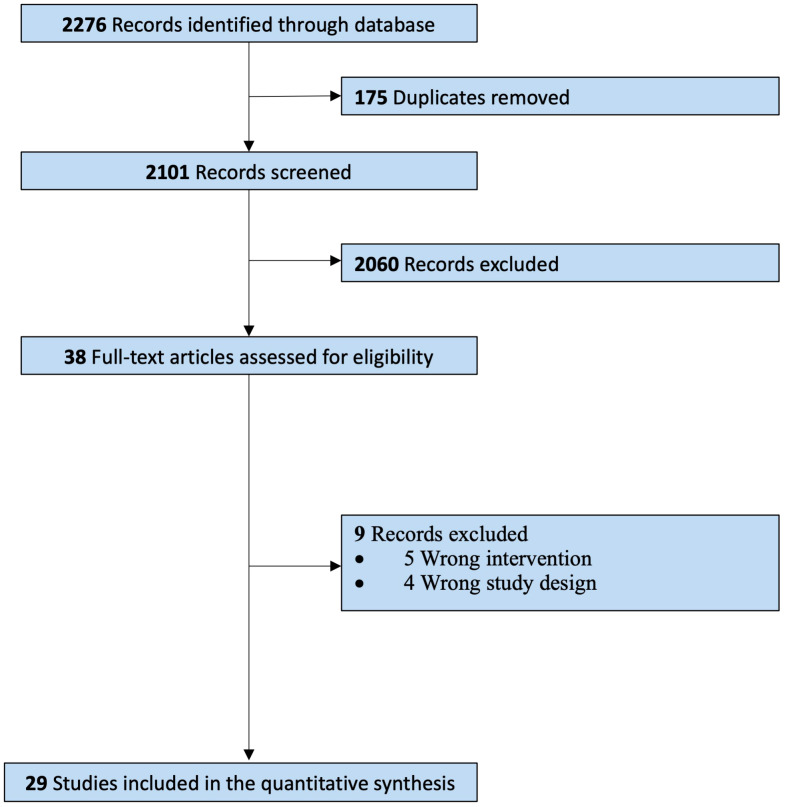
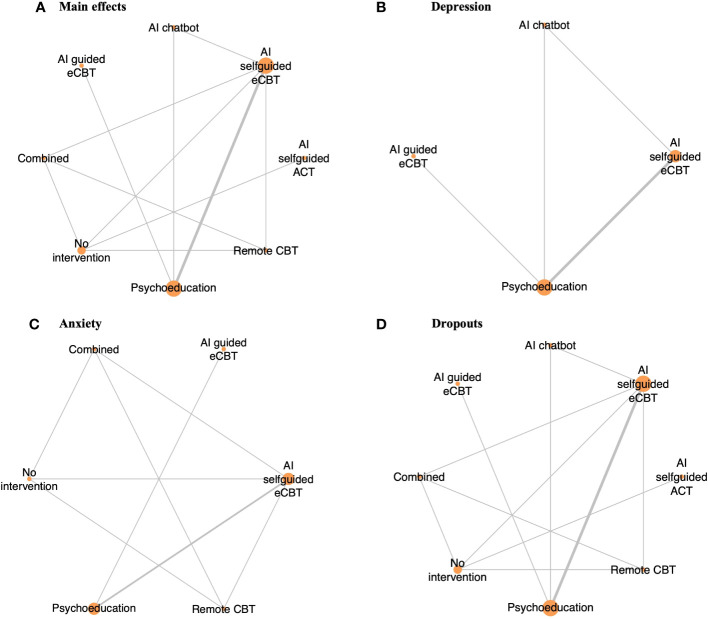
We searched the following databases: MEDLINE, CINAHL, PsycINFO, EMBASE, and Cochrane. This review included peer-reviewed randomized controlled trials, observational studies, non-randomized experimental studies, and case studies that were selected using the PRISMA guidelines. Data regarding pre and post-intervention outcomes and AI applications were extracted and analyzed. A mixed-methods approach encompassing meta-analysis and network meta-analysis was used to analyze pre and post-intervention outcomes, including main effects, depression, anxiety, and study dropouts. We applied the Cochrane risk of bias tool and the Grading of Recommendations Assessment, Development and Evaluation (GRADE) to assess the quality of the evidence.
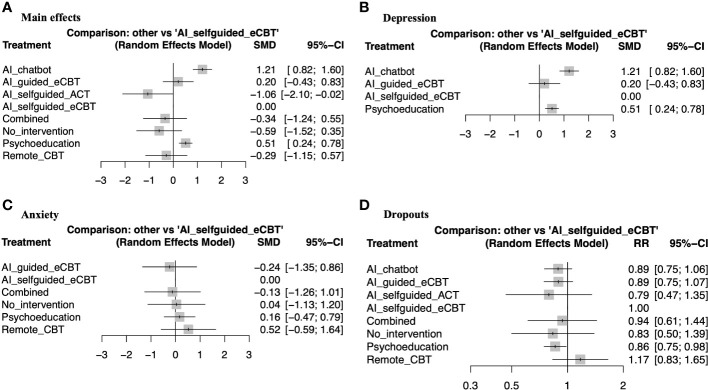
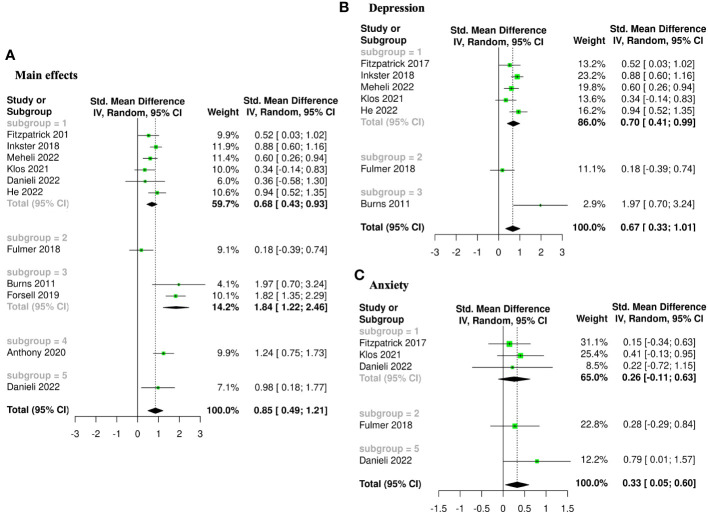
Twenty-nine studies were included revealing a variety of AI applications including triage, psychotherapy delivery, treatment monitoring, therapy engagement support, identification of effective therapy features, and prediction of treatment response, dropout, and adherence. AI-delivered self-guided interventions demonstrated medium to large effects on managing mental health symptoms, with dropout rates comparable to non-AI interventions. The quality of the data was low to very low.
The review supported the use of AI in enhancing treatment response, adherence, and improvements in online mental healthcare. Nevertheless, given the low quality of the available evidence, this study highlighted the need for additional robust and high-powered studies in this emerging field.
https://www.crd.york.ac.uk/prospero/display_record.php?RecordID=443575, identifier CRD42023443575.
在线心理医疗保健因其在心理健康症状管理方面的有效性、可及性和可扩展性而备受关注。尽管与传统面对面形式相比具有这些优势,包括更高的可用性和可及性,但治疗依从性低和辍学率高的问题仍然存在。人工智能(AI)技术可以通过强大的预测模型、语言分析以及与用户的智能对话来帮助解决这些问题,然而对这些应用的研究仍未得到充分探索。以下混合方法综述旨在通过综合关于人工智能在在线心理医疗保健中应用的现有证据来填补这一空白。
我们检索了以下数据库:MEDLINE、CINAHL、PsycINFO、EMBASE和Cochrane。本综述纳入了使用PRISMA指南筛选出的同行评审随机对照试验、观察性研究、非随机实验研究和案例研究。提取并分析了干预前后结果和人工智能应用的数据。采用包括荟萃分析和网络荟萃分析在内的混合方法来分析干预前后的结果,包括主要效应、抑郁、焦虑和研究辍学情况。我们应用Cochrane偏倚风险工具和推荐分级评估、制定与评价(GRADE)来评估证据质量。
纳入了29项研究,揭示了多种人工智能应用,包括分诊、心理治疗提供、治疗监测、治疗参与支持、有效治疗特征识别以及治疗反应、辍学和依从性预测。人工智能提供的自我引导干预对心理健康症状管理显示出中等至较大的效果,辍学率与非人工智能干预相当。数据质量低至极低。
该综述支持在增强治疗反应、依从性以及改善在线心理医疗保健方面使用人工智能。然而,鉴于现有证据质量较低,本研究强调了在这一新兴领域需要更多有力且有说服力的研究。
https://www.crd.york.ac.uk/prospero/display_record.php?RecordID=443575,标识符CRD42023443575。