Department of Gynecologic Oncology, Fudan University Shanghai Cancer Center, Shanghai, China.
Cancer Institute, Fudan University Shanghai Cancer Center, Shanghai, China.
Mol Cancer. 2024 May 22;23(1):111. doi: 10.1186/s12943-024-02025-8.
Poly (ADP-ribose) polymerase inhibitor (PARPi) resistance poses a significant challenge in ovarian carcinoma (OC). While the role of DOT1L in cancer and chemoresistance is acknowledged, its specific role in PARPi resistance remains unclear. This study aims to elucidate the molecular mechanism of DOT1L in PARPi resistance in OC patients.
This study analyzed the expression of DOT1L in PARPi-resistant cell lines compared to sensitive ones and correlated it with clinical outcomes in OC patients. Comprehensive in vitro and in vivo functional experiments were conducted using cellular and mouse models. Molecular investigations, including RNA sequencing, chromatin immunoprecipitation (ChIP) and Cleavage Under Targets and Tagmentation (CUT&Tag) assays, were employed to unravel the molecular mechanisms of DOT1L-mediated PARPi resistance.
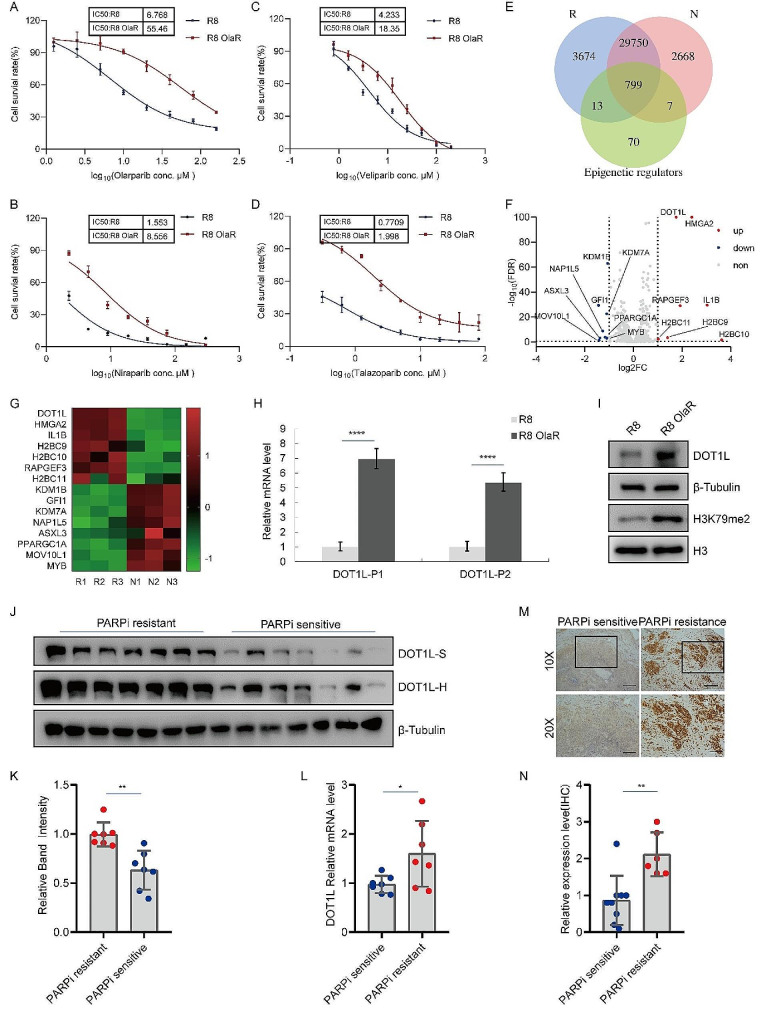
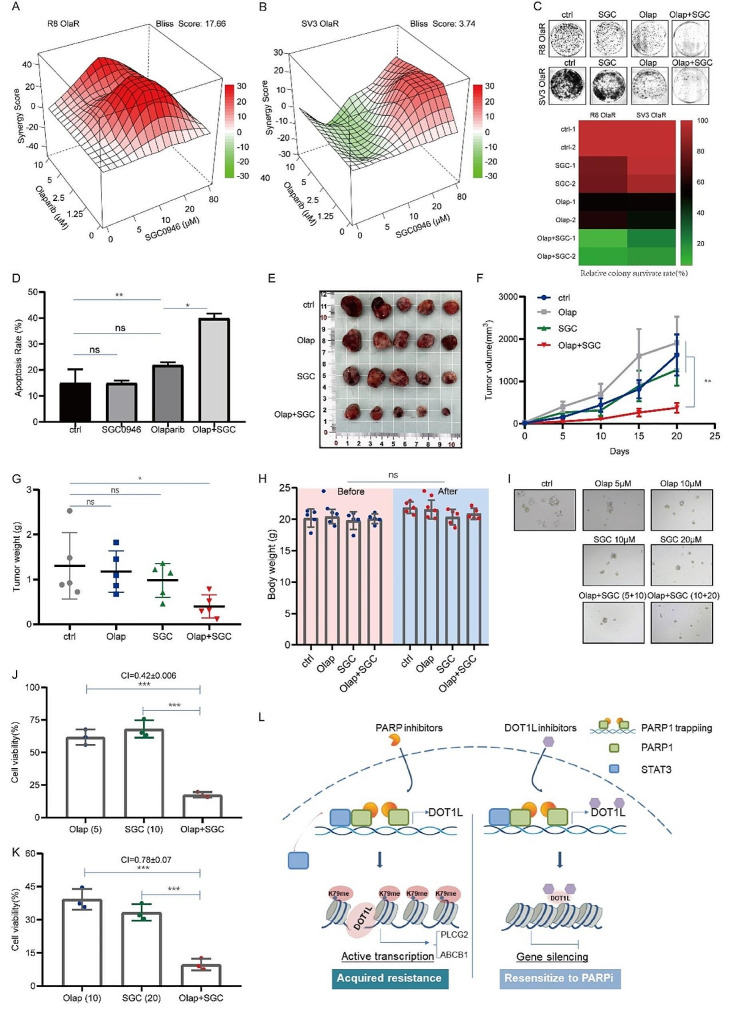
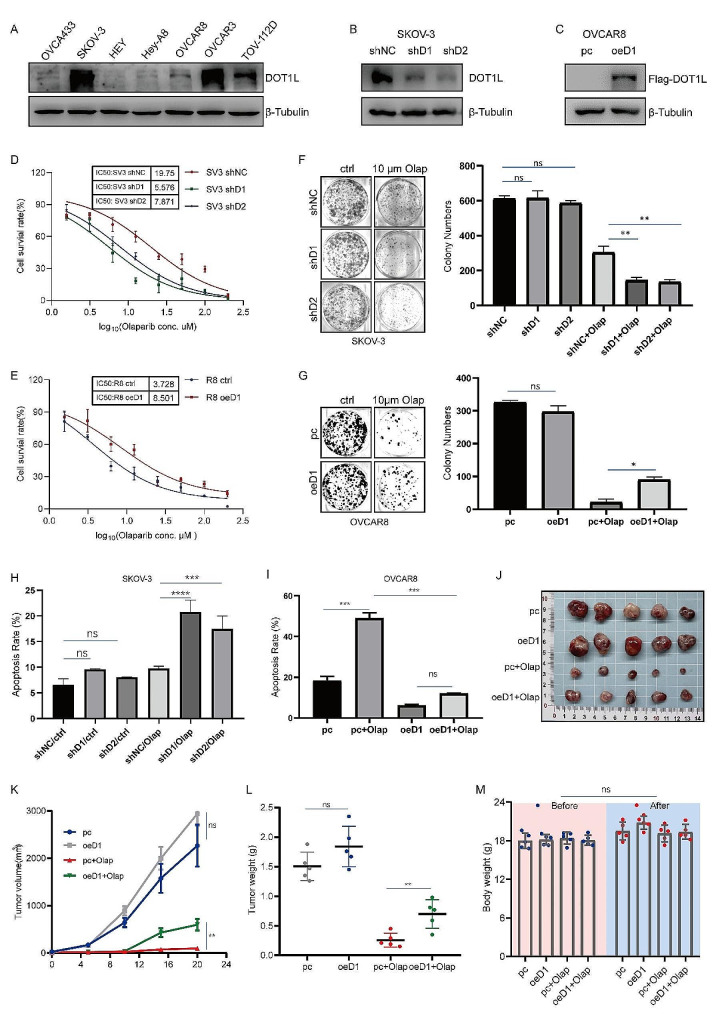
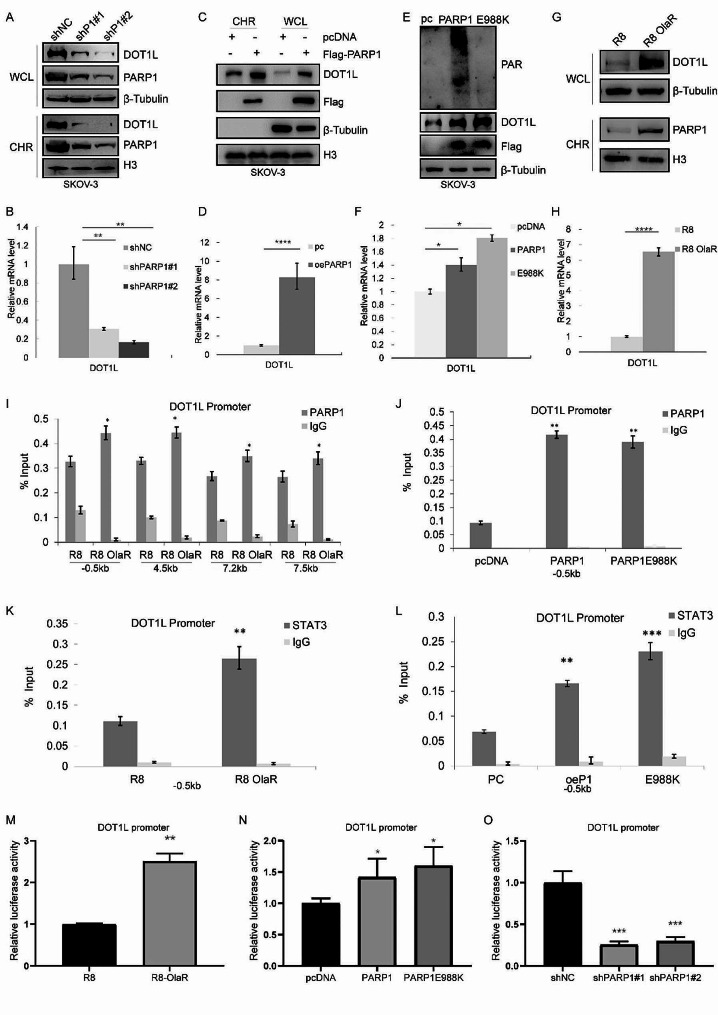
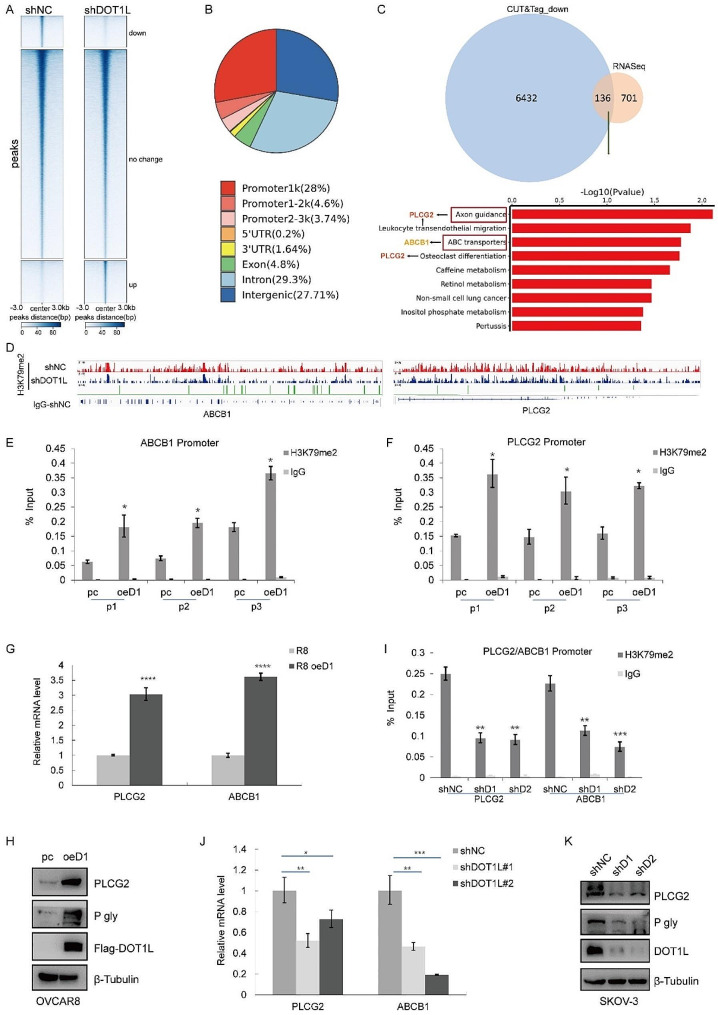
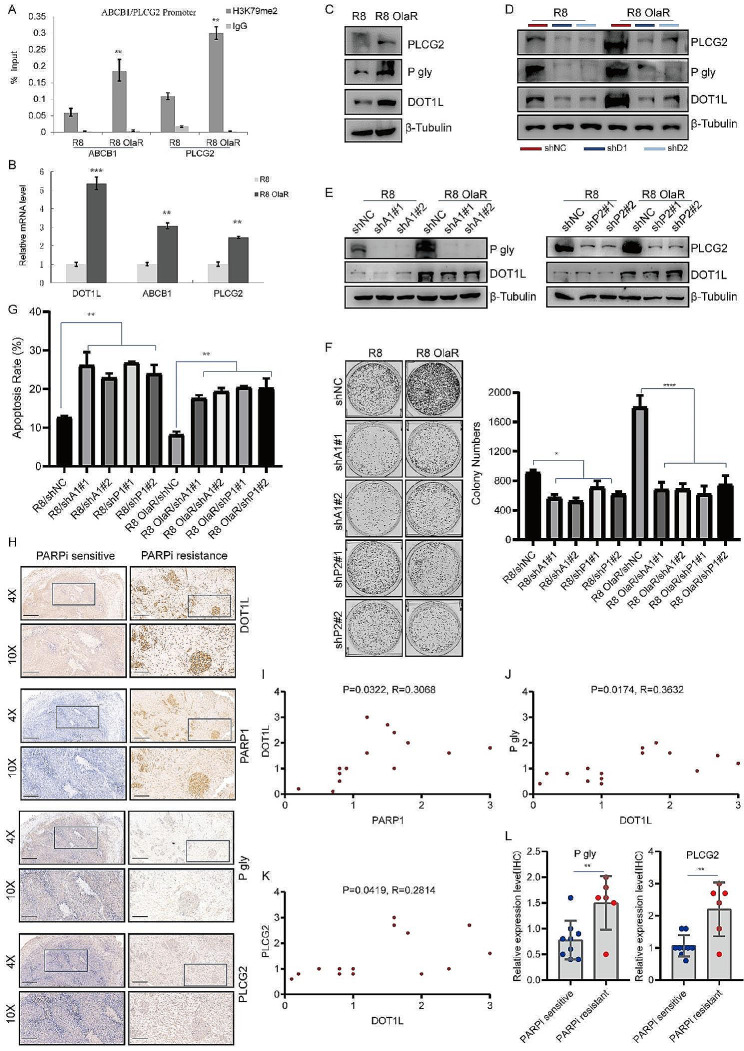
Our investigation revealed a robust correlation between DOT1L expression and clinical PARPi resistance in non-BRCA mutated OC cells. Upregulated DOT1L expression in PARPi-resistant tissues was associated with diminished survival in OC patients. Mechanistically, we identified that PARP1 directly binds to the DOT1L gene promoter, promoting transcription independently of its enzyme activity. PARP1 trapping induced by PARPi treatment amplified this binding, enhancing DOT1L transcription and contributing to drug resistance. Sequencing analysis revealed that DOT1L plays a crucial role in the transcriptional regulation of PLCG2 and ABCB1 via H3K79me2. This established the PARP1-DOT1L-PLCG2/ABCB1 axis as a key contributor to PARPi resistance. Furthermore, we discovered that combining a DOT1L inhibitor with PARPi demonstrated a synergistic effect in both cell line-derived xenograft mouse models (CDXs) and patient-derived organoids (PDOs).
Our results demonstrate that DOT1L is an independent prognostic marker for OC patients. The PARP1-DOT1L/H3K79me2-PLCG2/ABCB1 axis is identified as a pivotal contributor to PARPi resistance. Targeted inhibition of DOT1L emerges as a promising therapeutic strategy for enhancing PARPi treatment outcomes in OC patients.
聚(ADP-核糖)聚合酶抑制剂(PARPi)耐药在卵巢癌(OC)中是一个重大挑战。虽然 DOT1L 在癌症和化疗耐药中的作用已得到认可,但它在 PARPi 耐药中的具体作用尚不清楚。本研究旨在阐明 DOT1L 在 OC 患者 PARPi 耐药中的分子机制。
本研究分析了 PARPi 耐药细胞系与敏感细胞系中 DOT1L 的表达,并将其与 OC 患者的临床结局相关联。使用细胞和小鼠模型进行了全面的体外和体内功能实验。采用 RNA 测序、染色质免疫沉淀(ChIP)和靶向切割和标记(CUT&Tag)分析等分子研究方法,揭示了 DOT1L 介导的 PARPi 耐药的分子机制。
我们的研究发现,在非 BRCA 突变 OC 细胞中,DOT1L 的表达与临床 PARPi 耐药之间存在很强的相关性。PARPi 耐药组织中 DOT1L 的上调与 OC 患者的生存时间缩短有关。在机制上,我们发现 PARP1 直接结合 DOT1L 基因启动子,在不依赖其酶活性的情况下促进转录。PARPi 治疗引起的 PARP1 捕获增强了这种结合,增强了 DOT1L 的转录,并导致药物耐药。测序分析表明,DOT1L 通过 H3K79me2 在 PLCG2 和 ABCB1 的转录调控中发挥关键作用。这确立了 PARP1-DOT1L-PLCG2/ABCB1 轴是 PARPi 耐药的关键贡献者。此外,我们发现,DOT1L 抑制剂与 PARPi 联合使用在细胞系衍生的异种移植小鼠模型(CDXs)和患者来源的类器官(PDOs)中均表现出协同作用。
我们的研究结果表明,DOT1L 是 OC 患者的独立预后标志物。PARP1-DOT1L/H3K79me2-PLCG2/ABCB1 轴被确定为 PARPi 耐药的关键贡献者。靶向抑制 DOT1L 可能成为增强 OC 患者 PARPi 治疗效果的一种有前途的治疗策略。