Yang Haotian, Zhao Yue, Ren Bingnan, Wu Yin, Qiu Zhihong, Cheng Yan, Qiu Bo
Department of Pharmacy, Hebei Key Laboratory of Clinical Pharmacy, Hebei General Hospital, Shijiazhuang 050051, China.
Department of Medical Oncology, Hebei General Hospital, Shijiazhuang 050051, China.
Heliyon. 2024 May 11;10(10):e31106. doi: 10.1016/j.heliyon.2024.e31106. eCollection 2024 May 30.
Poria acid (PAC) is a triterpene compound found in a traditional Chinese medicine (TCM). The current study aims to explore the therapeutic effects and potential mechanisms of PAC on the migration and proliferation of human renal cell carcinoma (RCC) cells as well as tumor growth in animal model.
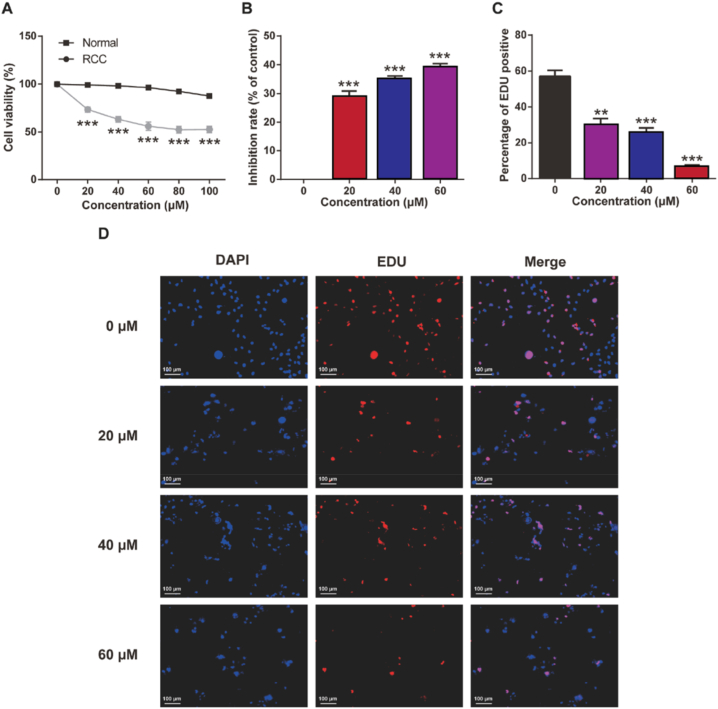
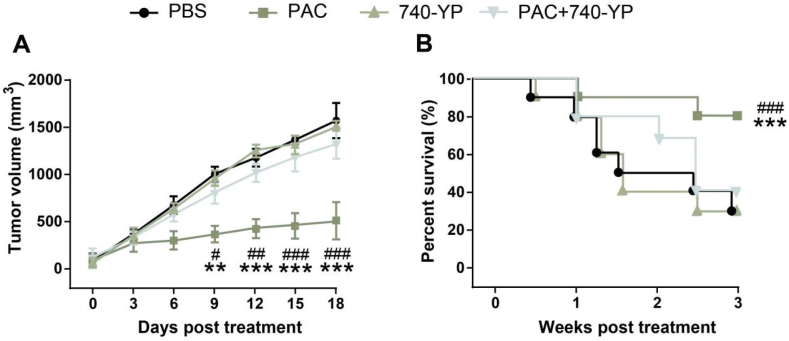
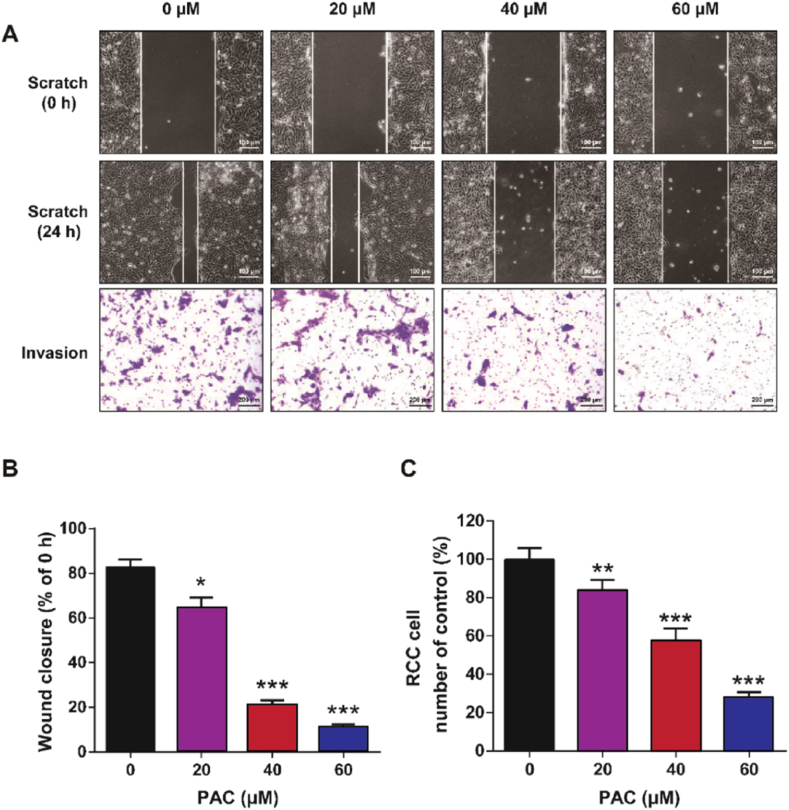
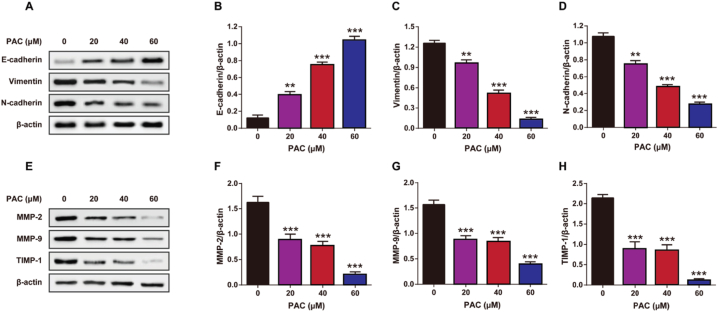
Cell viability and proliferative capacity of normal renal cells and RCC cells were investigated by MTT assay. In addition, 786-O cells were divided into four groups and treated with different concentrations of PAC (0, 20, 40, and 60 μM) for 48 h. Cell scratch test and cell invasion assay were performed to evaluate the effects of PAC on the invasion and migration of RCC cells, respectively. The effects of PAC on apoptosis of RCC cells and expression levels of PI3K/Akt/NF-kB signaling pathway-related biomarkers were investigated using TUNEL staining and Western blotting methods, respectively. Effects of PAC on the inhibitory activity of RCC tumor in mice were evaluated in a 786-O CDX model.
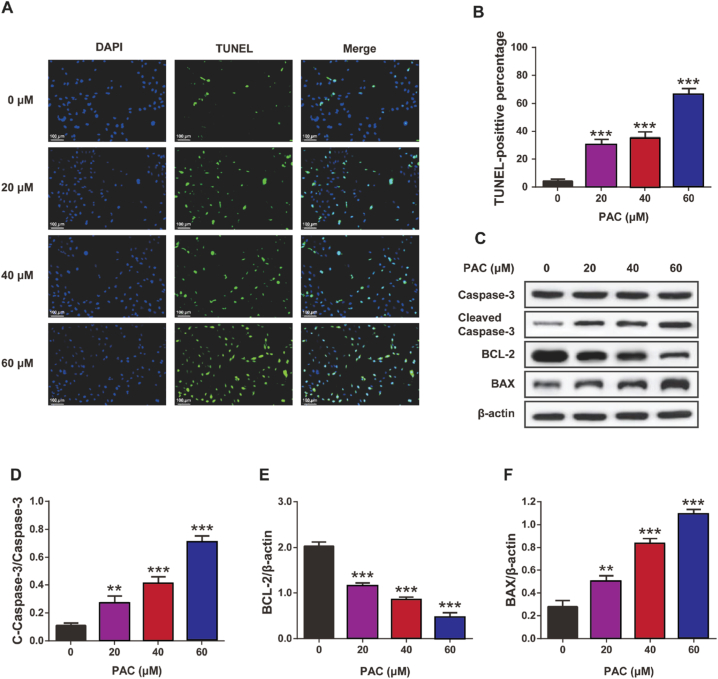
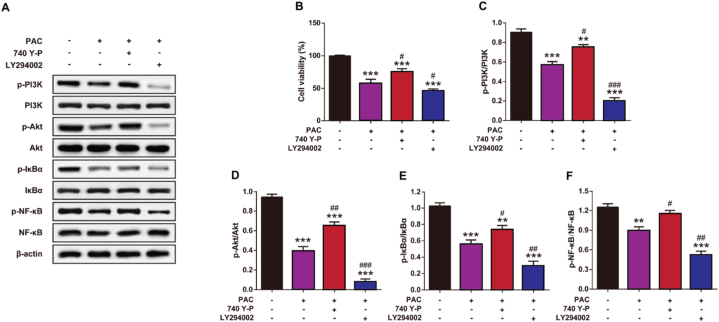
The study found that PAC inhibited the viability of RCC cells in a dose-dependent manner, as demonstrated by cell assays ( < 0.05). However, PAC showed no significant inhibitory effect on normal renal cells ( > 0.05). PAC also significantly inhibited the migration and invasion of RCC via EMT/MMP signaling pathways ( < 0.05). Immunofluorescence and immunoblotting results showed that PAC induced the apoptosis of RCC, which was accompanied by changes in the expression levels of apoptosis-related proteins ( < 0.05). Moreover, PAC significantly downregulated the PI3K/Akt/NF-kB signaling pathway in a concentration-dependent manner ( < 0.05). The effect of PAC on RCC apoptosis was dramatically reversed by 740Y-P (PI3K agonist) ( < 0.05) but significantly enhanced in the presence of LY294002 (PI3K inhibitor) ( < 0.05). The results of in vivo experiment also demonstrated that the antitumor activity of PAC was achieved by affecting the PI3K/Akt/NF-kB signaling pathway.
PAC can effectively suppress the proliferation, invasion and migration of RCC cells, and exhibit anti-tumor effects in RCC model by inhibiting the PI3K/Akt/NF-kB signaling pathway.
茯苓酸(PAC)是一种存在于中药中的三萜类化合物。本研究旨在探讨PAC对人肾细胞癌(RCC)细胞迁移和增殖以及动物模型中肿瘤生长的治疗作用和潜在机制。
采用MTT法研究正常肾细胞和RCC细胞的细胞活力和增殖能力。此外,将786-O细胞分为四组,分别用不同浓度的PAC(0、20、40和60 μM)处理48小时。分别进行细胞划痕试验和细胞侵袭试验,以评估PAC对RCC细胞侵袭和迁移的影响。分别采用TUNEL染色和Western印迹法研究PAC对RCC细胞凋亡及PI3K/Akt/NF-κB信号通路相关生物标志物表达水平的影响。在786-O CDX模型中评估PAC对小鼠RCC肿瘤抑制活性的影响。
研究发现,PAC以剂量依赖性方式抑制RCC细胞的活力,细胞试验表明差异有统计学意义(P<0.05)。然而,PAC对正常肾细胞无明显抑制作用(P>0.05)。PAC还通过EMT/MMP信号通路显著抑制RCC的迁移和侵袭(P<0.05)。免疫荧光和免疫印迹结果表明,PAC诱导RCC细胞凋亡,并伴有凋亡相关蛋白表达水平的变化(P<0.05)。此外,PAC以浓度依赖性方式显著下调PI3K/Akt/NF-κB信号通路(P<0.05)。740Y-P(PI3K激动剂)显著逆转了PAC对RCC细胞凋亡的作用(P<0.05),而LY294002(PI3K抑制剂)存在时作用显著增强(P<0.05)。体内实验结果也表明,PAC的抗肿瘤活性是通过影响PI3K/Akt/NF-κB信号通路实现的。
PAC可有效抑制RCC细胞的增殖、侵袭和迁移,并通过抑制PI3K/Akt/NF-κB信号通路在RCC模型中发挥抗肿瘤作用。