School of Geography, Earth and Environmental Sciences, University of Birmingham, Edgbaston, Birmingham B15 2TT, UK; Institute for Global Innovation, University of Birmingham, Edgbaston, Birmingham B15 2TT, UK; Birmingham Institute for Sustainability and Climate Action (BISCA), University of Birmingham, Edgbaston, Birmingham B15 2TT, UK; Ecologie des Hydrosystèmes Naturels et Anthropisés (LEHNA), Université Claude Bernard Lyon 1, Lyon, CNRS, ENTPE, UMR5023, 69622 Villeurbanne, France.
School of Geography, Earth and Environmental Sciences, University of Birmingham, Edgbaston, Birmingham B15 2TT, UK; Institute for Global Innovation, University of Birmingham, Edgbaston, Birmingham B15 2TT, UK.
Cell Rep Med. 2024 Jun 18;5(6):101581. doi: 10.1016/j.xcrm.2024.101581. Epub 2024 May 22.
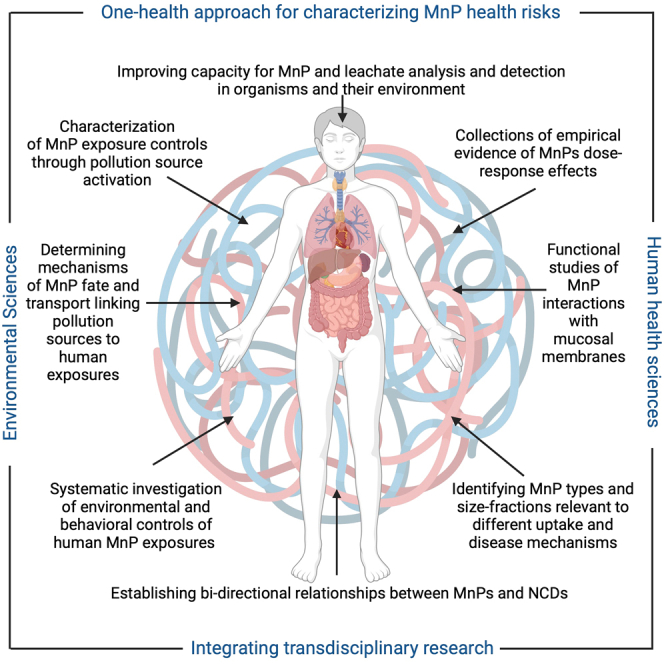
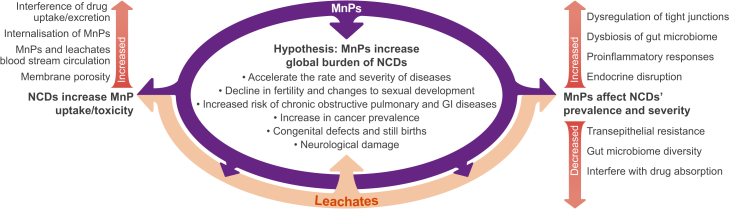
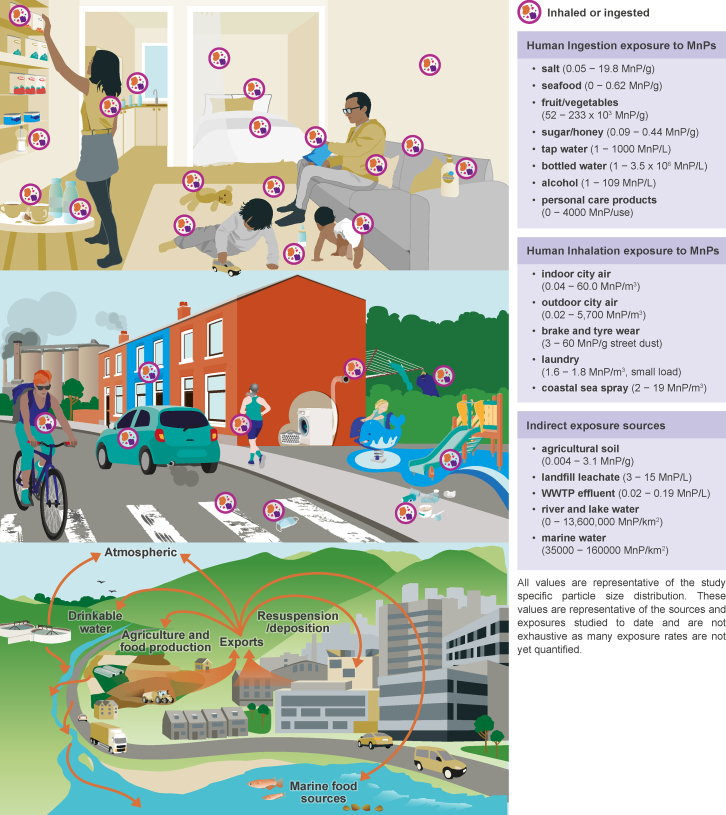
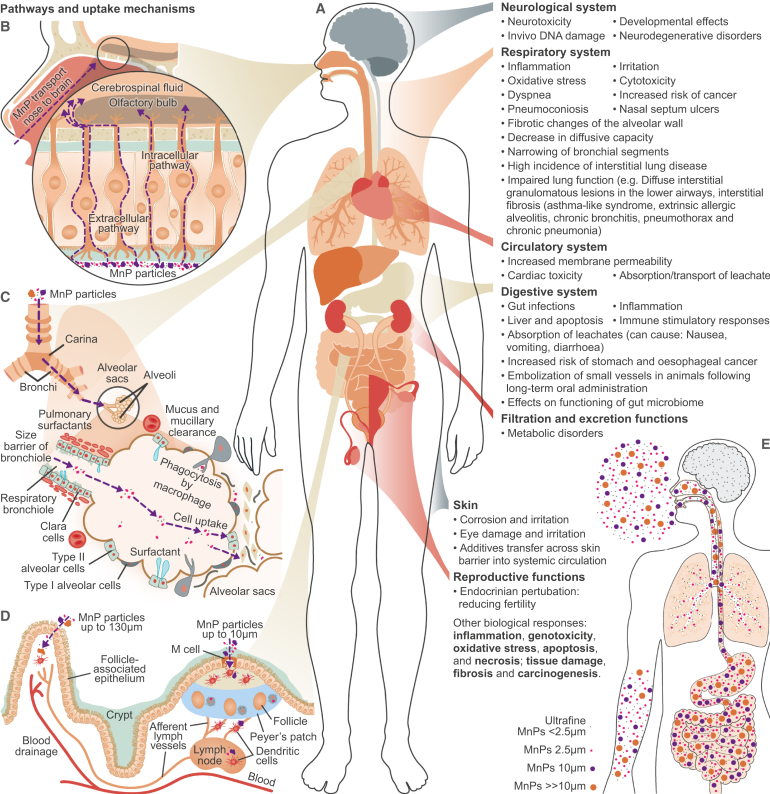
Non-communicable diseases (NCD) constitute one of the highest burdens of disease globally and are associated with inflammatory responses in target organs. There is increasing evidence of significant human exposure to micro- and nanoplastics (MnPs). This review of environmental MnP exposure and health impacts indicates that MnP particles, directly and indirectly through their leachates, may exacerbate inflammation. Meanwhile, persistent inflammation associated with NCDs in gastrointestinal and respiratory systems potentially increases MnP uptake, thus influencing MnP access to distal organs. Consequently, a future increase in MnP exposure potentially augments the risk and severity of NCDs. There is a critical need for an integrated one-health approach to human health and environmental research for assessing the drivers of human MnP exposure and their bidirectional links with NCDs. Assessing these risks requires interdisciplinary efforts to identify and link drivers of environmental MnP exposure and organismal uptake to studies of impacted disease mechanisms and health outcomes.
非传染性疾病(NCD)是全球疾病负担最高的疾病之一,与靶器官的炎症反应有关。越来越多的证据表明,人类大量接触到微塑料和纳米塑料(MnP)。本综述探讨了环境 MnP 暴露与健康影响,结果表明 MnP 颗粒及其浸出物可能直接或间接加剧炎症。与此同时,与胃肠道和呼吸系统的 NCD 相关的持续炎症可能会增加 MnP 的摄取,从而影响 MnP 进入远端器官。因此,未来 MnP 暴露的增加可能会增加 NCD 的风险和严重程度。人类健康和环境研究需要采取综合的“同一健康”方法,以评估人类 MnP 暴露的驱动因素及其与 NCD 的双向联系。评估这些风险需要跨学科的努力,以确定和联系环境 MnP 暴露和生物体摄取的驱动因素,以研究受影响的疾病机制和健康结果。