Silva Fábio, Garrido Marta I, Soares Sandra C
William James Center for Research, University of Aveiro, Aveiro, Portugal.
Melbourne School of Psychological Sciences, The University of Melbourne, Vic, Australia.
Q J Exp Psychol (Hove). 2025 Jun;78(6):1124-1138. doi: 10.1177/17470218241258209. Epub 2024 Jul 26.
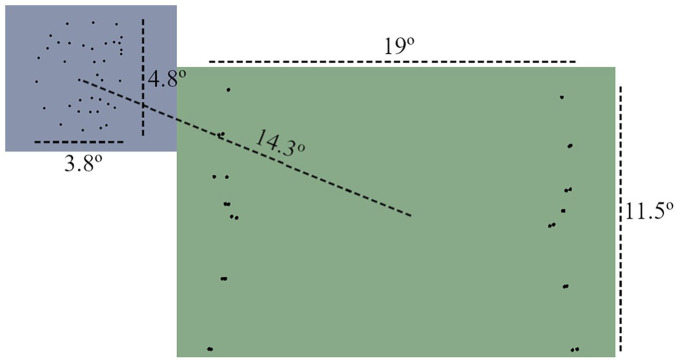
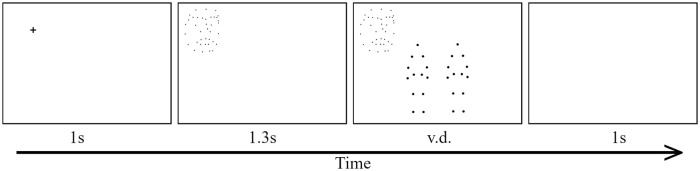
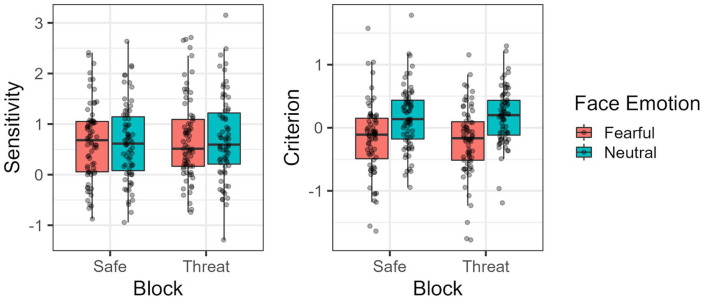
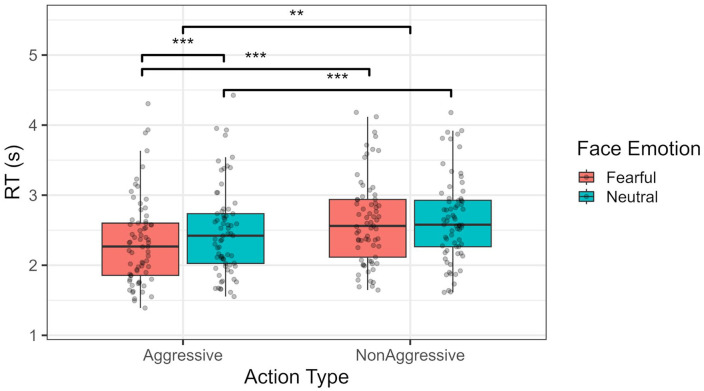
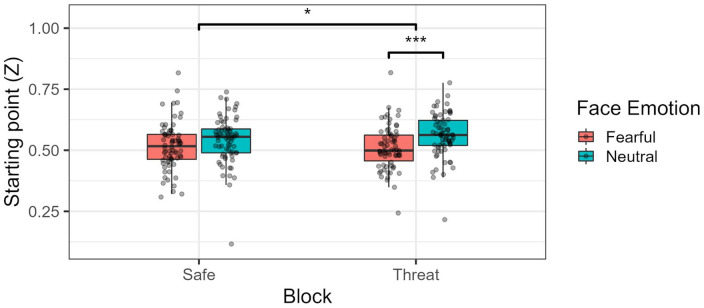
Contextual cues and emotional states carry expectations and biases that are used to attribute meaning to what we see. In addition, emotional states, such as anxiety, shape our visual systems, increasing overall, and particularly threat-related, sensitivity. It remains unclear, however, how anxiety interacts with additional cues when categorising sensory input. This is especially important in social scenarios where ambiguous gestures are commonplace, thus requiring the integration of cues for a proper interpretation. To this end, we decided to assess how states of anxiety might bias the perception of potentially aggressive social interactions, and how external cues are incorporated in this process. Participants ( = 71) were tasked with signalling the presence of aggression in ambiguous social interactions. Simultaneously, an observer (facial expression) reacted (by showing an emotional expression) to this interaction. Importantly, participants performed this task under safety and threat of shock conditions. Decision measures and eye-tracking data were collected. Our results showed that threat of shock did not affect sensitivity nor criterion when detecting aggressive interactions. The same pattern was observed for response times. Drift diffusion modelling analysis, however, suggested quicker evidence accumulation when under threat. Finally, dwell times over the observer were higher when under threat, indicating a possible association between anxiety states and a bias towards potentially threat-related indicators. Future probing into this topic remains a necessity to better explain the current findings.
情境线索和情绪状态带有期望和偏见,这些期望和偏见被用来赋予我们所看到的事物意义。此外,诸如焦虑等情绪状态会塑造我们的视觉系统,提高整体尤其是与威胁相关的敏感度。然而,尚不清楚焦虑在对感官输入进行分类时如何与其他线索相互作用。这在社交场景中尤为重要,在社交场景中模糊的手势很常见,因此需要整合线索才能进行正确解读。为此,我们决定评估焦虑状态如何可能使对潜在攻击性社交互动的感知产生偏差,以及外部线索在这一过程中是如何被纳入的。参与者(n = 71)的任务是在模糊的社交互动中表明是否存在攻击性。同时,一名观察者(面部表情)对这种互动做出反应(通过展示一种情绪表情)。重要的是,参与者在安全和电击威胁条件下完成这项任务。收集了决策指标和眼动追踪数据。我们的结果表明,电击威胁在检测攻击性互动时既不影响敏感度也不影响标准。反应时间也呈现相同模式。然而,漂移扩散模型分析表明,在受到威胁时证据积累得更快。最后,在受到威胁时对观察者的注视时间更长,这表明焦虑状态与对潜在威胁相关指标的偏差之间可能存在关联。未来对这一主题进行深入探究仍然很有必要,以便更好地解释当前的研究结果。