Lupi Lorenzo, Vitiello Adriana, Parolin Cristina, Calistri Arianna, Garzino-Demo Alfredo
Department of Molecular Medicine, University of Padova, 35121 Padova, Italy.
Department of Microbial Pathogenesis, School of Dentistry, University of Maryland, Baltimore, MD 21201, USA.
Pathogens. 2024 May 8;13(5):388. doi: 10.3390/pathogens13050388.
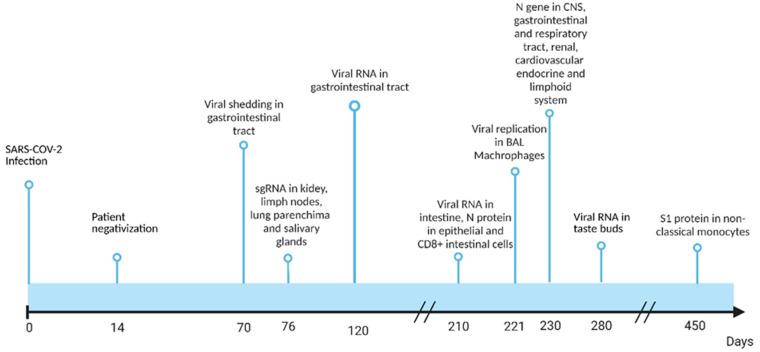
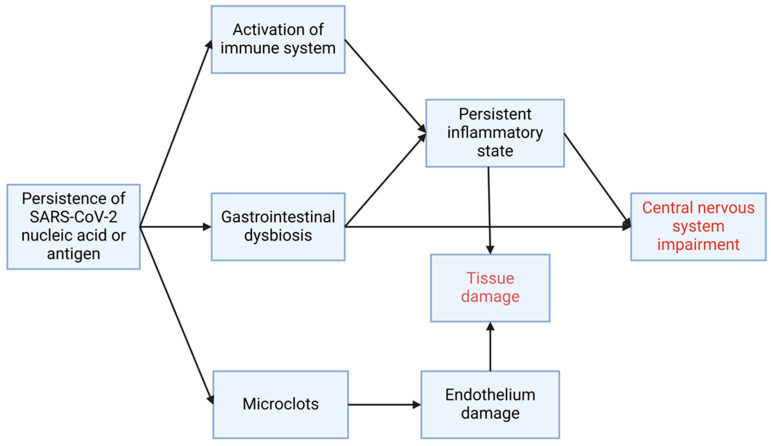
The infection by severe acute respiratory syndrome coronavirus 2 (SARS-CoV-2) is associated not only with the development of acute disease but also with long-term symptoms or post-acute sequelae of SARS-CoV-2 (PASC). Multiple lines of evidence support that some viral antigens and RNA can persist for up to 15 months in multiple organs in the body, often after apparent clearance from the upper respiratory system, possibly leading to the persistence of symptoms. Activation of the immune system to viral antigens is observed for a prolonged time, providing indirect evidence of the persistence of viral elements after acute infection. In the gastrointestinal tract, the persistence of some antigens could stimulate the immune system, shaping the local microbiota with potential systemic effects. All of these interactions need to be investigated, taking into account predisposing factors, multiplicity of pathogenic mechanisms, and stratifying populations of vulnerable individuals, particularly women, children, and immunocompromised individuals, where SARS-CoV-2 may present additional challenges.
严重急性呼吸综合征冠状病毒2(SARS-CoV-2)感染不仅与急性疾病的发生有关,还与SARS-CoV-2的长期症状或急性后遗症(PASC)有关。多条证据支持,一些病毒抗原和RNA在体内多个器官中可持续长达15个月,通常是在上呼吸道系统明显清除病毒之后,这可能导致症状持续存在。长时间观察到免疫系统对病毒抗原的激活,这为急性感染后病毒成分的持续存在提供了间接证据。在胃肠道中,一些抗原的持续存在可能刺激免疫系统,塑造局部微生物群,产生潜在的全身影响。所有这些相互作用都需要进行研究,同时要考虑到易感因素、致病机制的多样性以及对脆弱个体群体进行分层,特别是妇女、儿童和免疫功能低下的个体,SARS-CoV-2可能给他们带来额外的挑战。