State Key Laboratory for Animal Disease Control and Prevention, Harbin Veterinary Research Institute, Chinese Academy of Agricultural Sciences, Harbin, China.
Institute of Western Agriculture, Chinese Academy of Agricultural Sciences, Xinjiang, China.
PLoS Pathog. 2024 May 24;20(5):e1012266. doi: 10.1371/journal.ppat.1012266. eCollection 2024 May.
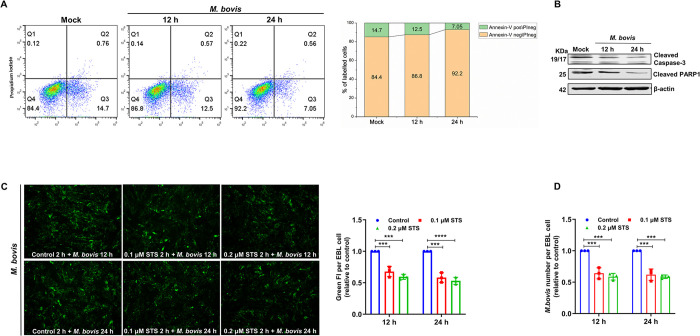
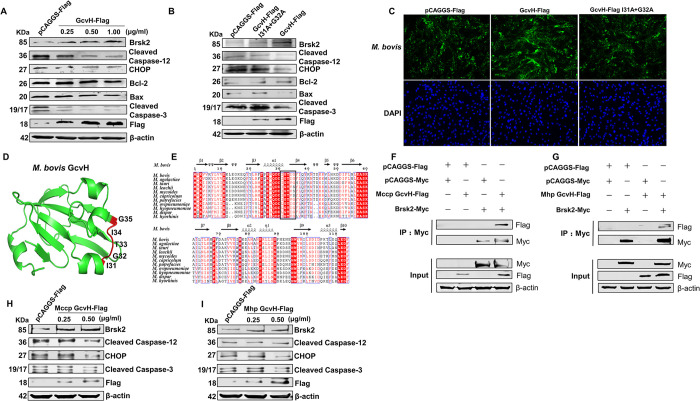
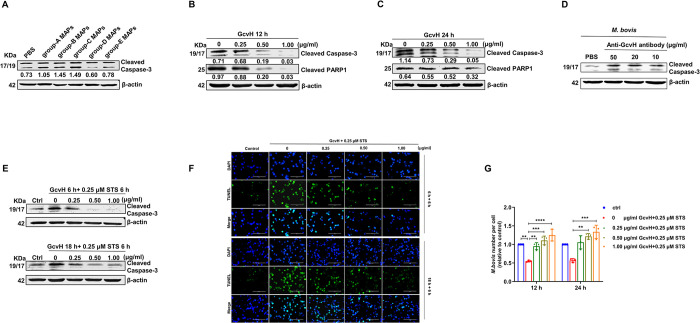
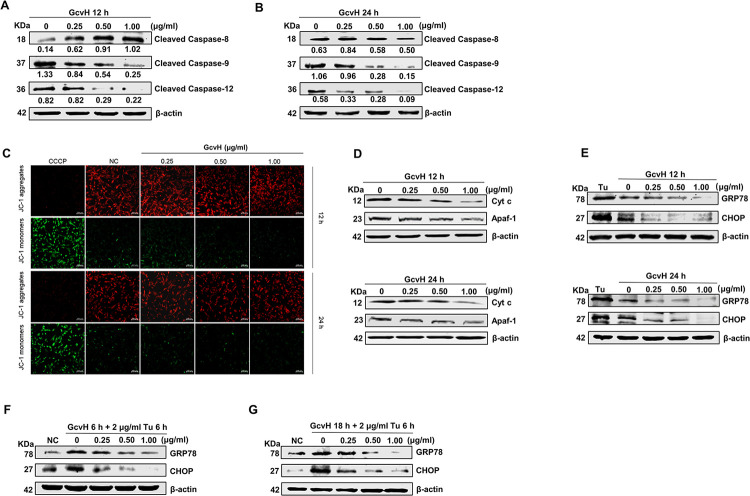
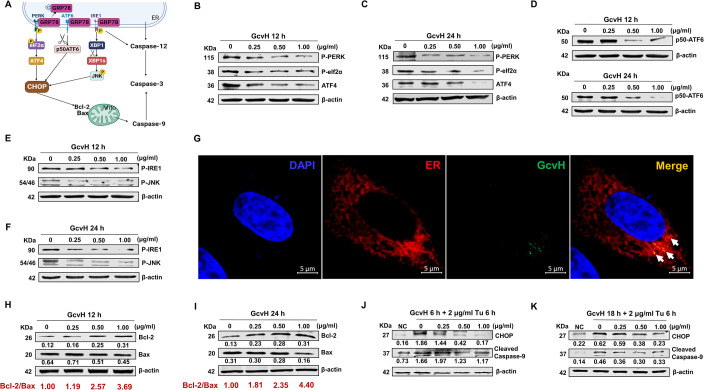
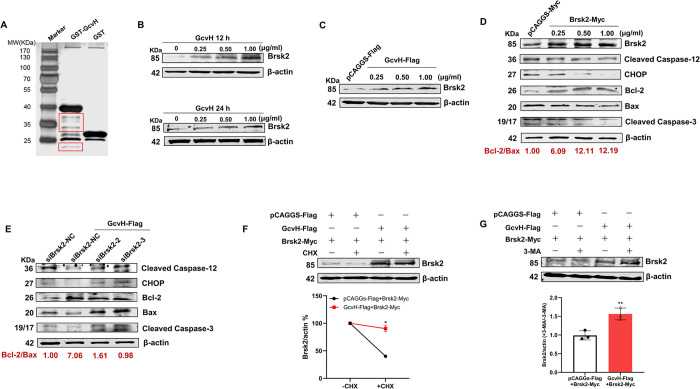
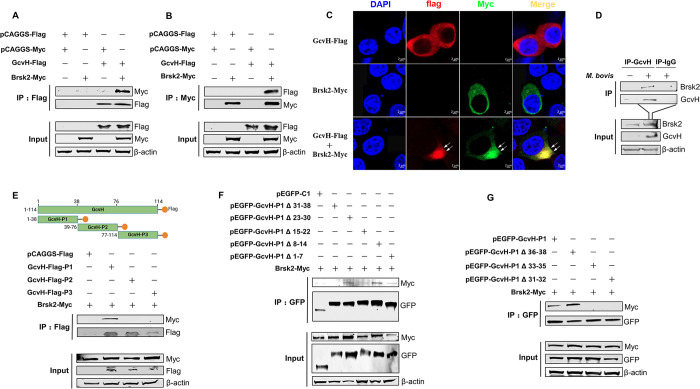
Mycoplasmas are minimal but notorious bacteria that infect humans and animals. These genome-reduced organisms have evolved strategies to overcome host apoptotic defense and establish persistent infection. Here, using Mycoplasma bovis as a model, we demonstrate that mycoplasma glycine cleavage system (GCS) H protein (GcvH) targets the endoplasmic reticulum (ER) to hijack host apoptosis facilitating bacterial infection. Mechanically, GcvH interacts with the ER-resident kinase Brsk2 and stabilizes it by blocking its autophagic degradation. Brsk2 subsequently disturbs unfolded protein response (UPR) signaling, thereby inhibiting the key apoptotic molecule CHOP expression and ER-mediated intrinsic apoptotic pathway. CHOP mediates a cross-talk between ER- and mitochondria-mediated intrinsic apoptosis. The GcvH N-terminal amino acid 31-35 region is necessary for GcvH interaction with Brsk2, as well as for GcvH to exert anti-apoptotic and potentially pro-infective functions. Notably, targeting Brsk2 to dampen apoptosis may be a conserved strategy for GCS-containing mycoplasmas. Our study reveals a novel role for the conserved metabolic route protein GcvH in Mycoplasma species. It also sheds light on how genome-reduced bacteria exploit a limited number of genomic proteins to resist host cell apoptosis thereby facilitating pathogenesis.
支原体是一种微小但臭名昭著的细菌,能够感染人类和动物。这些基因组缩小的生物体已经进化出策略来克服宿主凋亡防御并建立持续性感染。在这里,我们以牛支原体(Mycoplasma bovis)为模型,证明了支原体甘氨酸裂解系统(glycine cleavage system,GCS)H 蛋白(GcvH)靶向内质网(endoplasmic reticulum,ER)以劫持宿主细胞凋亡,从而促进细菌感染。从机制上讲,GcvH 与 ER 驻留激酶 Brsk2 相互作用,并通过阻止其自噬降解来稳定 Brsk2。Brsk2 随后扰乱未折叠蛋白反应(unfolded protein response,UPR)信号,从而抑制关键凋亡分子 CHOP 的表达和 ER 介导的内在凋亡途径。CHOP 介导内质网和线粒体介导的内在凋亡之间的串扰。GcvH 的 N 端氨基酸 31-35 区域对于 GcvH 与 Brsk2 的相互作用以及 GcvH 发挥抗凋亡和潜在的促感染功能是必要的。值得注意的是,靶向 Brsk2 以抑制细胞凋亡可能是含有 GCS 的支原体的一种保守策略。我们的研究揭示了保守代谢途径蛋白 GcvH 在支原体物种中的新作用。它还揭示了基因组缩小的细菌如何利用有限数量的基因组蛋白来抵抗宿主细胞凋亡,从而促进发病机制。