Wagner Angelika, Garner-Spitzer Erika, Auer Claudia, Gattinger Pia, Zwazl Ines, Platzer René, Orola-Taus Maria, Pichler Peter, Amman Fabian, Bergthaler Andreas, Huppa Johannes B, Stockinger Hannes, Zielinski Christoph C, Valenta Rudolf, Kundi Michael, Wiedermann Ursula
Institute of Specific Prophylaxis and Tropical Medicine, Center of Pathophysiology, Infectiology and Immunology, Medical University Vienna, 1090 Vienna, Austria.
Center for Pathophysiology, Infectiology and Immunology, Department of Pathophysiology and Allergy Research, Medical University of Vienna, 1090 Vienna, Austria.
Vaccines (Basel). 2024 May 9;12(5):518. doi: 10.3390/vaccines12050518.
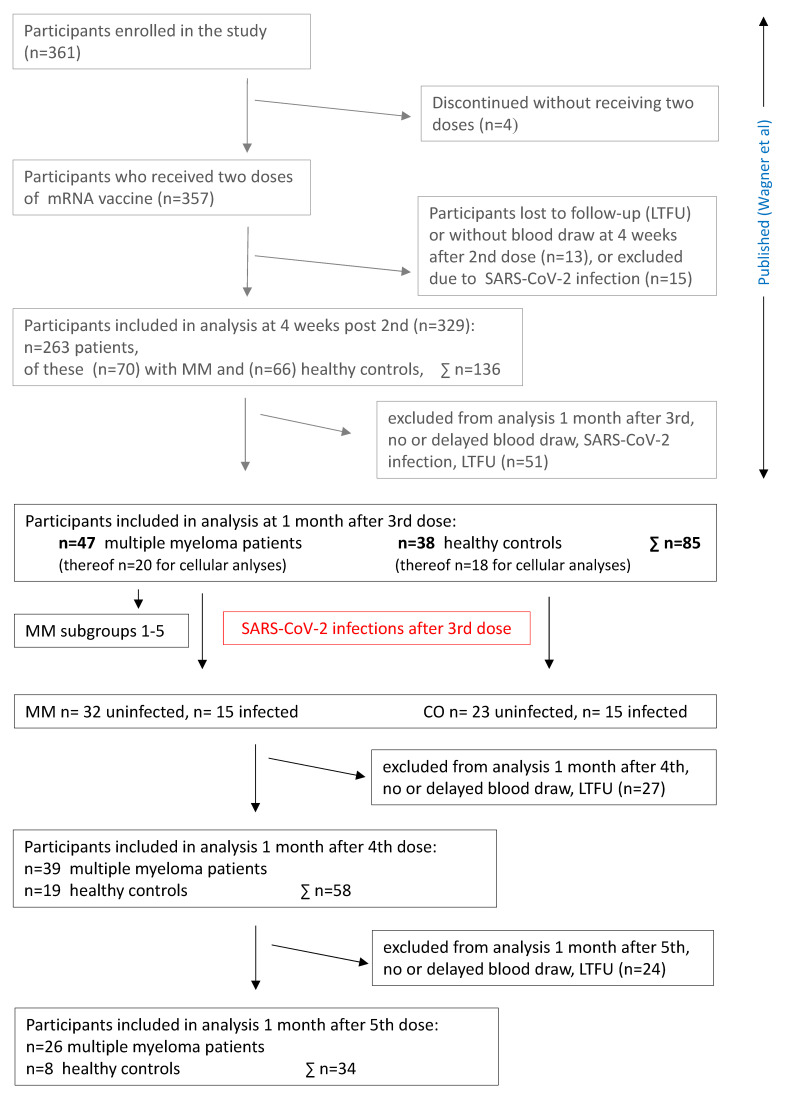
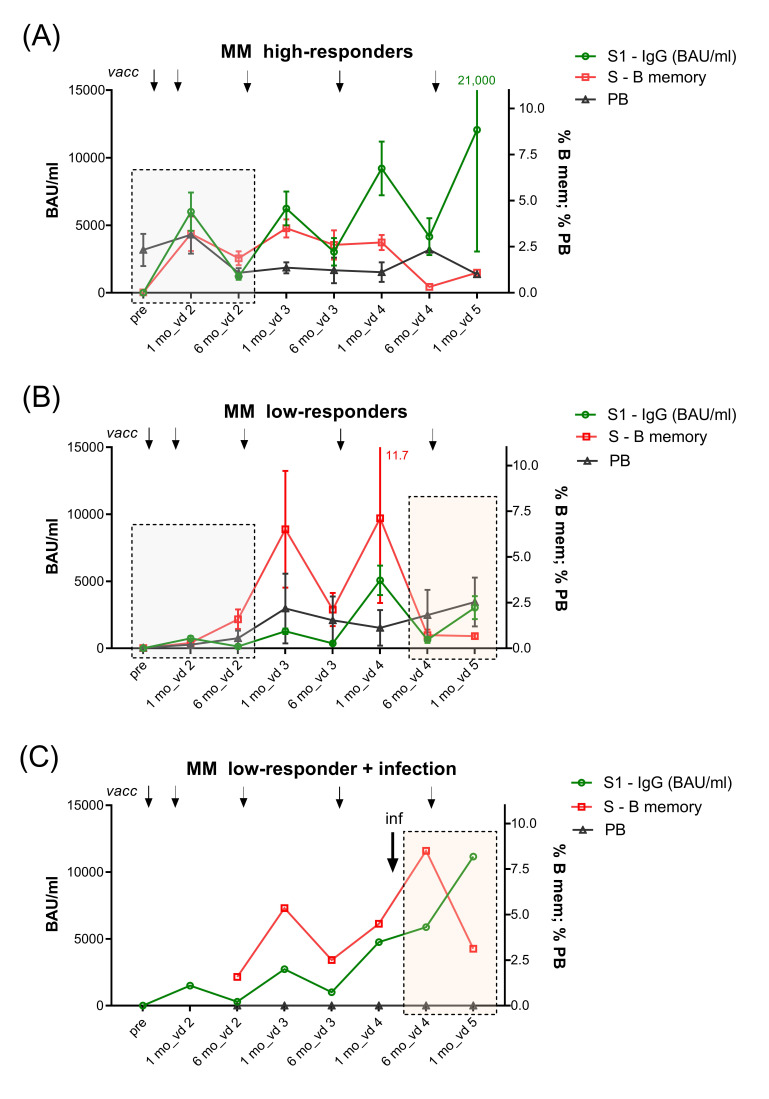
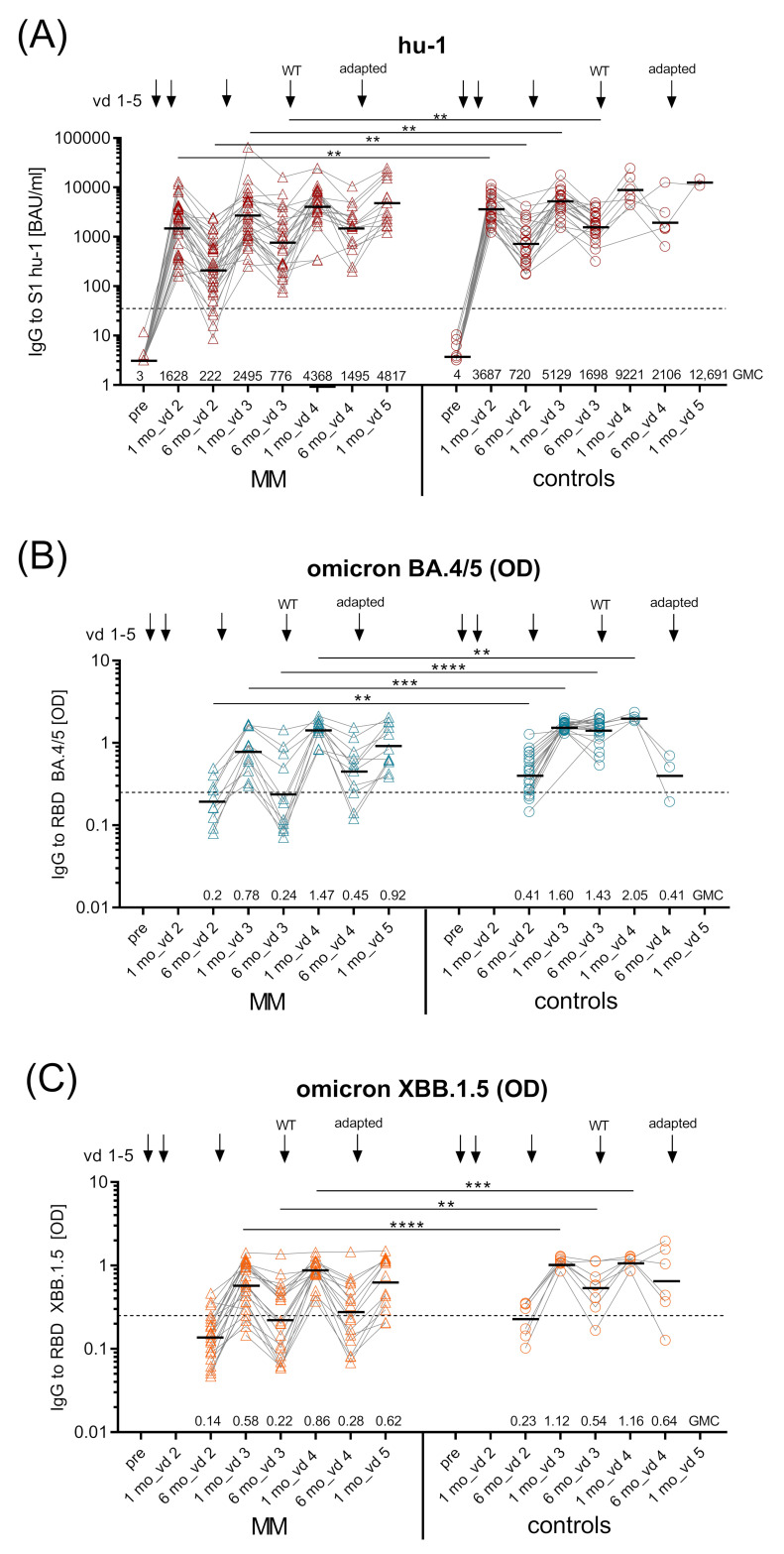
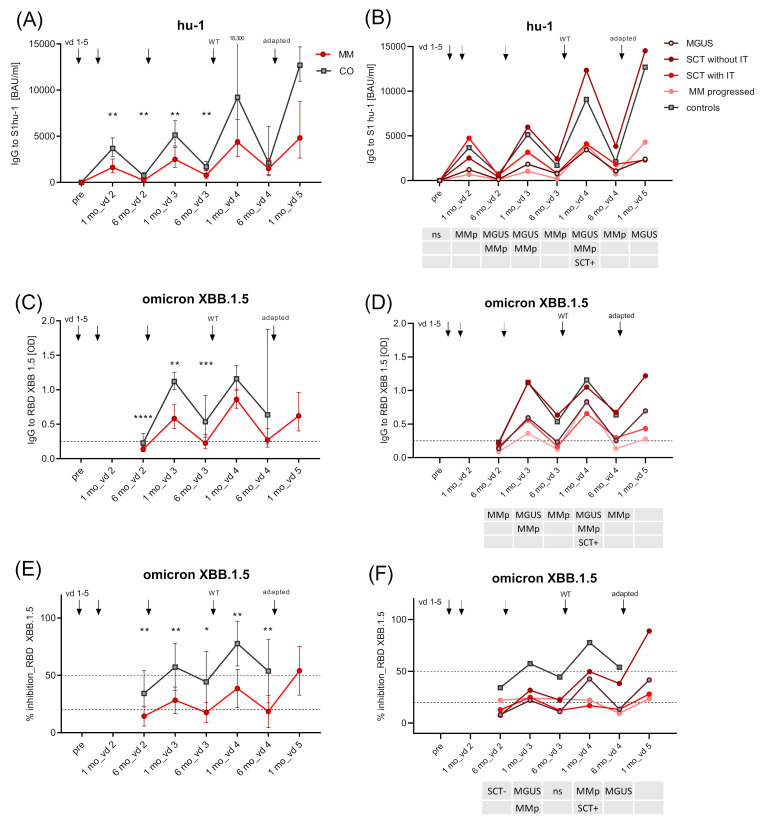
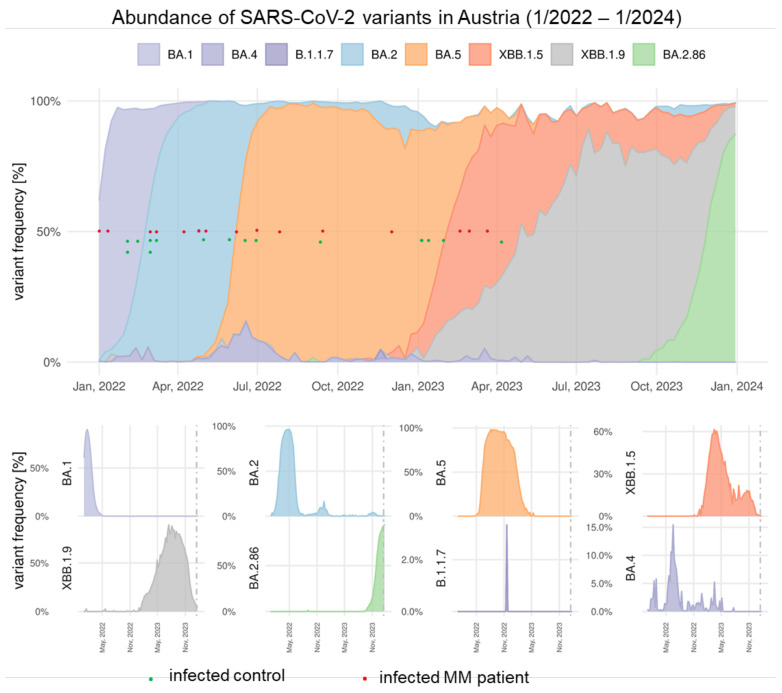
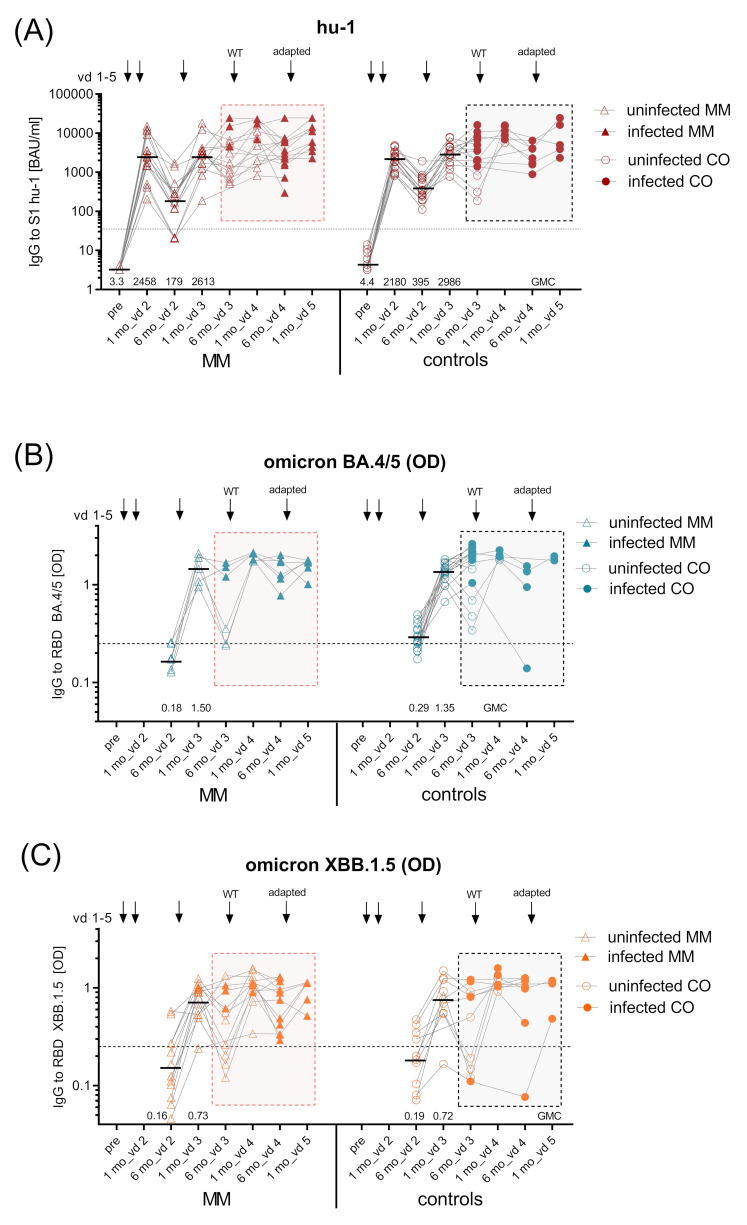
Patients with multiple myeloma (MM) are a heterogenous, immunocompromised group with increased risk for COVID-19 morbidity and mortality but impaired responses to primary mRNA SARS-CoV-2 vaccination. The effects of booster vaccinations and breakthrough infections (BTIs) on antibody (Ab) levels and cross-protection to variants of concern (VOCs) are, however, not sufficiently evaluated. Therefore, we analysed humoral and cellular vaccine responses in MM patients stratified according to disease stage/treatment into group (1) monoclonal gammopathy of undetermined significance, (2) after stem cell transplant (SCT) without immunotherapy (IT), (3) after SCT with IT, and (4) progressed MM, and in healthy subjects (prospective cohort study). In contrast to SARS-CoV-2 hu-1-specific Ab levels, Omicron-specific Abs and their cross-neutralisation capacity remained low even after three booster doses in a majority of MM patients. In particular, progressed MM patients receiving anti-CD38 mAb and those after SCT with IT were Ab low responders and showed delayed formation of spike-specific B memory cells. However, MM patients with hybrid immunity (i.e., vaccination and breakthrough infection) had improved cross-neutralisation capacity against VOCs, yet in the absence of severe COVID-19 disease. Our results indicate that MM patients require frequent variant-adapted booster vaccinations and/or changes to other vaccine formulations/platforms, which might have similar immunological effects as BTIs.
多发性骨髓瘤(MM)患者是一个异质性的免疫功能低下群体,感染新型冠状病毒肺炎(COVID-19)后发病和死亡风险增加,但对SARS-CoV-2原始mRNA疫苗的反应受损。然而,加强疫苗接种和突破性感染(BTIs)对抗体(Ab)水平以及对关注变体(VOCs)的交叉保护作用尚未得到充分评估。因此,我们分析了MM患者的体液和细胞疫苗反应,这些患者根据疾病阶段/治疗情况分为四组:(1)意义未明的单克隆丙种球蛋白病;(2)接受干细胞移植(SCT)后未进行免疫治疗(IT);(3)接受SCT并进行IT治疗后;(4)进展期MM,同时还分析了健康受试者的情况(前瞻性队列研究)。与SARS-CoV-2 hu-1特异性Ab水平不同,即使在大多数MM患者接种三剂加强针后,奥密克戎特异性抗体及其交叉中和能力仍然很低。特别是,接受抗CD38单克隆抗体治疗的进展期MM患者以及接受SCT并进行IT治疗后的患者是Ab低反应者,并且其刺突特异性B记忆细胞形成延迟。然而,具有混合免疫(即接种疫苗和突破性感染)的MM患者对VOCs的交叉中和能力有所提高,但未出现严重的COVID-19疾病。我们的结果表明,MM患者需要频繁接种适应变体的加强针和/或更换为其他疫苗制剂/平台,这可能具有与BTIs类似的免疫效果。