
蜂蜜酚类化合物的抗菌作用——一项体外研究
Antimicrobial Effect of Honey Phenolic Compounds against -An In Vitro Study.
作者信息
Kassym Laura, Kussainova Assiya, Semenova Yuliya, McLoone Pauline
机构信息
Department of General Medical Practice with a Course of Evidence-Based Medicine, NJSC "Astana Medical University", Astana 010000, Kazakhstan.
School of Medicine, Nazarbayev University, Astana 010000, Kazakhstan.
出版信息
Pharmaceuticals (Basel). 2024 Apr 27;17(5):560. doi: 10.3390/ph17050560.
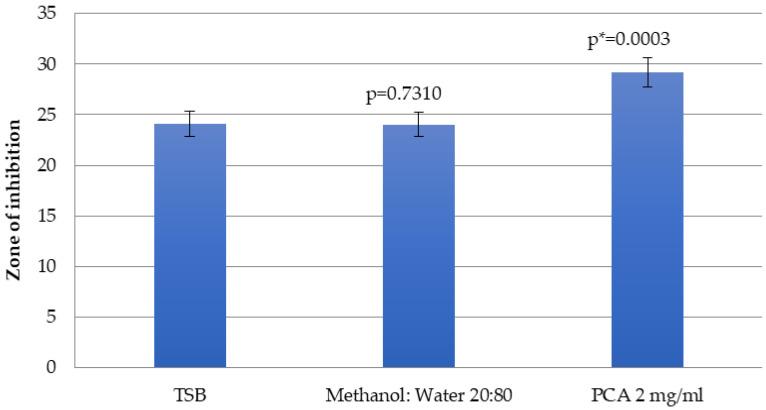
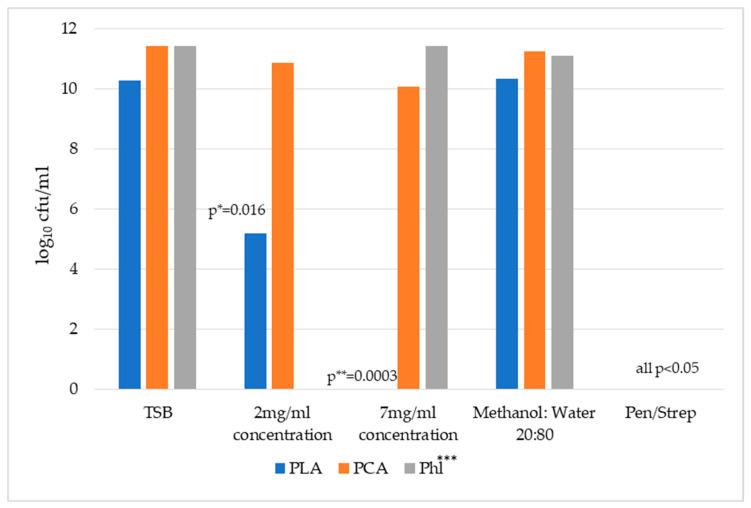
Growing concern over antimicrobial resistance in chronic wound patients necessitates the exploration of alternative treatments from natural sources. This study suggests that honey's phenolic compounds may offer antimicrobial benefits, warranting further investigation for therapeutic development. The main aim of this study was to investigate the antimicrobial activity of phenolic compounds and to determine the effects of their sub-inhibitory concentrations against (). 3-phenyllactic acid (PLA), -coumaric acid (PCA), and phloretin were tested against the bacterial strain of ATCC 25922. Comparison of the antimicrobial activity of honey constituents in vitro was performed using a broth culture assay. Measurement of the inhibitory properties of constituents in vitro was conducted using disc and well diffusion assays. The effects of sub-inhibitory concentrations of PCA on the susceptibility of ATCC 25922 to penicillin-streptomycin were tested. The results demonstrated that PLA was the most efficient antimicrobial agent, followed by PCA, whereas phloretin, at lower (2 mg/mL) concentrations, led to an increase in the growth of . Various modifications of the agar diffusion assay did not reveal the antibacterial properties of the studied phytochemicals. The enhancing effect of a sub-inhibitory concentration of PCA in cooperation with penicillin-streptomycin was shown. These findings might be helpful for the further investigation and development of new antimicrobial agents for the treatment of skin infections and wounds.
对慢性伤口患者抗菌药物耐药性的日益关注,使得有必要探索来自天然来源的替代治疗方法。本研究表明,蜂蜜中的酚类化合物可能具有抗菌益处,值得进一步研究以用于治疗开发。本研究的主要目的是研究酚类化合物的抗菌活性,并确定其亚抑制浓度对()的影响。对3-苯乳酸(PLA)、对香豆酸(PCA)和根皮素针对ATCC 25922细菌菌株进行了测试。使用肉汤培养试验对蜂蜜成分的体外抗菌活性进行了比较。使用纸片扩散法和打孔扩散法对成分的体外抑制特性进行了测定。测试了PCA亚抑制浓度对ATCC 25922对青霉素-链霉素敏感性的影响。结果表明,PLA是最有效的抗菌剂,其次是PCA,而根皮素在较低(2mg/mL)浓度下导致()的生长增加。琼脂扩散试验的各种改进均未揭示所研究植物化学物质的抗菌特性。显示了PCA亚抑制浓度与青霉素-链霉素协同作用的增强效果。这些发现可能有助于进一步研究和开发用于治疗皮肤感染和伤口的新型抗菌剂。
 Zotero 插件