Ismail Heba M, Liu Jianyun, Netherland Michael, Evans-Molina Carmella, DiMeglio Linda A
Department of Pediatrics, Indiana University School of Medicine, Indianapolis, IN, USA.
Department of Surgery, Indiana University School of Medicine, Indianapolis, IN, USA.
medRxiv. 2024 Jun 3:2024.05.17.24307489. doi: 10.1101/2024.05.17.24307489.
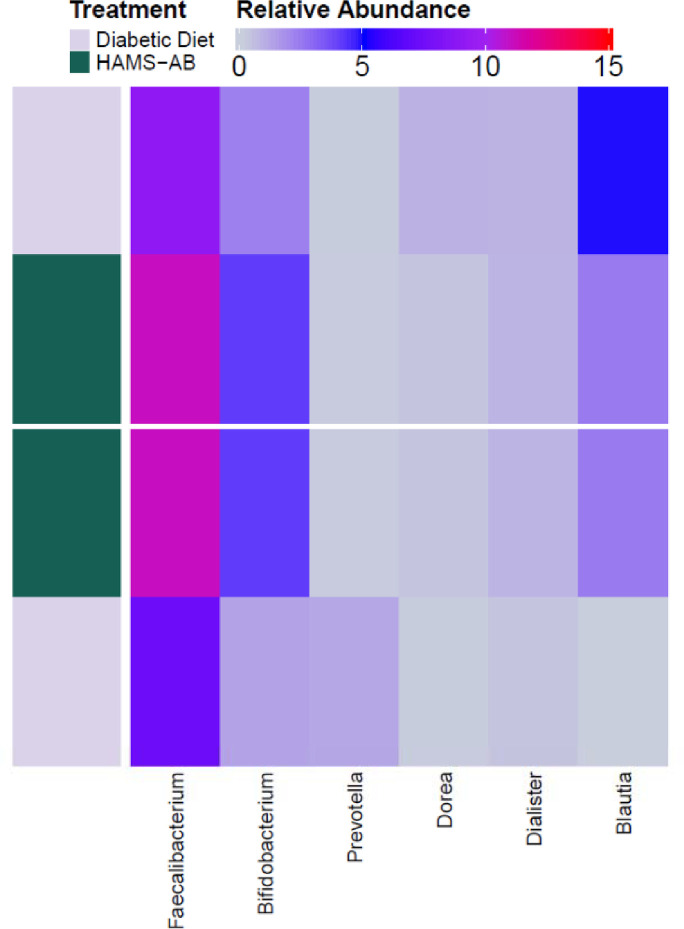
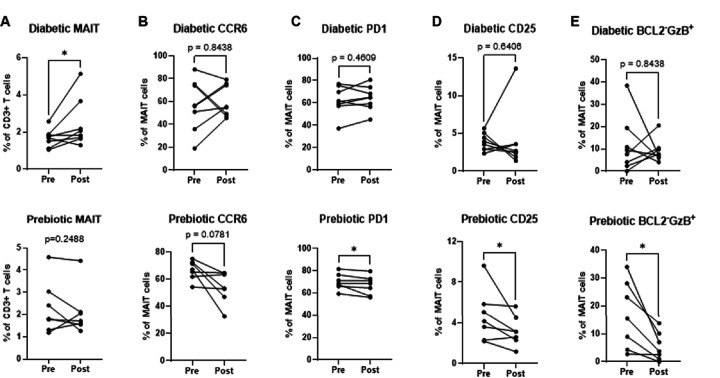
Acetylated and butyrylated high amylose starch (HAMS-AB) is a prebiotic shown to be effective in type 1 diabetes (T1D) prevention in mouse models and is safe in adults with established T1D. HAMS-AB alters the gut microbiome profile with increased bacterial fermenters that produce short chain fatty acids (SCFAs) with anti-inflammatory and immune-modulatory effects. We performed a pilot study using a cross-over design to assess the safety and efficacy of 4 weeks of oral HAMS-AB consumption by recently diagnosed (< 2 years of diagnosis) youths with T1D. Seven individuals completed the study. The mean±SD age was 15.0±1.2 years, diabetes duration 19.5±6.3 months, 5/7 were female and 4/7 were White, all with a BMI of < 85%. The prebiotic was safe. Following prebiotic intake, gut microbiome changes were seen, including a notable increase in the relative abundance of fermenters such as Bifidobacterium and Faecalibacterium. Treatment was also associated with changes in bacterial functional pathways associated with either improved energy metabolism (upregulation of tyrosine metabolism) or anti-inflammatory effects (reduced geraniol degradation). There were no differences in stool SCFA levels. Plasma metabolites associated with improved glycemia, such as hippurate, were significantly increased after treatment and there were positive and significant changes in the immune regulatory function of mucosal associated invariant T cells. There was a significant decrease in the area under the curve glucose but not C-peptide, as measured during a mixed meal tolerance testing, following the prebiotic consumption. In summary, the prebiotic HAMS-AB was safe in adolescents with T1D and showed promising effects on the gut microbiome composition, function and immune regulatory function.
乙酰化和丁酰化高直链淀粉(HAMS-AB)是一种益生元,在小鼠模型中已显示出对1型糖尿病(T1D)预防有效,并且对已确诊T1D的成年人是安全的。HAMS-AB改变肠道微生物群谱,增加产生具有抗炎和免疫调节作用的短链脂肪酸(SCFA)的细菌发酵菌。我们进行了一项试点研究,采用交叉设计来评估近期诊断(诊断<2年)的T1D青少年口服HAMS-AB 4周的安全性和有效性。7名个体完成了研究。平均±标准差年龄为15.0±1.2岁,糖尿病病程19.5±6.3个月,5/7为女性,4/7为白人,所有人体重指数均<85%。该益生元是安全的。摄入益生元后,观察到肠道微生物群发生变化,包括双歧杆菌和粪杆菌等发酵菌的相对丰度显著增加。治疗还与细菌功能途径的变化有关,这些变化要么与改善能量代谢(酪氨酸代谢上调)有关,要么与抗炎作用(香叶醇降解减少)有关。粪便SCFA水平没有差异。治疗后,与改善血糖相关的血浆代谢物(如马尿酸盐)显著增加,黏膜相关恒定T细胞的免疫调节功能发生了积极且显著的变化。在进行混合餐耐量测试期间,摄入益生元后,葡萄糖曲线下面积显著下降,但C肽曲线下面积没有下降。总之,益生元HAMS-AB对患有T1D的青少年是安全的,并且对肠道微生物群组成、功能和免疫调节功能显示出有希望的效果。