Rodriguez Fernando, Krauss Philipp, Kluckert Jonas, Ryser Franziska, Stieglitz Lennart, Baumann Christian, Gassert Roger, Imbach Lukas, Bichsel Oliver
Rehabilitation Engineering Laboratory, Department of Health Sciences and Technology, ETH Zurich, Zurich, Switzerland.
Department of Neurosurgery, University Hospital Zurich, University of Zurich, Zurich, Switzerland.
Parkinsons Dis. 2024 May 20;2024:5787563. doi: 10.1155/2024/5787563. eCollection 2024.
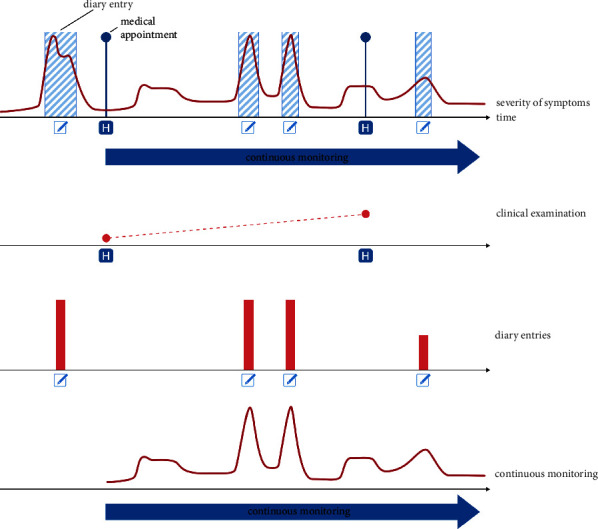
Accurately assessing the severity and frequency of fluctuating motor symptoms is important at all stages of Parkinson's disease management. Contrarily to time-consuming clinical testing or patient self-reporting with uncertain reliability, recordings with wearable sensors show promise as a tool for continuously and objectively assessing PD symptoms. While wearables-based clinical assessments during standardised and scripted tasks have been successfully implemented, assessments during unconstrained activity remain a challenge.
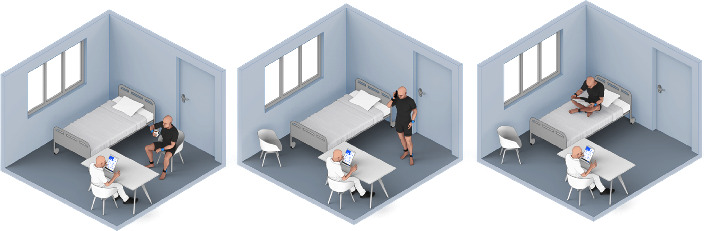
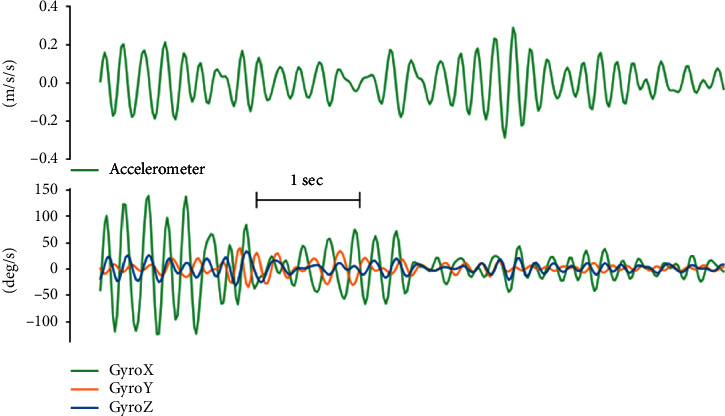
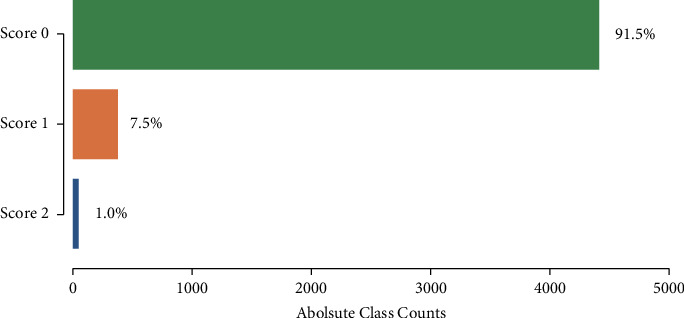
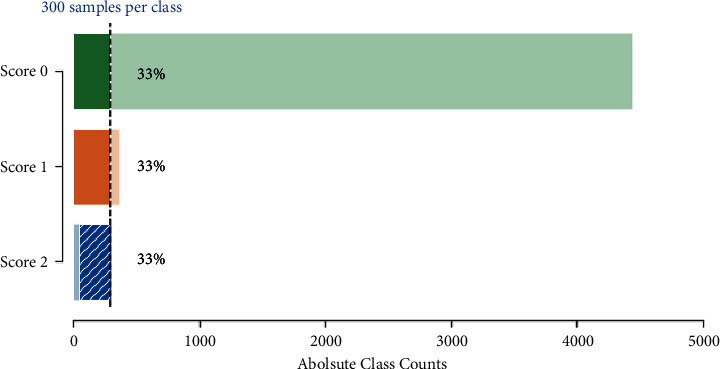
We developed and implemented a supervised machine learning algorithm, trained and tested on tremor scores. We evaluated the algorithm on a 67-hour database comprising sensor data and clinical tremor scores for 24 Parkinson patients at four extremities for periods of about 3 hours. A random 25% subset of the labelled samples was used as test data, the remainder as training data. Based on features extracted from the sensor data, a Support Vector Machine was trained to predict tremor severity. Due to the inherent imbalance in tremor scores, we applied dataset rebalancing techniques.
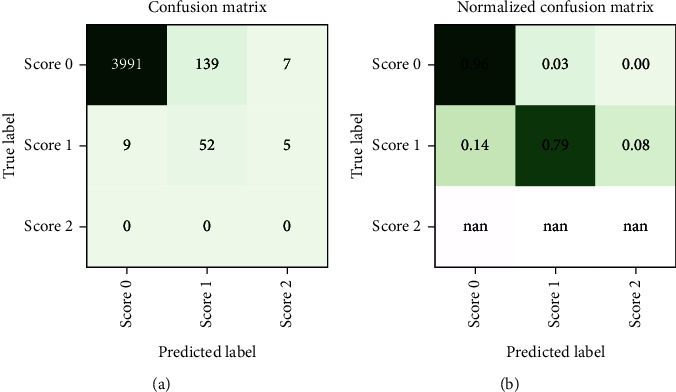
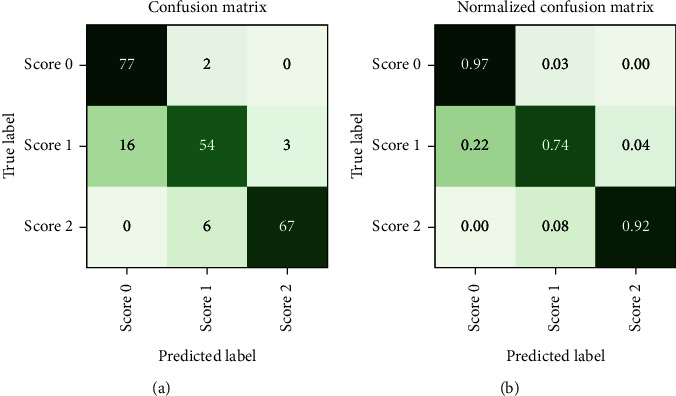
Our classifier demonstrated robust performance in detecting tremor events with a sensitivity of 0.90 on the test-portion of the resampled dataset. The overall classification accuracy was high at 0.88.
We implemented an accurate classifier for tremor monitoring in free-living environments that can be trained even with modestly sized and imbalanced datasets. This advancement offers significant clinical value in continuously monitoring Parkinson's disease symptoms beyond the hospital setting, paving the way for personalized management of PD, timely therapeutic adjustments, and improved patient quality of life.
在帕金森病管理的各个阶段,准确评估运动症状波动的严重程度和频率都很重要。与耗时且可靠性不确定的临床测试或患者自我报告不同,可穿戴传感器记录有望成为持续、客观评估帕金森病症状的工具。虽然基于可穿戴设备的标准化和脚本化任务期间的临床评估已成功实施,但无约束活动期间的评估仍然是一项挑战。
我们开发并实施了一种监督式机器学习算法,该算法基于震颤评分进行训练和测试。我们在一个67小时的数据库上评估了该算法,该数据库包含24名帕金森病患者四个肢体约3小时的传感器数据和临床震颤评分。将随机抽取的25%的标记样本子集用作测试数据,其余用作训练数据。基于从传感器数据中提取的特征,训练了一个支持向量机来预测震颤严重程度。由于震颤评分存在固有不平衡,我们应用了数据集重新平衡技术。
我们的分类器在检测震颤事件方面表现出强大的性能,在重新采样数据集的测试部分灵敏度为0.90。总体分类准确率很高,为0.88。
我们实现了一种用于在自由生活环境中监测震颤的准确分类器,即使使用规模适中且不平衡的数据集也可以进行训练。这一进展在院外持续监测帕金森病症状方面具有重要的临床价值,为帕金森病的个性化管理、及时的治疗调整和改善患者生活质量铺平了道路。