Albright Liam, Ko Woojin, Buvanesh Meyhaa, Haraldsson Harald, Polubriaginof Fernanda, Kuperman Gilad J, Levy Michelle, Sterling Madeline R, Dell Nicola, Estrin Deborah
Department of Information Science, Cornell University, New York, NY, United States.
Department of Computer Science, Cornell Tech, New York, NY, United States.
JMIR Form Res. 2024 May 30;8:e56916. doi: 10.2196/56916.
Although family caregivers play a critical role in care delivery, research has shown that they face significant physical, emotional, and informational challenges. One promising avenue to address some of caregivers' unmet needs is via the design of digital technologies that support caregivers' complex portfolio of responsibilities. Augmented reality (AR) applications, specifically, offer new affordances to aid caregivers as they perform care tasks in the home.
This study explored how AR might assist family caregivers with the delivery of home-based cancer care. The specific objectives were to shed light on challenges caregivers face where AR might help, investigate opportunities for AR to support caregivers, and understand the risks of AR exacerbating caregiver burdens.
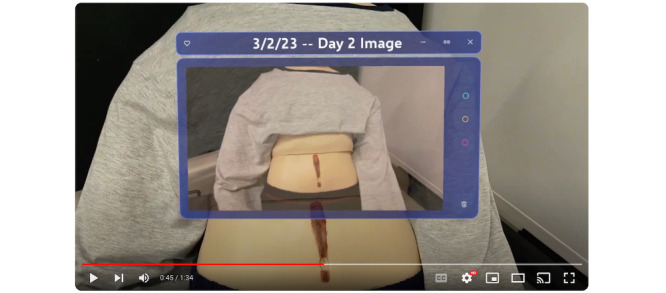
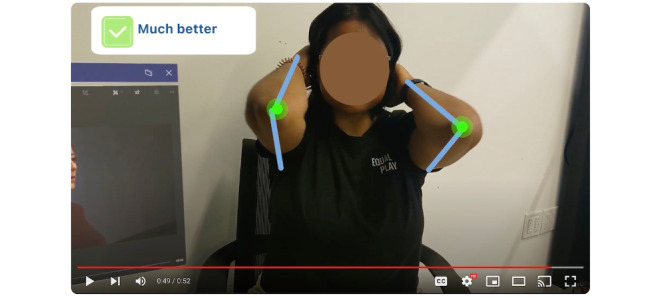
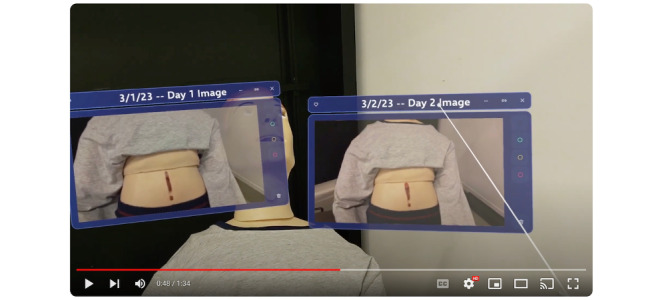
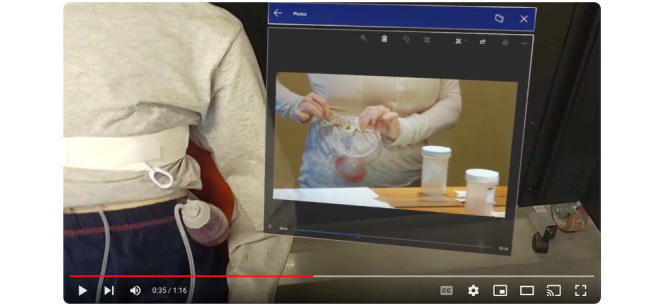
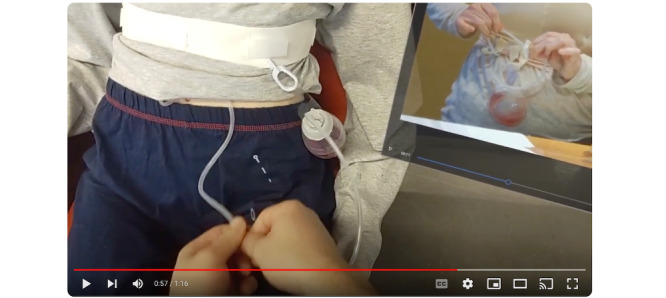
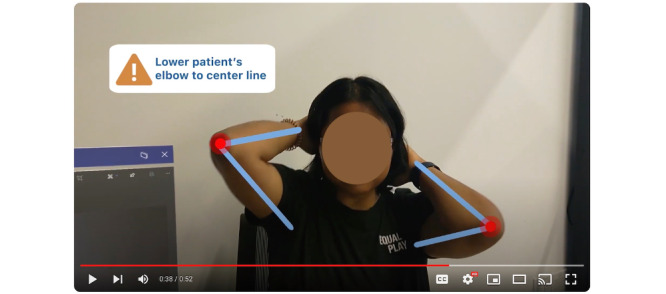
We conducted a qualitative video elicitation study with clinicians and caregivers. We created 3 video elicitations that offer ways in which AR might support caregivers as they perform often high-stakes, unfamiliar, and anxiety-inducing tasks in postsurgical cancer care: wound care, drain care, and rehabilitative exercise. The elicitations show functional AR applications built using Unity Technologies software and Microsoft Hololens2. Using elicitations enabled us to avoid rediscovering known usability issues with current AR technologies, allowing us to focus on high-level, substantive feedback on potential future roles for AR in caregiving. Moreover, it enabled nonintrusive exploration of the inherently sensitive in-home cancer care context.
We recruited 22 participants for our study: 15 clinicians (eg, oncologists and nurses) and 7 family caregivers. Our findings shed light on clinicians' and caregivers' perceptions of current information and communication challenges caregivers face as they perform important physical care tasks as part of cancer treatment plans. Most significant was the need to provide better and ongoing support for execution of caregiving tasks in situ, when and where the tasks need to be performed. Such support needs to be tailored to the specific needs of the patient, to the stress-impaired capacities of the caregiver, and to the time-constrained communication availability of clinicians. We uncover opportunities for AR technologies to potentially increase caregiver confidence and reduce anxiety by supporting the capture and review of images and videos and by improving communication with clinicians. However, our findings also suggest ways in which, if not deployed carefully, AR technologies might exacerbate caregivers' already significant burdens.
These findings can inform both the design of future AR devices, software, and applications and the design of caregiver support interventions based on already available technology and processes. Our study suggests that AR technologies and the affordances they provide (eg, tailored support, enhanced monitoring and task accuracy, and improved communications) should be considered as a part of an integrated care journey involving multiple stakeholders, changing information needs, and different communication channels that blend in-person and internet-based synchronous and asynchronous care, illness, and recovery.
尽管家庭照顾者在护理提供中发挥着关键作用,但研究表明他们面临着重大的身体、情感和信息方面的挑战。解决照顾者一些未满足需求的一个有前景的途径是通过设计支持照顾者复杂责任组合的数字技术。具体而言,增强现实(AR)应用为照顾者在家中执行护理任务提供了新的功能。
本研究探讨了AR如何协助家庭照顾者提供居家癌症护理。具体目标是阐明照顾者在AR可能有所帮助的方面所面临的挑战,调查AR支持照顾者的机会,并了解AR加剧照顾者负担的风险。
我们对临床医生和照顾者进行了一项定性视频诱导研究。我们创建了3个视频诱导材料,展示了AR在癌症术后护理中支持照顾者执行通常高风险、不熟悉且令人焦虑的任务(伤口护理、引流护理和康复锻炼)的方式。这些诱导材料展示了使用Unity Technologies软件和Microsoft Hololens2构建的功能性AR应用。使用诱导材料使我们能够避免重新发现当前AR技术已知的可用性问题,使我们能够专注于对AR在护理中潜在未来作用的高层次、实质性反馈。此外,它还能对本质上敏感的居家癌症护理环境进行非侵入式探索。
我们招募了22名参与者进行研究:15名临床医生(如肿瘤学家和护士)和7名家庭照顾者。我们的研究结果揭示了临床医生和照顾者对照顾者在执行作为癌症治疗计划一部分的重要身体护理任务时所面临的当前信息和沟通挑战的看法。最重要的是需要在护理任务执行的现场、任务执行的时间和地点提供更好的持续支持。这种支持需要根据患者的具体需求、照顾者因压力而受损的能力以及临床医生受时间限制的沟通可用性进行调整。我们发现AR技术有机会通过支持图像和视频的捕获与回顾以及改善与临床医生的沟通来潜在地增强照顾者的信心并减少焦虑。然而,我们的研究结果也表明,如果部署不当,AR技术可能会加剧照顾者已经很大的负担。
这些发现可为未来AR设备、软件和应用的设计以及基于现有技术和流程的照顾者支持干预措施的设计提供参考。我们的研究表明,AR技术及其提供的功能(如量身定制的支持、增强的监测和任务准确性以及改善的沟通)应被视为涉及多个利益相关者、不断变化的信息需求以及融合面对面和基于互联网的同步和异步护理、疾病和康复的不同沟通渠道的综合护理过程的一部分。