Department of Anesthesia, Critical Care and Pain Medicine, Massachusetts General Hospital, Boston, MA, USA; Department of Anaesthesia, Harvard Medical School, Boston, MA, USA.
Department of Anesthesia, Critical Care and Pain Medicine, Massachusetts General Hospital, Boston, MA, USA.
Brain Stimul. 2024 May-Jun;17(3):687-697. doi: 10.1016/j.brs.2024.05.012. Epub 2024 May 29.
Dopaminergic neurons in the ventral tegmental area (VTA) are crucially involved in regulating arousal, making them a potential target for reversing general anesthesia. Electrical deep brain stimulation (DBS) of the VTA restores consciousness in animals anesthetized with drugs that primarily enhance GABA receptors. However, it is unknown if VTA DBS restores consciousness in animals anesthetized with drugs that target other receptors.
To evaluate the efficacy of VTA DBS in restoring consciousness after exposure to four anesthetics with distinct receptor targets.
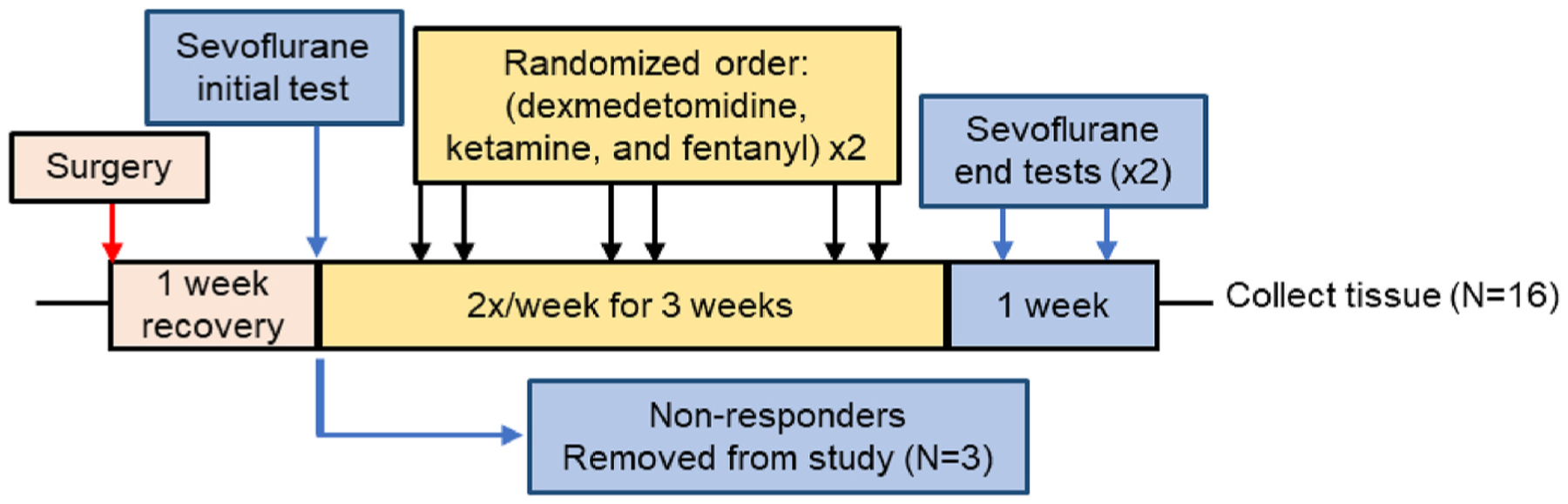
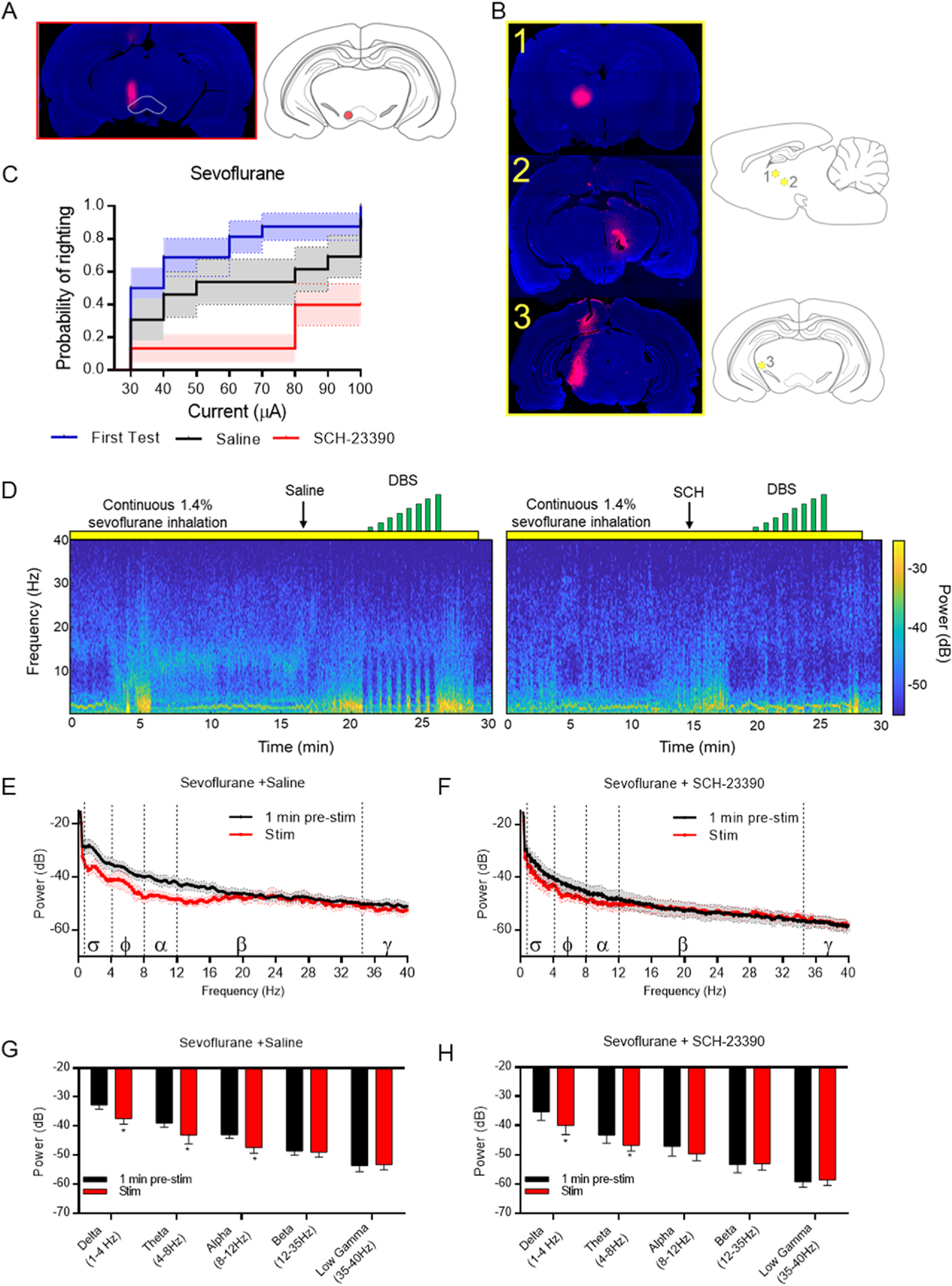
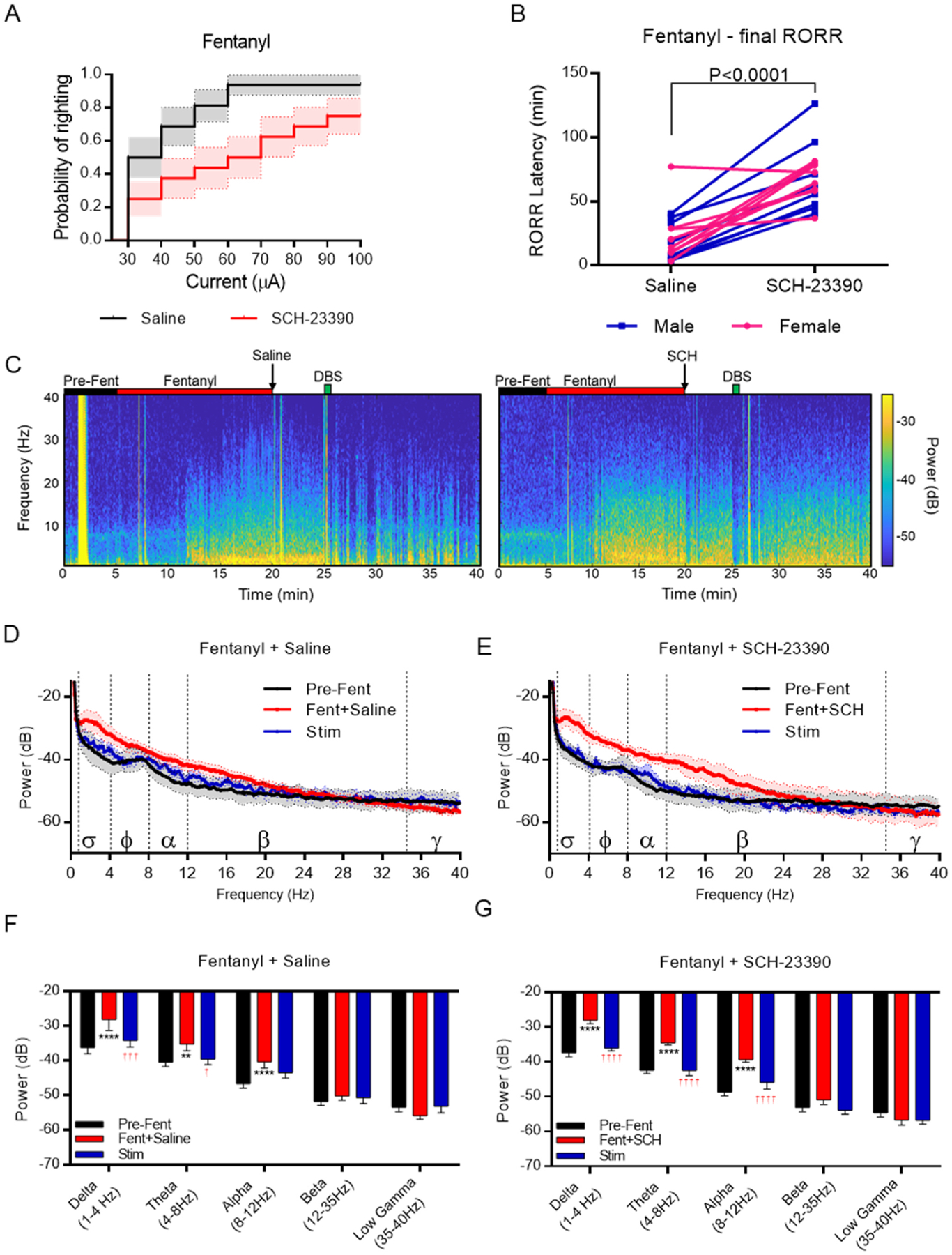
Sixteen adult Sprague-Dawley rats (8 female, 8 male) with bipolar electrodes implanted in the VTA were exposed to dexmedetomidine, fentanyl, ketamine, or sevoflurane to produce loss of righting, a proxy for unconsciousness. After receiving the dopamine D1 receptor antagonist, SCH-23390, or saline (vehicle), DBS was initiated at 30 μA and increased by 10 μA until reaching a maximum of 100 μA. The current that evoked behavioral arousal and restored righting was recorded for each anesthetic and compared across drug (saline/SCH-23390) condition. Electroencephalogram, heart rate and pulse oximetry were recorded continuously.
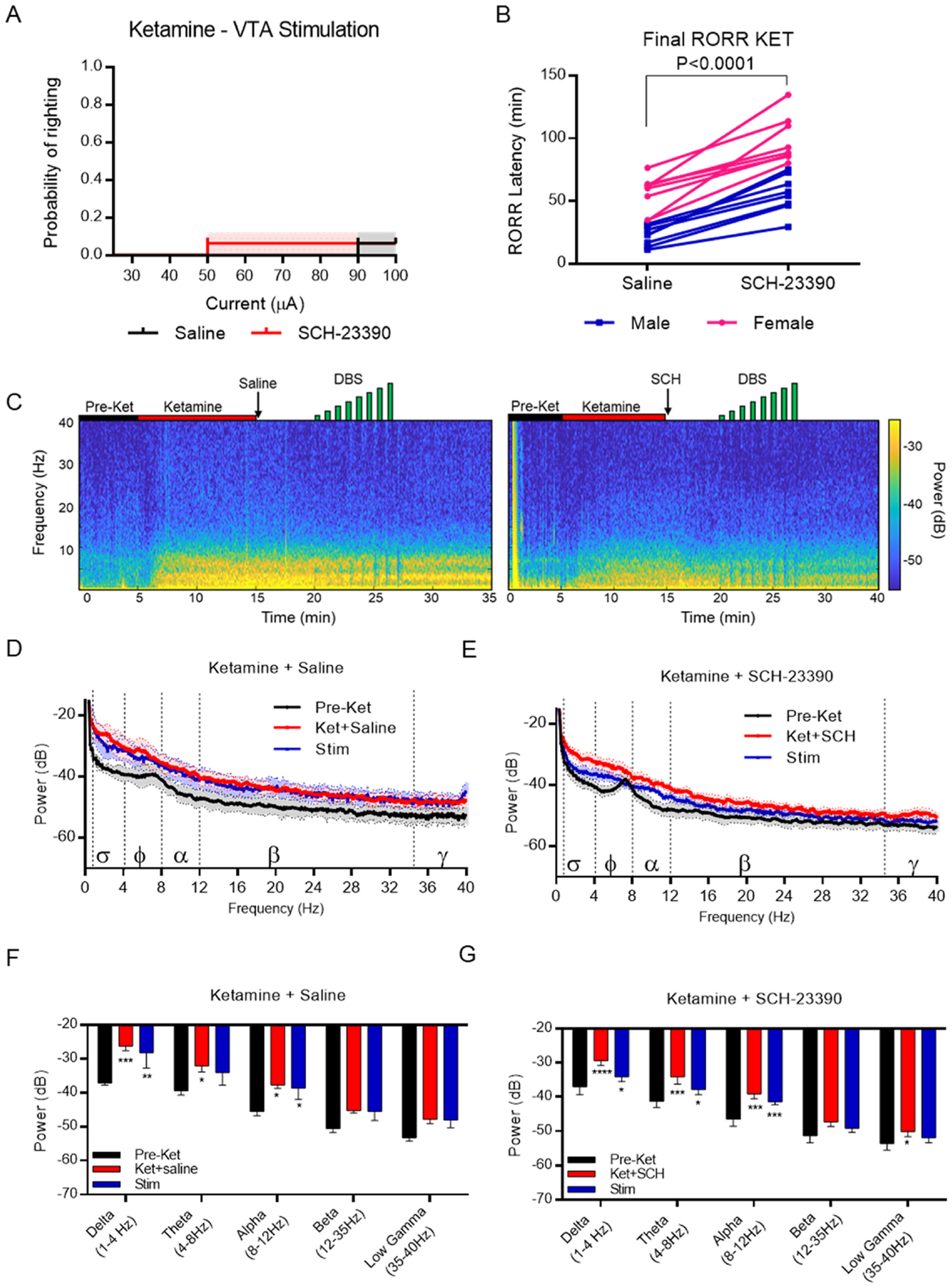
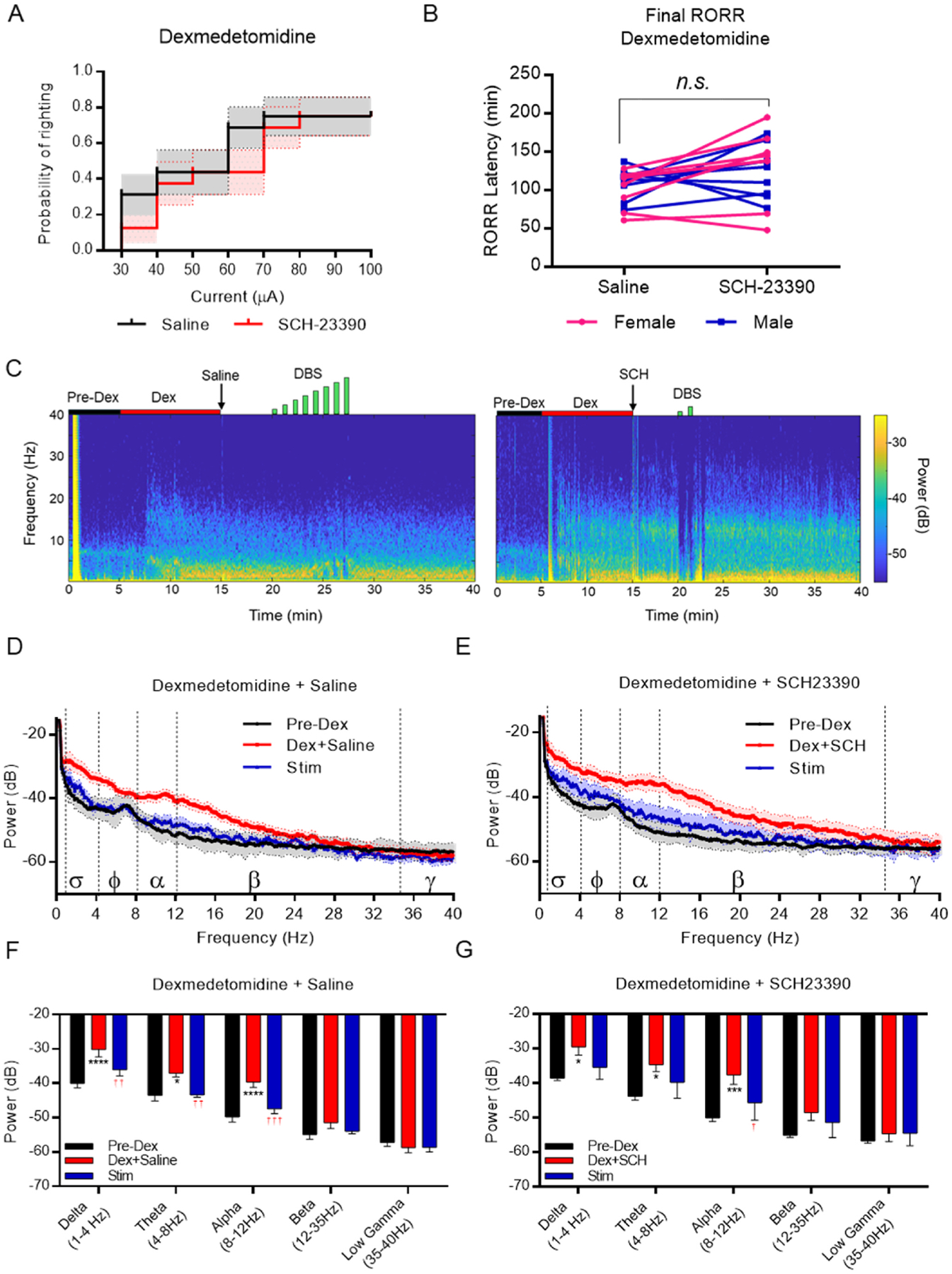
VTA DBS restored righting after sevoflurane, dexmedetomidine, and fentanyl-induced unconsciousness, but not ketamine-induced unconsciousness. D1 receptor antagonism diminished the efficacy of VTA stimulation following sevoflurane and fentanyl, but not dexmedetomidine.
Electrical DBS of the VTA restores consciousness in animals anesthetized with mechanistically distinct drugs, excluding ketamine. The involvement of the D1 receptor in mediating this effect is anesthetic-specific.
腹侧被盖区(VTA)中的多巴胺能神经元在调节觉醒方面起着至关重要的作用,使其成为逆转全身麻醉的潜在靶点。VTA 的电深部脑刺激(DBS)可恢复被主要增强 GABA 受体的药物麻醉的动物的意识。然而,尚不清楚 VTA DBS 是否能恢复被作用于其他受体的药物麻醉的动物的意识。
评估 VTA DBS 在暴露于四种具有不同受体靶标的麻醉剂后恢复意识的效果。
将 16 只成年 Sprague-Dawley 大鼠(8 只雌性,8 只雄性)的双极电极植入 VTA,使其接受右向翻正反射(righting reflex)丧失,作为无意识的替代指标。在接受多巴胺 D1 受体拮抗剂 SCH-23390 或生理盐水(载体)后,开始以 30 μA 的电流刺激 VTA,并以 10 μA 的增量增加,直至达到 100 μA 的最大电流。记录每种麻醉剂引起行为觉醒并恢复右向翻正反射的电流,并比较药物(生理盐水/SCH-23390)条件下的电流。连续记录脑电图、心率和脉搏血氧饱和度。
VTA DBS 可恢复 sevoflurane、dexmedetomidine 和 fentanyl 诱导的无意识大鼠的右向翻正反射,但不能恢复 ketamine 诱导的无意识大鼠的右向翻正反射。D1 受体拮抗作用减弱了 sevoflurane 和 fentanyl 后 VTA 刺激的效果,但对 dexmedetomidine 无影响。
电刺激 VTA 可恢复接受机制不同的药物(排除 ketamine)麻醉的动物的意识。D1 受体在介导这种效应中的作用是麻醉特异性的。