• 文献检索
  • 文档翻译
  • 深度研究
  • 学术资讯
  • Suppr Zotero 插件Zotero 插件
  • 邀请有礼
  • 套餐&价格
  • 历史记录
应用&插件
Suppr Zotero 插件Zotero 插件浏览器插件Mac 客户端Windows 客户端微信小程序
定价
高级版会员购买积分包购买API积分包
服务
文献检索文档翻译深度研究API 文档MCP 服务
关于我们
关于 Suppr公司介绍联系我们用户协议隐私条款
关注我们

Suppr 超能文献

核心技术专利:CN118964589B侵权必究
粤ICP备2023148730 号-1Suppr @ 2026

文献检索

告别复杂PubMed语法,用中文像聊天一样搜索,搜遍4000万医学文献。AI智能推荐,让科研检索更轻松。

立即免费搜索

文件翻译

保留排版,准确专业,支持PDF/Word/PPT等文件格式,支持 12+语言互译。

免费翻译文档

深度研究

AI帮你快速写综述,25分钟生成高质量综述,智能提取关键信息,辅助科研写作。

立即免费体验

迈向疟疾消除及其对坦桑尼亚病媒控制、疾病管理和生计的影响。

Towards malaria elimination and its implication for vector control, disease management and livelihoods in Tanzania.

作者信息

Mboera Leonard E G, Mazigo Humphrey D, Rumisha Susan F, Kramer Randall A

机构信息

National Institute for Medical Research, P.O. Box 9653, Dares Salaam, Tanzania.

Catholic University of Health and Allied Sciences-Bugando, P.O. Box 1464, Mwanza, Tanzania.

出版信息

Malariaworld J. 2013 Dec 12;4:19. doi: 10.5281/zenodo.10928325. eCollection 2013.

DOI:10.5281/zenodo.10928325
PMID:38828111
原文链接:https://pmc.ncbi.nlm.nih.gov/articles/PMC11138750/
Abstract

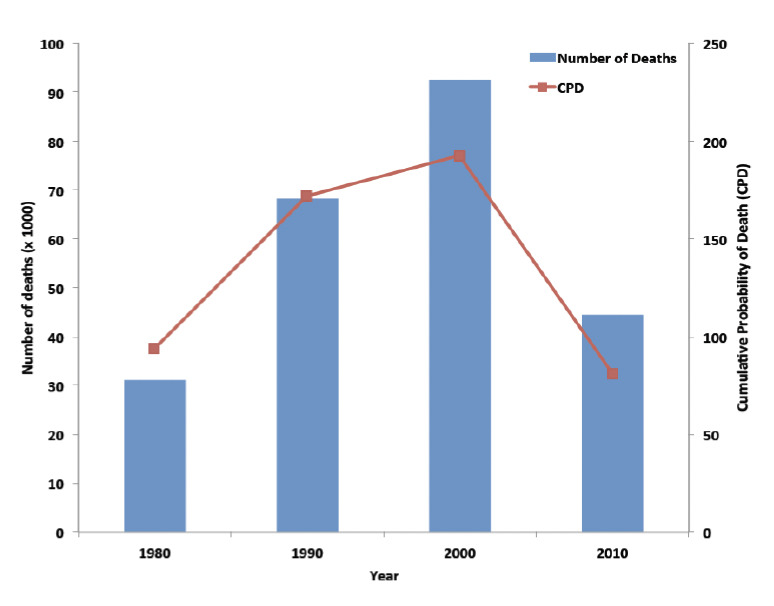
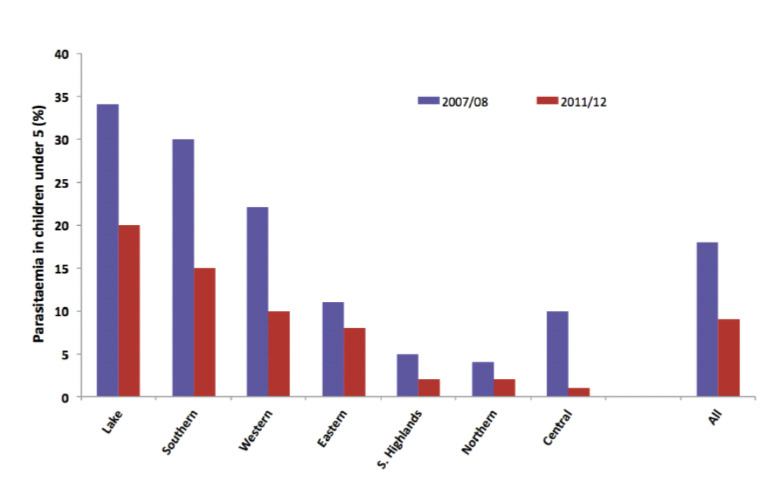
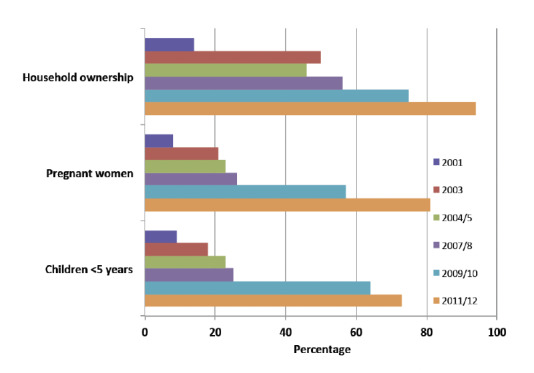
Over the years, malaria has remained the number one cause of morbidity and mortality in Tanzania. Population based studies have indicated a decline in overall malaria prevalence among under-fives from 18.1% in 2008 to 9.7% in 2012. The decline of malaria infection has occurred in all geographical zones of the country. Malaria mortality and cumulative probability of deaths have also shown a marked decline from 2000 to 2010. During the same period, area specific studies in Muheza, Korogwe, Muleba and Mvomero have also reported a similar declining trend in malaria prevalence and incidence. The decline in malaria prevalence has been observed to coincide with a decline in transmission indices including anopheline mosquito densities. The decline in malaria prevalence has been attributed to a combination of factors including improved access to effective malaria treatment with artemisinin combination therapy and protection from mosquito bites by increased availability of insecticide treated bednets and indoor residual spraying. The objective of this paper was to review the changing landscape of malaria and its implication for disease management, vector control, and livelihoods in Tanzania. It seeks to examine the links within a broad framework that considers the different pathways given the multiplicity of interactions that can produce unexpected outcomes and trade-offs. Despite the remarkable decline in malaria burden, Tanzania is faced with a number of challenges. These include the development of resistance of malaria vectors to pyrethroids, changing mosquito behaviour and livelihood activities that increase mosquito productivity and exposure to mosquito bites. In addition, there are challenges related to health systems, community perceptions, community involvement and sustainability of funding to the national malaria control programme. This review indicates that malaria remains an important and challenging disease that illustrates the interactions among ecosystems, livelihoods, and health systems. Livelihoods and several sectoral development activities including construction, water resource development and agricultural practices contribute significantly to malaria mosquito productivity and transmission. Consequently, these situations require innovative and integrative re-thinking of the strategies to prevent and control malaria. In conclusion, to accelerate and sustain malaria control in Tanzania, the prevention strategies must go hand in hand with an intersectoral participation approach that takes into account ecosystems and livelihoods that have the potential to increase or decrease malaria transmission.

摘要

多年来,疟疾一直是坦桑尼亚发病和死亡的首要原因。基于人群的研究表明,五岁以下儿童的总体疟疾患病率从2008年的18.1%降至2012年的9.7%。该国所有地理区域的疟疾感染率均有所下降。2000年至2010年期间,疟疾死亡率和累积死亡概率也显著下降。同一时期,在穆赫扎、科罗格韦、穆莱巴和姆沃梅罗进行的特定地区研究也报告了疟疾患病率和发病率的类似下降趋势。人们观察到疟疾患病率的下降与包括按蚊密度在内的传播指数的下降相吻合。疟疾患病率的下降归因于多种因素,包括青蒿素联合疗法使有效疟疾治疗的可及性提高,以及经杀虫剂处理的蚊帐和室内滞留喷洒的可得性增加,从而减少了蚊虫叮咬。本文的目的是回顾坦桑尼亚疟疾形势的变化及其对疾病管理、病媒控制和生计的影响。它试图在一个广泛的框架内审视各种联系,该框架考虑到由于可能产生意外结果和权衡的多重相互作用而产生的不同途径。尽管疟疾负担显著下降,但坦桑尼亚仍面临一些挑战。这些挑战包括疟疾病媒对拟除虫菊酯产生抗性、蚊虫行为改变以及生计活动增加了蚊虫繁殖力和蚊虫叮咬暴露风险。此外,还存在与卫生系统、社区认知、社区参与以及国家疟疾控制项目资金可持续性相关的挑战。这篇综述表明,疟疾仍然是一种重要且具有挑战性的疾病,它体现了生态系统、生计和卫生系统之间的相互作用。生计以及包括建筑、水资源开发和农业实践在内的多个部门发展活动对疟蚊繁殖力和传播有重大影响。因此,这些情况需要对预防和控制疟疾的策略进行创新和综合的重新思考。总之,为了在坦桑尼亚加速并持续控制疟疾,预防策略必须与跨部门参与方法携手并进,该方法要考虑到有可能增加或减少疟疾传播的生态系统和生计。
https://cdn.ncbi.nlm.nih.gov/pmc/blobs/5518/11138750/a62b0f353f44/MWJ-4-19-f3.jpg
https://cdn.ncbi.nlm.nih.gov/pmc/blobs/5518/11138750/2eb54a064314/MWJ-4-19-f1.jpg
https://cdn.ncbi.nlm.nih.gov/pmc/blobs/5518/11138750/2ef566509076/MWJ-4-19-f2.jpg
https://cdn.ncbi.nlm.nih.gov/pmc/blobs/5518/11138750/a62b0f353f44/MWJ-4-19-f3.jpg
https://cdn.ncbi.nlm.nih.gov/pmc/blobs/5518/11138750/2eb54a064314/MWJ-4-19-f1.jpg
https://cdn.ncbi.nlm.nih.gov/pmc/blobs/5518/11138750/2ef566509076/MWJ-4-19-f2.jpg
https://cdn.ncbi.nlm.nih.gov/pmc/blobs/5518/11138750/a62b0f353f44/MWJ-4-19-f3.jpg

相似文献

1
Towards malaria elimination and its implication for vector control, disease management and livelihoods in Tanzania.迈向疟疾消除及其对坦桑尼亚病媒控制、疾病管理和生计的影响。
Malariaworld J. 2013 Dec 12;4:19. doi: 10.5281/zenodo.10928325. eCollection 2013.
2
On the cost-effectiveness of insecticide-treated wall liner and indoor residual spraying as additions to insecticide treated bed nets to prevent malaria: findings from cluster randomized trials in Tanzania.在坦桑尼亚进行的群组随机试验中,评估了经杀虫剂处理的壁衬和室内滞留喷洒作为杀虫剂处理蚊帐的补充措施预防疟疾的成本效益。
BMC Public Health. 2021 Sep 14;21(1):1666. doi: 10.1186/s12889-021-11671-2.
3
Malaria risk behaviours, socio-cultural practices and rural livelihoods in southern Tanzania: implications for bednet usage.坦桑尼亚南部的疟疾风险行为、社会文化习俗和农村生计:对蚊帐使用的影响。
Soc Sci Med. 2011 Feb;72(3):408-17. doi: 10.1016/j.socscimed.2010.11.009. Epub 2010 Nov 24.
4
Declining burden of malaria over two decades in a rural community of Muheza district, north-eastern Tanzania.二十年来坦桑尼亚东北部穆哈兹地区一个农村社区疟疾负担下降。
Malar J. 2013 Sep 22;12:338. doi: 10.1186/1475-2875-12-338.
5
Risk factors for malaria infection prevalence and household vector density between mass distribution campaigns of long-lasting insecticidal nets in North-western Tanzania.在坦桑尼亚西北部长效驱虫蚊帐大规模分发运动期间,疟疾感染流行率和家庭传播媒介密度的风险因素。
Malar J. 2020 Aug 20;19(1):297. doi: 10.1186/s12936-020-03369-4.
6
Community perceptions on outdoor malaria transmission in Kilombero Valley, Southern Tanzania.坦桑尼亚南部基洛梅罗山谷地区社区对室外疟疾传播的认知
Malar J. 2017 Jul 4;16(1):274. doi: 10.1186/s12936-017-1924-7.
7
Effectiveness of a long-lasting piperonyl butoxide-treated insecticidal net and indoor residual spray interventions, separately and together, against malaria transmitted by pyrethroid-resistant mosquitoes: a cluster, randomised controlled, two-by-two factorial design trial.长效氯菊酯处理的防虫网和室内滞留喷洒干预措施单独和联合使用对经拟除虫菊酯抗性蚊子传播疟疾的效果:一项基于群组的、随机对照、二乘二析因设计试验。
Lancet. 2018 Apr 21;391(10130):1577-1588. doi: 10.1016/S0140-6736(18)30427-6. Epub 2018 Apr 11.
8
Patterns of human exposure to malaria vectors in Zanzibar and implications for malaria elimination efforts.坦桑尼亚桑给巴尔地区人类与疟疾病媒接触模式及其对消除疟疾工作的影响。
Malar J. 2020 Jun 22;19(1):212. doi: 10.1186/s12936-020-03266-w.
9
Outdoor malaria transmission risks and social life: a qualitative study in South-Eastern Tanzania.户外疟疾传播风险与社会生活:坦桑尼亚东南部的一项定性研究。
Malar J. 2018 Oct 29;17(1):397. doi: 10.1186/s12936-018-2550-8.
10
Malaria control in Bhutan: case study of a country embarking on elimination.不丹的疟疾控制:一个国家开始消除疟疾的案例研究。
Malar J. 2012 Jan 9;11:9. doi: 10.1186/1475-2875-11-9.

引用本文的文献

1
The Role of Community Participation in Planning and Executing Malaria Interventions: Experience from Implementation of Biolarviciding for Malaria Vector Control in Southern Tanzania.社区参与规划和实施疟疾干预措施的作用:坦桑尼亚南部实施生物幼虫控制疟疾媒介的经验。
Biomed Res Int. 2022 Sep 23;2022:8046496. doi: 10.1155/2022/8046496. eCollection 2022.
2
LOCAL KNOWLEDGE OF ADAPTIVE STRATEGIES AGAINST MALARIA ENDEMICITY IN THE OKAVANGO DELTA, BOTSWANA.博茨瓦纳奥卡万戈三角洲应对疟疾流行的适应性策略的当地知识
Afr J Infect Dis. 2022 May 6;16(2):21-34. doi: 10.21010/Ajid.v16i2.3. eCollection 2022.
3
Adult Anopheles Mosquito Distribution at a Low and High Malaria Transmission Site in Tanzania.

本文引用的文献

1
Distribution and spread of pyrethroid and DDT resistance among the Anopheles gambiae complex in Tanzania.拟除虫菊酯和滴滴涕抗性在坦桑尼亚冈比亚按蚊复合体中的分布与传播
Med Vet Entomol. 2014 Sep;28(3):244-52. doi: 10.1111/mve.12036. Epub 2013 Nov 5.
2
Declining burden of malaria over two decades in a rural community of Muheza district, north-eastern Tanzania.二十年来坦桑尼亚东北部穆哈兹地区一个农村社区疟疾负担下降。
Malar J. 2013 Sep 22;12:338. doi: 10.1186/1475-2875-12-338.
3
Quantifying the mosquito's sweet tooth: modelling the effectiveness of attractive toxic sugar baits (ATSB) for malaria vector control.
坦桑尼亚低、高疟疾传播地区成年按蚊的分布。
Biomed Res Int. 2022 Jan 10;2022:6098536. doi: 10.1155/2022/6098536. eCollection 2022.
4
Seroprevalence of Dengue and Chikungunya antibodies among blood donors in Dar es Salaam and Zanzibar, Tanzania: a cross-sectional study.坦桑尼亚达累斯萨拉姆和桑给巴尔的献血者中登革热和基孔肯雅热抗体的血清流行率:一项横断面研究。
BMC Infect Dis. 2021 Sep 6;21(1):911. doi: 10.1186/s12879-021-06549-y.
5
Household knowledge, perceptions and practices of mosquito larval source management for malaria prevention and control in Mwanza district, Malawi: a cross-sectional study.马拉维姆万扎地区为预防和控制疟疾而进行的蚊虫幼虫源管理的家庭知识、认知和实践:一项横断面研究。
Malar J. 2021 Mar 17;20(1):150. doi: 10.1186/s12936-021-03683-5.
6
Process Evaluation of a Community-Based Microbial Larviciding Intervention for Malaria Control in Rural Tanzania.坦桑尼亚农村地区以社区为基础的微生物灭蚊干预措施的效果评价。
Int J Environ Res Public Health. 2020 Oct 7;17(19):7309. doi: 10.3390/ijerph17197309.
7
High malaria parasitemia among outpatient febrile children in low endemic area, East-Central Tanzania in 2013.2013 年,坦桑尼亚中东部低流行地区门诊发热儿童中存在高疟疾寄生虫血症。
BMC Res Notes. 2020 May 24;13(1):251. doi: 10.1186/s13104-020-05092-4.
8
A zooprophylaxis strategy using L-lactic acid (Abate) to divert host-seeking malaria vectors from human host to treated non-host animals.一种使用 L-乳酸(Abate)的动物防疫策略,旨在将寻找人类宿主的疟疾传播媒介从人类宿主转移到经过处理的非宿主动物身上。
Malar J. 2020 Jan 30;19(1):52. doi: 10.1186/s12936-020-3136-9.
9
Disease spectrum and outcomes among elderly patients in two tertiary hospitals in Dar es Salaam, Tanzania.坦桑尼亚达累斯萨拉姆两所三级医院老年患者的疾病谱和结局。
PLoS One. 2019 Oct 10;14(10):e0213131. doi: 10.1371/journal.pone.0213131. eCollection 2019.
10
Spatio-temporal prevalence of malaria and anaemia in relation to agro-ecosystems in Mvomero district, Tanzania.坦桑尼亚姆万扎地区疟疾和贫血症与农业生态系统的时空流行情况。
Malar J. 2019 Jul 9;18(1):228. doi: 10.1186/s12936-019-2859-y.
量化蚊子的嗜甜性:评估诱食性毒饵(ATSB)对疟疾媒介控制的效果。
Malar J. 2013 Aug 23;12:291. doi: 10.1186/1475-2875-12-291.
4
Over-diagnosis of malaria by microscopy in the Kilombero Valley, Southern Tanzania: an evaluation of the utility and cost-effectiveness of rapid diagnostic tests.坦桑尼亚南部基隆贝罗谷地区显微镜法过度诊断疟疾:快速诊断检测的实用性和成本效益评估。
Malar J. 2013 May 10;12:159. doi: 10.1186/1475-2875-12-159.
5
Challenges for malaria elimination in Zanzibar: pyrethroid resistance in malaria vectors and poor performance of long-lasting insecticide nets.桑给巴尔消除疟疾面临的挑战:疟疾病媒对拟除虫菊酯的抗性以及长效驱虫蚊帐效果不佳。
Parasit Vectors. 2013 Mar 28;6:82. doi: 10.1186/1756-3305-6-82.
6
Design, implementation and evaluation of a national campaign to deliver 18 million free long-lasting insecticidal nets to uncovered sleeping spaces in Tanzania.在坦桑尼亚开展全国运动,向未覆盖的睡眠空间免费发放 1800 万顶长效驱虫蚊帐:设计、实施和评估。
Malar J. 2013 Mar 4;12:85. doi: 10.1186/1475-2875-12-85.
7
Impact of indoor residual spraying of lambda-cyhalothrin on malaria prevalence and anemia in an epidemic-prone district of Muleba, north-western Tanzania.马拉维西北部疟疾流行区室内滞留喷洒氯氟氰菊酯对疟疾流行和贫血的影响。
Am J Trop Med Hyg. 2013 May;88(5):841-9. doi: 10.4269/ajtmh.12-0412. Epub 2013 Mar 4.
8
Progress towards malaria control targets in relation to national malaria programme funding.疟疾控制目标的进展与国家疟疾规划资金的关系。
Malar J. 2013 Jan 14;12:18. doi: 10.1186/1475-2875-12-18.
9
Assessing seasonal variations and age patterns in mortality during the first year of life in Tanzania.评估坦桑尼亚婴儿期第一年的死亡率的季节性变化和年龄模式。
Acta Trop. 2013 Apr;126(1):28-36. doi: 10.1016/j.actatropica.2012.12.002. Epub 2012 Dec 12.
10
Variation in malaria transmission dynamics in three different sites in Western kenya.肯尼亚西部三个不同地点疟疾传播动态的变化。
J Trop Med. 2012;2012:912408. doi: 10.1155/2012/912408. Epub 2012 Sep 3.