Qian Chao, Zhao Guoliang, Huo Mengping, Su Meixia, Hu Xuexue, Liu Qiang, Wang Lei
Shandong Provincial Hospital, Shandong University Jinan 250000 China
Department of Ultrasound, Shandong Provincial Hospital Affiliated to Shandong First Medical University Jinan 250021 China
RSC Adv. 2024 May 31;14(25):17612-17626. doi: 10.1039/d4ra00539b. eCollection 2024 May 28.
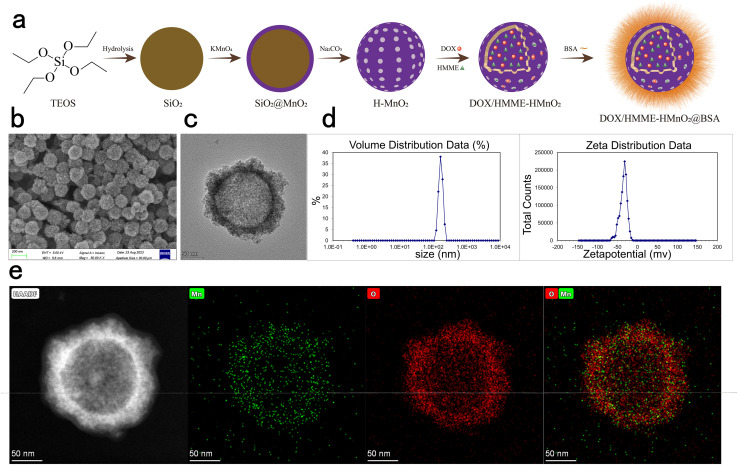
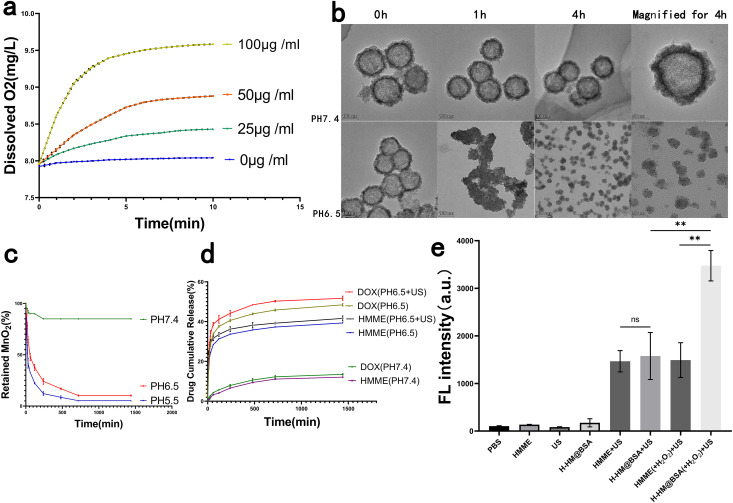
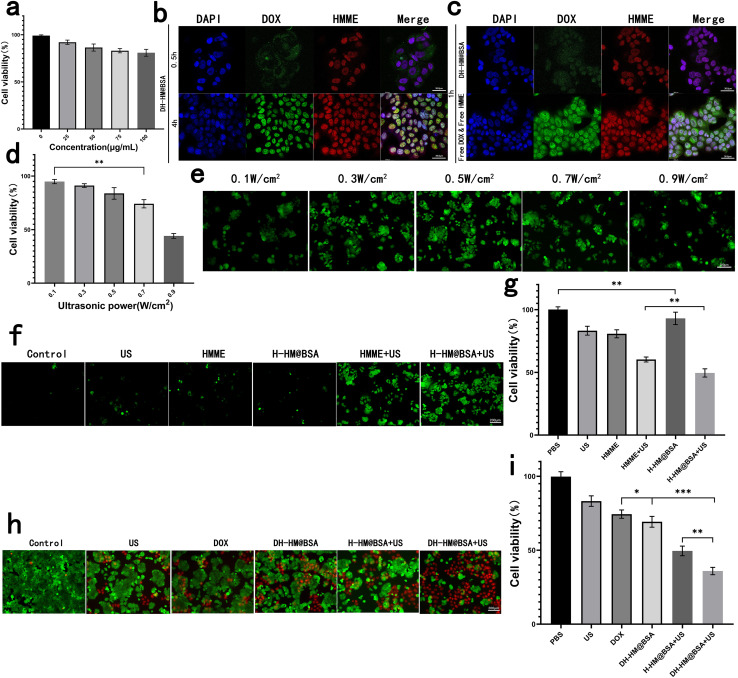
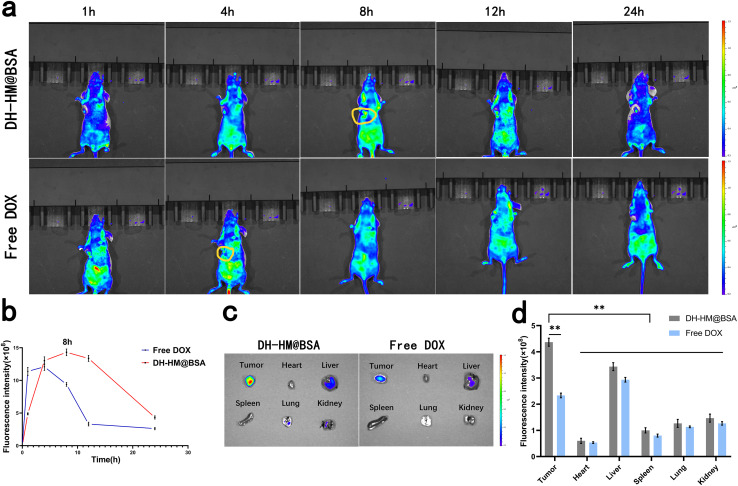
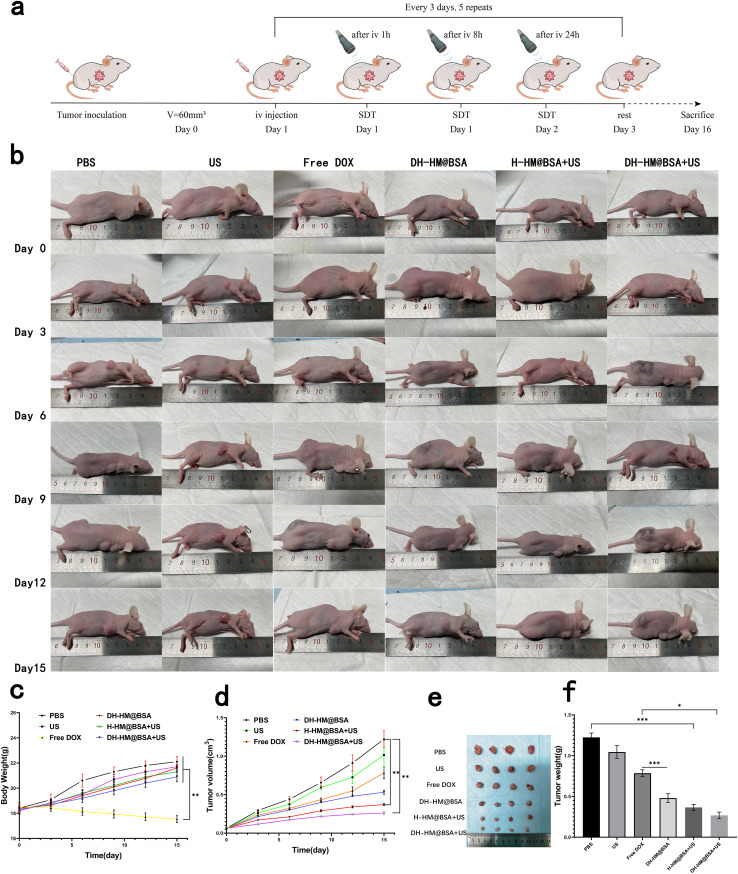
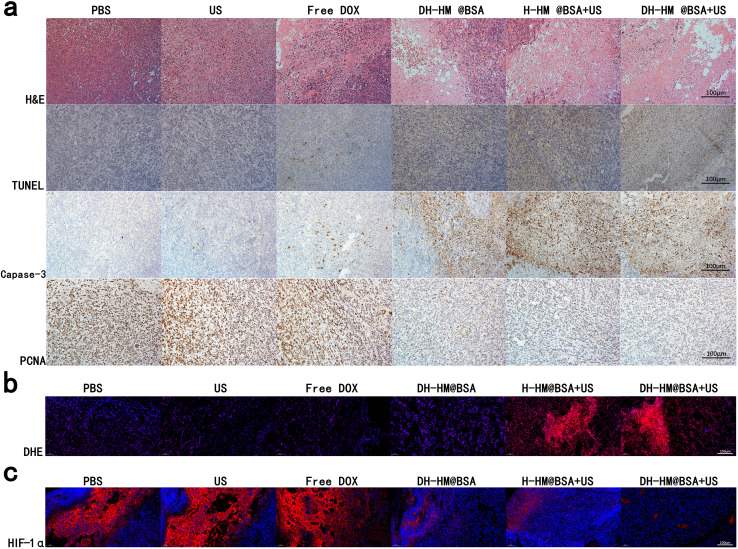
Co-loading of sonosensitizers and chemotherapeutic drugs into nanocarriers can improve the biocompatibilities, stabilities, and targeting of drugs and reduce the adverse reactions of drugs, providing a robust platform to orchestrate the synergistic interplay between chemotherapy and sonodynamic therapy (SDT) in cancer treatment. In this regard, biodegradable manganese dioxide (MnO) has attracted widespread attention because of its unique properties in the tumor microenvironment (TME). Accordingly, herein, MnO nanoshells with hollow mesoporous structures (H-MnO) were etched to co-load hematoporphyrin monomethyl ether (HMME) and doxorubicin (DOX), and DOX/HMME-HMnO@bovine serum albumin (BSA) obtained after simple BSA modification of DOX/HMME-HMnO exhibited excellent hydrophilicity and dispersibility. H-MnO rapidly degraded in the weakly acidic TME, releasing loaded HMME and DOX, and catalysed the decomposition of HO abundantly present in TME, producing oxygen (O) , significantly increasing O concentration and downregulating the hypoxia-inducible factor 1α (HIF-1α). After irradiation of the tumor area with low-frequency ultrasound, the drug delivery efficiency of DOX/HMME-HMnO@BSA substantially increased, and the excited HMME generated a large amount of reactive oxygen species (ROS), which caused irreversible damage to tumor cells. Moreover, the cell death rate exceeded 60% after synergistic SDT-chemotherapy. Therefore, the pH-responsive nanoshells designed in this study can realize drug accumulation in tumor regions by responding to TME and augment SDT-chemotherapy potency for breast cancer treatment by improving hypoxia in tumors. Thus, this study provides theoretical support for the development of multifunctional nanocarriers and scientific evidence for further exploration of safer and more efficient breast cancer treatments.
将声敏剂和化疗药物共同负载到纳米载体中,可以提高药物的生物相容性、稳定性和靶向性,并减少药物的不良反应,为在癌症治疗中协调化疗与声动力疗法(SDT)之间的协同相互作用提供了一个强大的平台。在这方面,可生物降解的二氧化锰(MnO)因其在肿瘤微环境(TME)中的独特性质而受到广泛关注。因此,本文通过蚀刻具有中空介孔结构的MnO纳米壳(H-MnO)来共同负载单甲氧基血卟啉(HMME)和阿霉素(DOX),并且在对DOX/HMME-HMnO进行简单的牛血清白蛋白(BSA)修饰后得到的DOX/HMME-HMnO@BSA表现出优异的亲水性和分散性特性。H-MnO在弱酸性的TME中迅速降解,释放出负载的HMME和DOX,并催化TME中大量存在的过氧化氢(HO)分解,产生氧气(O),显著提高O浓度并下调缺氧诱导因子1α(HIF-1α)。在用低频超声照射肿瘤区域后,DOX/HMME-HMnO@BSA的药物递送效率大幅提高,并且被激发的HMME产生大量活性氧(ROS),对肿瘤细胞造成不可逆的损伤。此外,协同SDT-化疗后的细胞死亡率超过60%。因此,本研究设计的pH响应性纳米壳可以通过对TME做出响应来实现药物在肿瘤区域的积累,并通过改善肿瘤缺氧来增强SDT-化疗对乳腺癌治疗的效力。因此,本研究为多功能纳米载体的开发提供了理论支持,并为进一步探索更安全、更有效的乳腺癌治疗方法提供了科学依据。