Darpel Karin E, Corla Amanda, Stedman Anna, Bellamy Fiona, Flannery John, Rajko-Nenow Paulina, Powers Claire, Wilson Steve, Charleston Bryan, Baron Michael D, Batten Carrie
The Pirbright Institute, Ash Road, Pirbright, Surrey, GU24 0NF, UK.
Institute of Virology and Immunology, Mittelhäusern, Switzerland.
NPJ Vaccines. 2024 Jun 3;9(1):98. doi: 10.1038/s41541-024-00892-2.
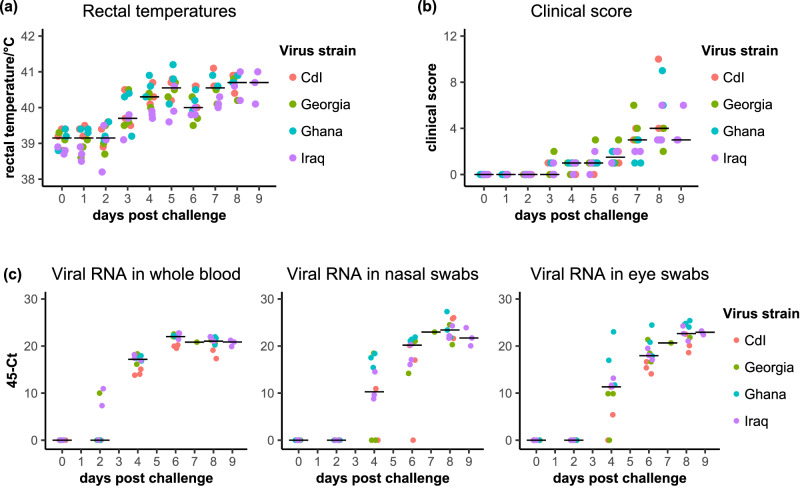
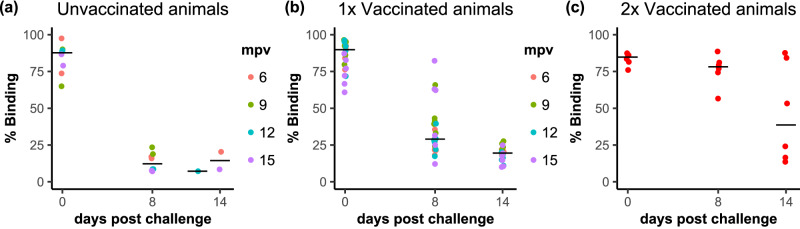
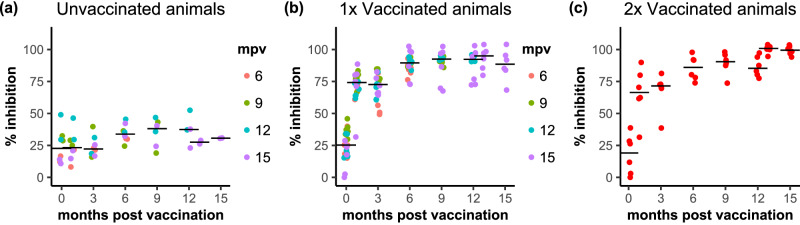
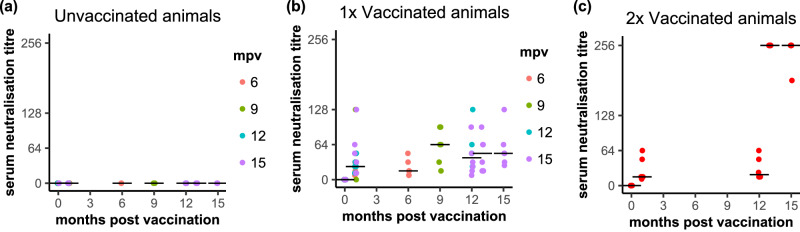
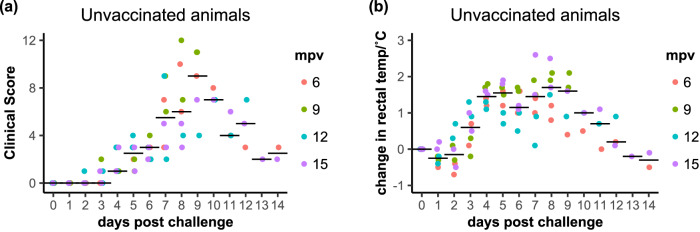
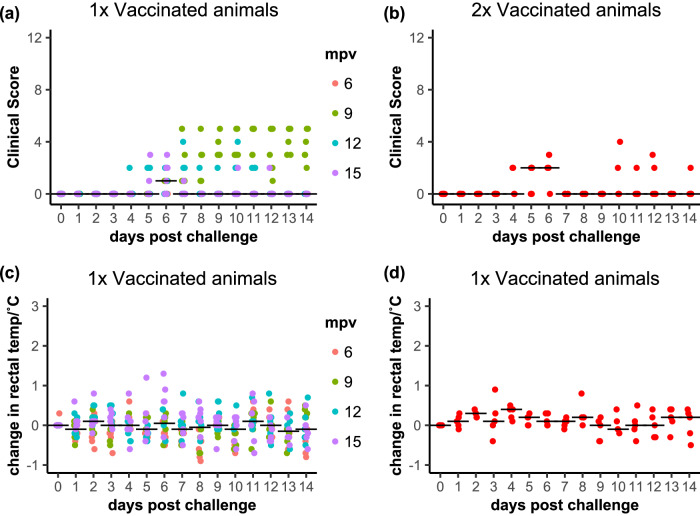
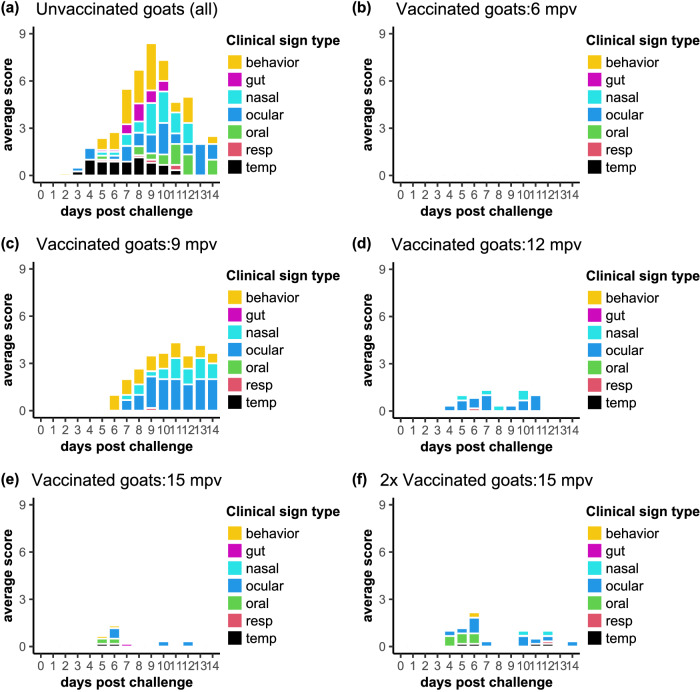
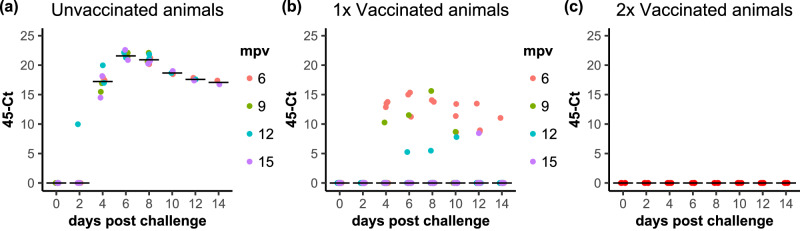
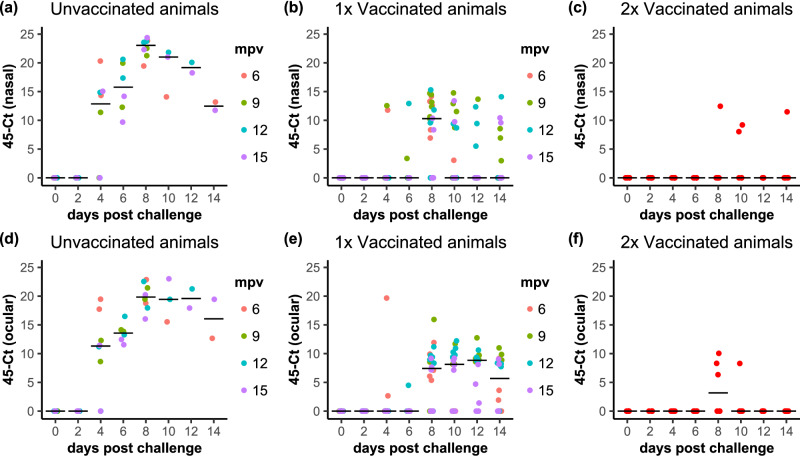
A recombinant, replication-defective, adenovirus-vectored vaccine expressing the H surface glycoprotein of peste des petits ruminants virus (PPRV) has previously been shown to protect goats from challenge with wild-type PPRV at up to 4 months post vaccination. Here, we present the results of a longer-term trial of the protection provided by such a vaccine, challenging animals at 6, 9, 12 and 15 months post vaccination. Vaccinated animals developed high levels of anti-PPRV H protein antibodies, which were virus-neutralising, and the level of these antibodies was maintained for the duration of the trial. The vaccinated animals were largely protected against overt clinical disease from the challenge virus. Although viral genome was intermittently detected in blood samples, nasal and/or ocular swabs of vaccinated goats post challenge, viral RNA levels were significantly lower compared to unvaccinated control animals and vaccinated goats did not appear to excrete live virus. This protection, like the antibody response, was maintained at the same level for at least 15 months after vaccination. In addition, we showed that animals that have been vaccinated with the adenovirus-based vaccine can be revaccinated with the same vaccine after 12 months and showed an increased anti-PPRV antibody response after this boost vaccination. Such vaccines, which provide a DIVA capability, would therefore be suitable for use when the current live attenuated PPRV vaccines are withdrawn at the end of the ongoing global PPR eradication campaign.
一种表达小反刍兽疫病毒(PPRV)H表面糖蛋白的重组、复制缺陷型腺病毒载体疫苗,此前已被证明可在接种疫苗后长达4个月的时间内保护山羊免受野生型PPRV的攻击。在此,我们展示了对这种疫苗提供的保护进行的长期试验结果,在接种疫苗后6、9、12和15个月对动物进行攻击。接种疫苗的动物产生了高水平的抗PPRV H蛋白抗体,这些抗体具有病毒中和能力,并且在试验期间这些抗体水平一直保持。接种疫苗的动物在很大程度上受到保护,免受攻击病毒引起的明显临床疾病。尽管在攻击后接种疫苗的山羊的血液样本、鼻拭子和/或眼拭子中间歇性地检测到病毒基因组,但与未接种疫苗的对照动物相比,病毒RNA水平显著较低,并且接种疫苗的山羊似乎没有排出活病毒。这种保护,如同抗体反应一样,在接种疫苗后至少15个月内保持在相同水平。此外,我们表明,用基于腺病毒的疫苗接种过的动物在12个月后可以用相同的疫苗再次接种,并且在这次加强接种后显示出抗PPRV抗体反应增强。因此,这种具有鉴别诊断能力的疫苗,在当前正在进行的全球PPR根除运动结束时,当现有的减毒活PPRV疫苗被停用后,将适合使用。