IFN and Host-Defense Research Laboratory, Louis Pasteur Center for Medical Research, Kyoto, Kyoto, 606-8225, Japan.
Evercare Hospital Dhaka, Plot-81, Block-E, Bashundhara R/A, Dhaka, 1229, Bangladesh.
Sci Rep. 2024 Jun 3;14(1):12713. doi: 10.1038/s41598-024-63184-8.
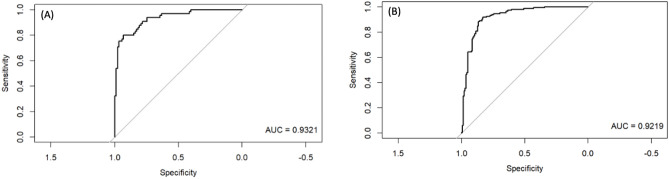
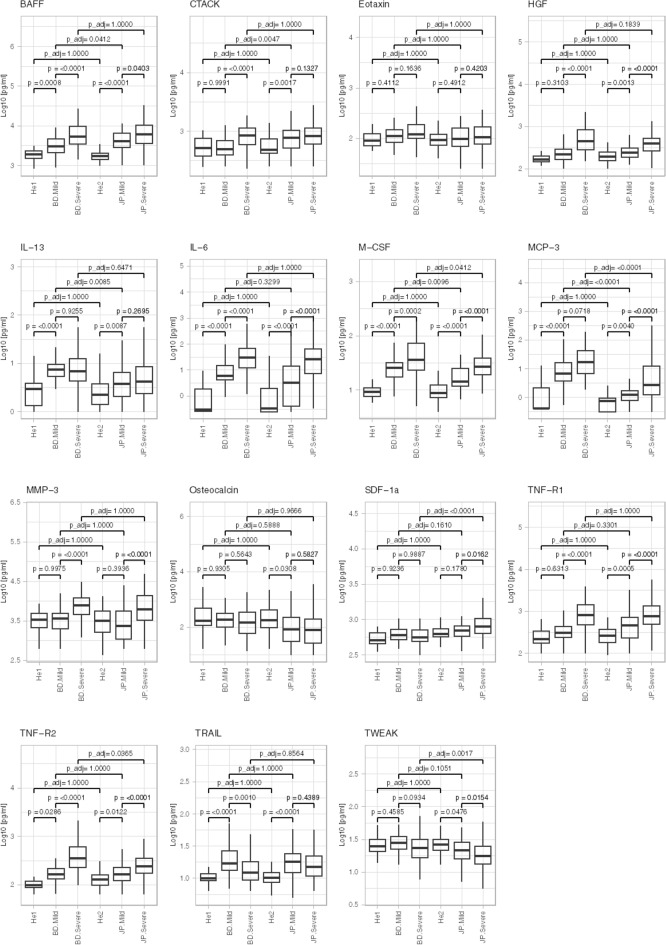
Despite high vaccination rates globally, countries are still grappling with new COVID infections, and patients diagnosed as mild dying at home during outpatient treatment. Hence, this study aim to identify, then validate, biomarkers that could predict if newly infected COVID-19 patients would subsequently require hospitalization or could recover safely with medication as outpatients. Serum cytokine/chemokine data from 129 COVID-19 patients within 7 days after the onset of symptoms in Bangladesh were used as training data. The majority of patients were infected with the Omicron variant and over 88% were vaccinated. Patients were divided into those with mild symptoms who recovered, and those who deteriorated to moderate or severe illness. Using the Lasso method, 15 predictive markers were identified and used to classify patients into these two groups. The biomarkers were then validated in a cohort of 194 Covid patients in Japan with a predictive accuracy that exceeded 80% for patients infected with Delta and Omicron variants, and 70% for Wuhan and Alpha variants. In an environment of widespread vaccination, these biomarkers could help medical practitioners determine if newly infected COVID-19 patients will improve and can be managed on an out-patient basis, or if they will deteriorate and require hospitalization.
尽管全球疫苗接种率很高,但各国仍在努力应对新的 COVID 感染,并且在门诊治疗期间被诊断为轻症的患者在家中死亡。因此,本研究旨在确定并验证生物标志物,以预测新感染 COVID-19 的患者是否随后需要住院治疗,或者是否可以通过药物安全地作为门诊患者康复。本研究使用了孟加拉国 129 名 COVID-19 患者在症状出现后 7 天内的血清细胞因子/趋化因子数据作为训练数据。大多数患者感染了奥密克戎变异株,超过 88%的患者接种了疫苗。患者分为轻症并康复的患者,以及病情恶化至中度或重度的患者。使用套索法,确定了 15 个预测标志物,并用于将患者分为这两组。然后,在日本的 194 名新冠患者队列中验证了这些生物标志物,对于感染德尔塔和奥密克戎变异株的患者,其预测准确率超过 80%,对于感染武汉和阿尔法变异株的患者,预测准确率为 70%。在广泛接种疫苗的环境下,这些生物标志物可以帮助医疗从业者确定新感染 COVID-19 的患者是否会好转并可以进行门诊管理,或者是否会恶化并需要住院治疗。