Research Department of Child Nutrition, University Hospital of Pediatrics and Adolescent Medicine, St. Josef-Hospital, Ruhr-University Bochum, Bochum, Germany.
Pediatric Clinic, Klinikum Dortmund, Beurhausstrasse 40, D-44137, Dortmund, Germany.
Ital J Pediatr. 2024 Jun 3;50(1):110. doi: 10.1186/s13052-024-01683-0.
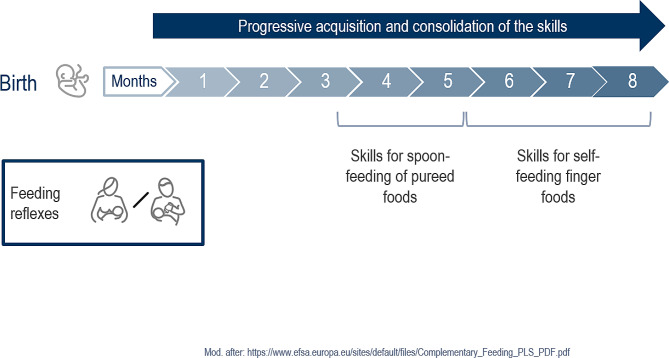
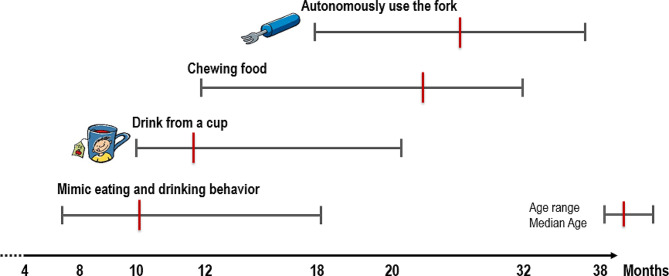
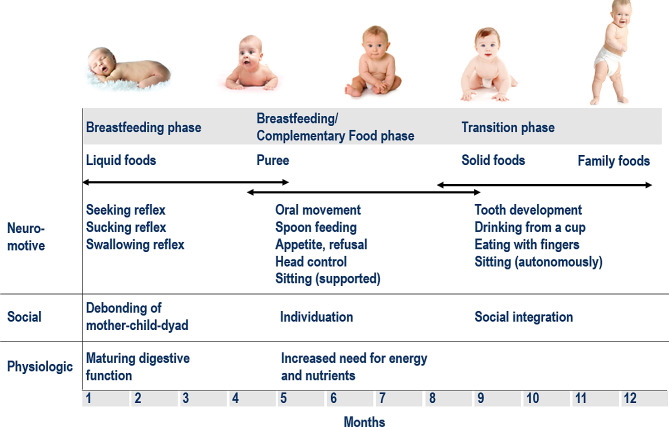
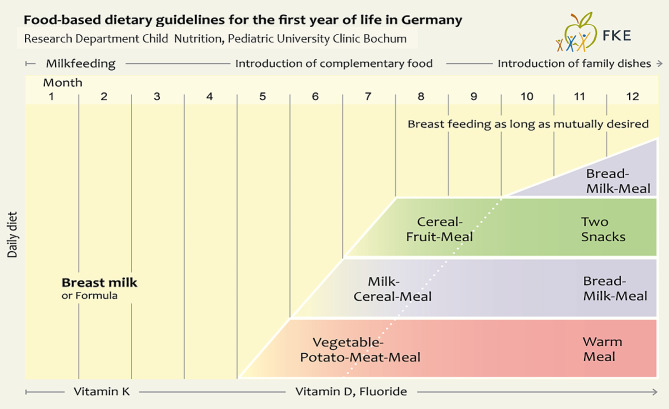
Early infant feeding and swallowing are complex motor processes involving numerous muscles in coordination, e.g. the orofacial muscles as well as the muscles of the pharynx, larynx and esophagus. The newborn's reflexive drinking develops into the ability to ingest pureed complementary food as infancy progresses. Finally, in the last part of the first year of life, a differentiated eating, chewing and swallowing process develops allowing the voluntary intake of different foods of the family diet. The dietary schedule for the first year of life, which describes the recommended nutrition of infants in Germany, corresponds to these milestones in eating development. Disturbances in gross motor development, sensory processing issues, and organic and behavioral problems are known to interfere with the development of eating skills. Swallowing disorders (dysphagia) in children can have a detrimental effect on food intake and pose a serious risk to growth and development. Their prevention treatment requires a multidisciplinary approach with the aim of enabling the child to eat independently in the long term.
婴儿早期的喂养和吞咽是复杂的运动过程,涉及到许多肌肉的协调,例如口腔肌肉以及咽、喉和食管的肌肉。随着婴儿的成长,新生儿的反射性饮水能力逐渐发展为能够摄入泥状的补充食物。最后,在生命的第一年的最后阶段,发展出了一种分化的进食、咀嚼和吞咽过程,允许儿童自愿摄入不同的家庭饮食。描述德国婴儿推荐营养的第一年饮食计划与这些进食发展的里程碑相对应。粗大运动发育障碍、感觉处理问题以及有机和行为问题已知会干扰进食技能的发展。儿童吞咽障碍(吞咽困难)会对食物摄入产生不利影响,并对生长和发育构成严重威胁。预防和治疗需要多学科方法,目的是使儿童能够长期独立进食。