Anhui Provincial Center for Disease Control and Prevention, Hefei, Anhui, 230601, China.
Department of Epidemiology and Biostatistics, School of Public Health, Anhui Medical University, Hefei, China.
BMC Microbiol. 2024 Jun 3;24(1):192. doi: 10.1186/s12866-024-03351-z.
HIV-infected persons demonstrate notable disturbances in their intestinal microbiota; however, the impact of intestinal microbiota on HIV susceptibility in men who have sex with men (MSM), as well as the effects of HIV and antiretroviral therapy (ART) on their gut microbiota, remains under active study. Thus, our research focuses on clarifying the distinctions in intestinal microbiota composition among uninfected MSM and non-MSM healthy controls, investigating the alterations in early-stage intestinal microbial communities following HIV infection, and assessing how ART affects the intestinal microbiota.
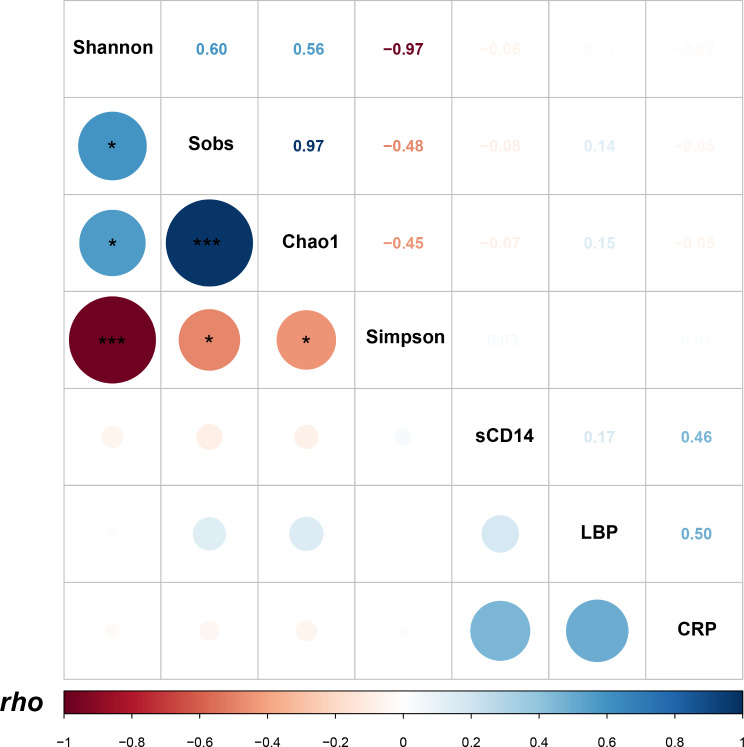
This study enrolled four participant groups: uninfected MSM, Recent HIV-1 infection (RHI) MSM, MSM on ART, and non-MSM healthy controls, with 30 individuals in each group. We utilized 16S ribosomal DNA (16S rDNA) amplicon sequencing to analyze fecal microbiota and employed Luminex multiplex assays to measure plasma markers for microbial translocation (LBP, sCD14) and the inflammatory marker CRP.
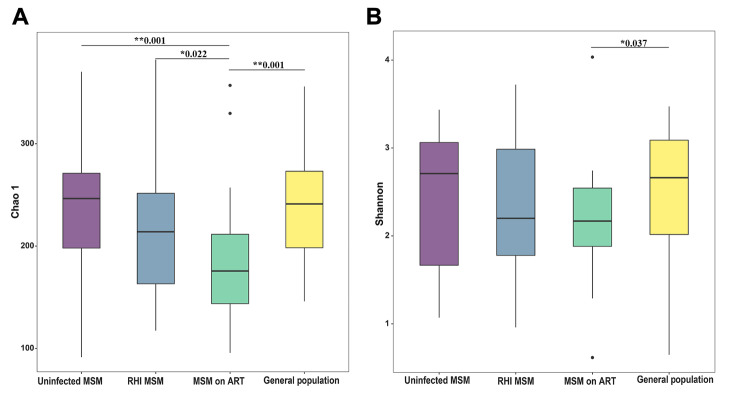
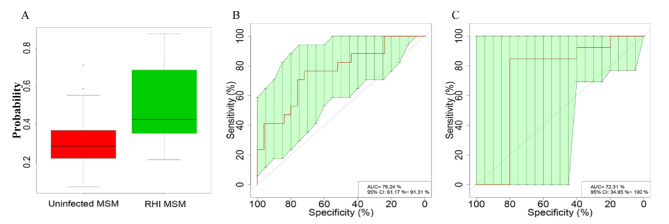
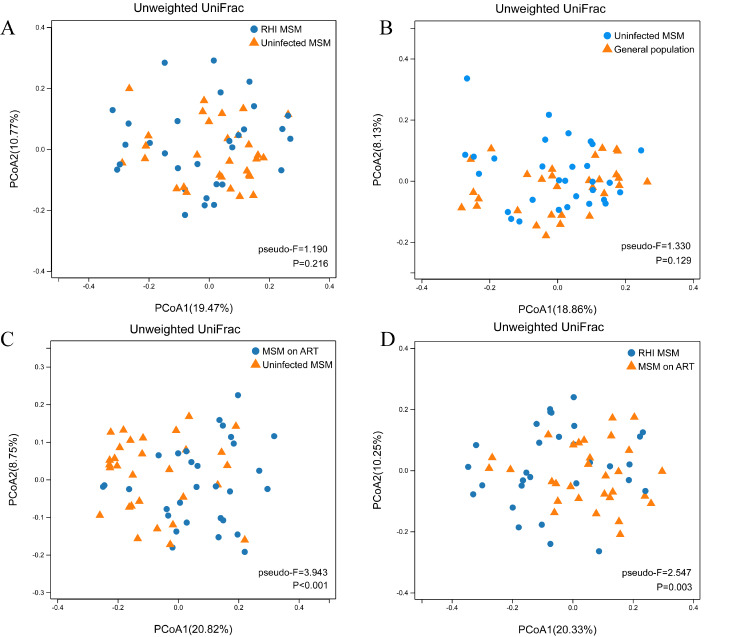
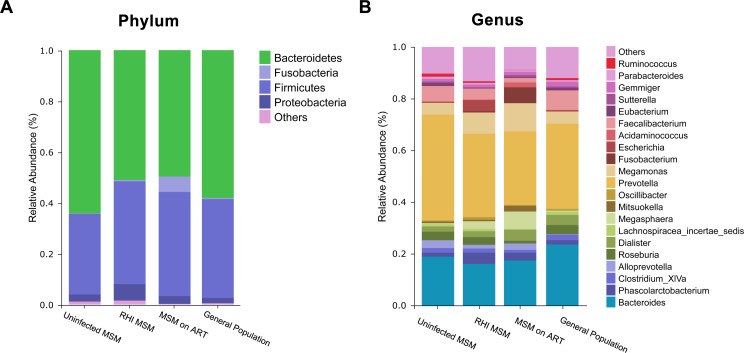
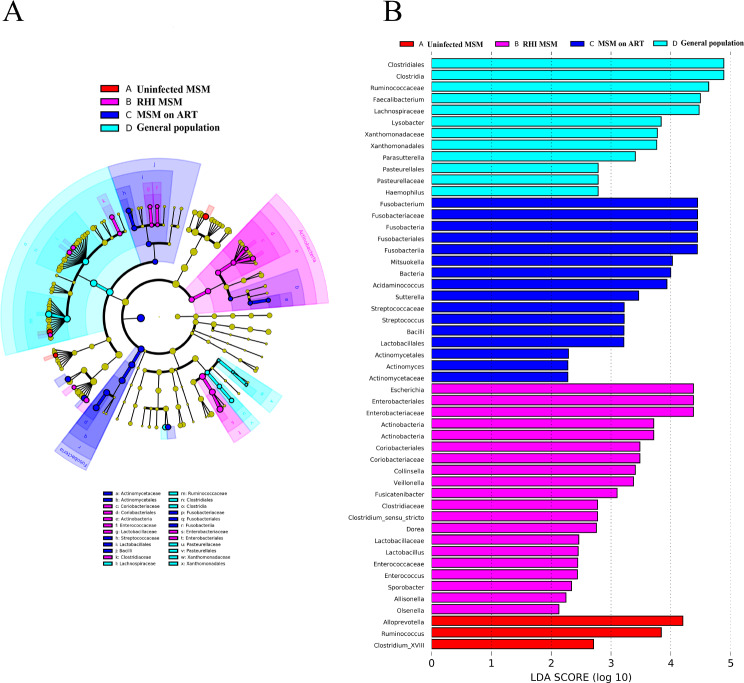
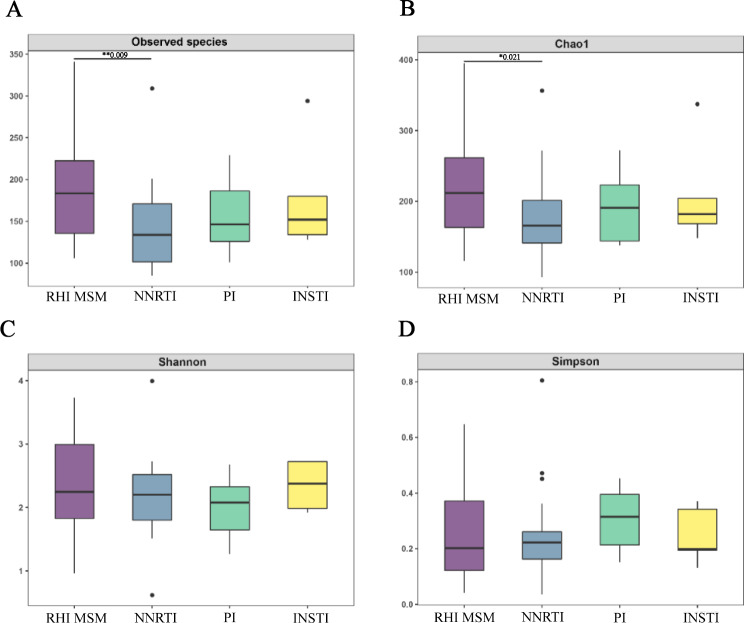
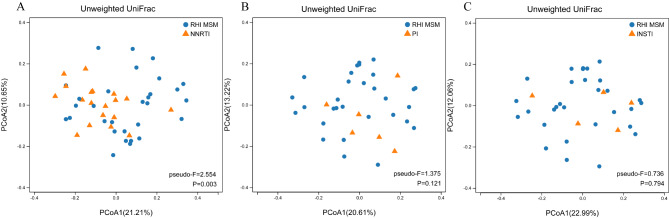
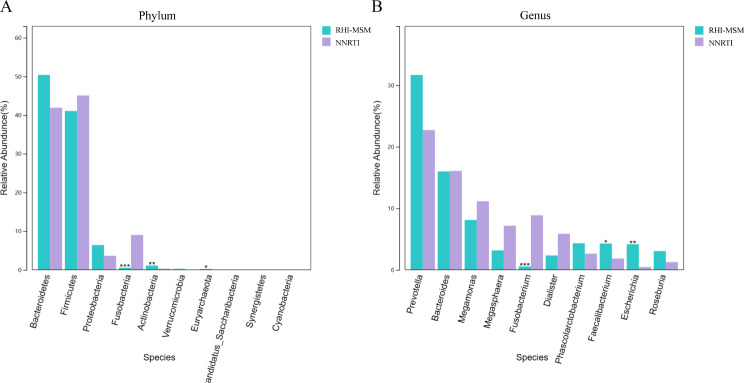
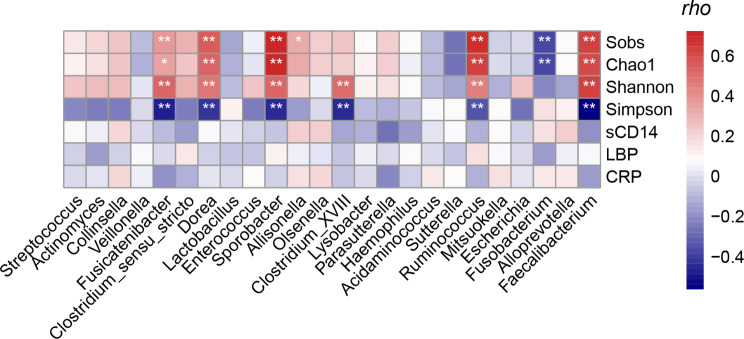
Comparing uninfected MSM to non-MSM healthy controls, no substantial variances were observed in α and β diversity. Uninfected MSM had higher average relative abundances of Bacteroidetes, Prevotella, and Alloprevotella, while Bacteroides, Firmicutes, and Faecalibacterium had lower average relative abundances. MSM on ART had lower intestinal microbiota diversity than RHI MSM and uninfected MSM. In MSM on ART, Megasphaera and Fusobacterium increased, while Faecalibacterium and Roseburia decreased at genus level. Additionally, treatment with a non-nucleoside reverse transcriptase inhibitor (NNRTI) led to significant alterations in intestinal microbiota diversity and composition compared to RHI MSM. The random forest model showed that HIV infection biomarkers effectively distinguished between newly diagnosed HIV-infected MSM and HIV-negative MSM, with an ROC AUC of 76.24% (95% CI: 61.17-91.31%).
MSM showed early intestinal microbiota imbalances after new HIV infection. MSM on ART experienced worsened dysbiosis, indicating a combined effect of HIV and ART. NNRTI-based treatment notably changed intestinal microbiota, suggesting a potential direct impact of NNRTI drugs on intestinal microbiota.
HIV 感染者的肠道微生物群存在明显紊乱;然而,肠道微生物群对男男性行为者(MSM)中 HIV 易感性的影响,以及 HIV 和抗逆转录病毒治疗(ART)对其肠道微生物群的影响,仍在积极研究中。因此,我们的研究重点是阐明未感染的 MSM 和非 MSM 健康对照组之间肠道微生物群组成的差异,研究 HIV 感染后早期肠道微生物群落的变化,并评估 ART 如何影响肠道微生物群。
本研究纳入了四个实验组:未感染的 MSM、新近感染 HIV-1(RHI)的 MSM、接受 ART 的 MSM 和非 MSM 健康对照组,每组 30 人。我们使用 16S 核糖体 DNA(16S rDNA)扩增子测序分析粪便微生物群,并使用 Luminex 多重分析测定血浆微生物易位标志物(LBP、sCD14)和炎症标志物 CRP。
与非 MSM 健康对照组相比,未感染的 MSM 的 α 和 β 多样性没有明显差异。未感染的 MSM 的拟杆菌门、普雷沃氏菌属和 Alloprevotella 相对丰度较高,而 Bacteroides、Firmicutes 和 Faecalibacterium 的相对丰度较低。接受 ART 的 MSM 的肠道微生物多样性低于 RHI MSM 和未感染的 MSM。在接受 ART 的 MSM 中,Megasphaera 和 Fusobacterium 增加,而 Faecalibacterium 和 Roseburia 减少。此外,与 RHI MSM 相比,使用非核苷类逆转录酶抑制剂(NNRTI)治疗导致肠道微生物多样性和组成发生显著变化。随机森林模型显示,HIV 感染标志物能够有效区分新诊断的 HIV 感染的 MSM 和 HIV 阴性的 MSM,ROC AUC 为 76.24%(95%CI:61.17-91.31%)。
MSM 在新感染 HIV 后出现早期肠道微生物群失衡。接受 ART 的 MSM 经历了更严重的肠道菌群失调,表明 HIV 和 ART 的联合作用。基于 NNRTI 的治疗显著改变了肠道微生物群,提示 NNRTI 药物可能对肠道微生物群有直接影响。