Department of Gastroenterology, Guangzhou Digestive Disease Center, Guangzhou First People's Hospital, Guangzhou Medical University, Guangzhou, China.
Department of Internal Medicine, Guangzhou No. 8 People's Hospital, Guangzhou, China.
J Cell Mol Med. 2018 Apr;22(4):2263-2271. doi: 10.1111/jcmm.13508. Epub 2018 Feb 7.
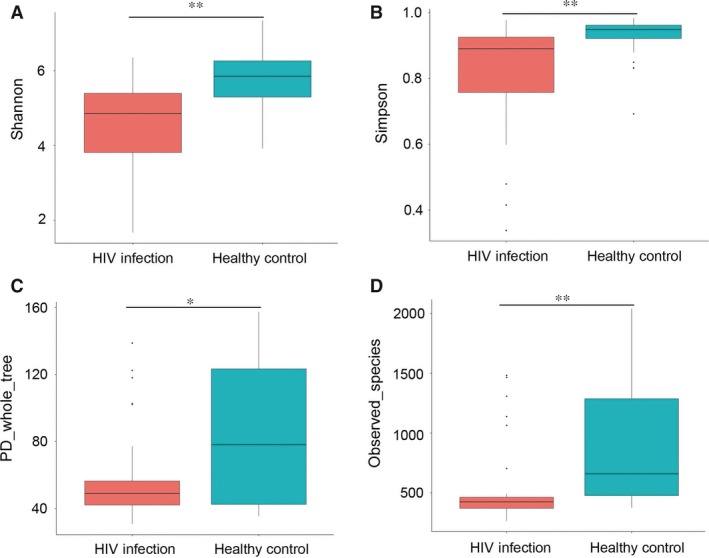
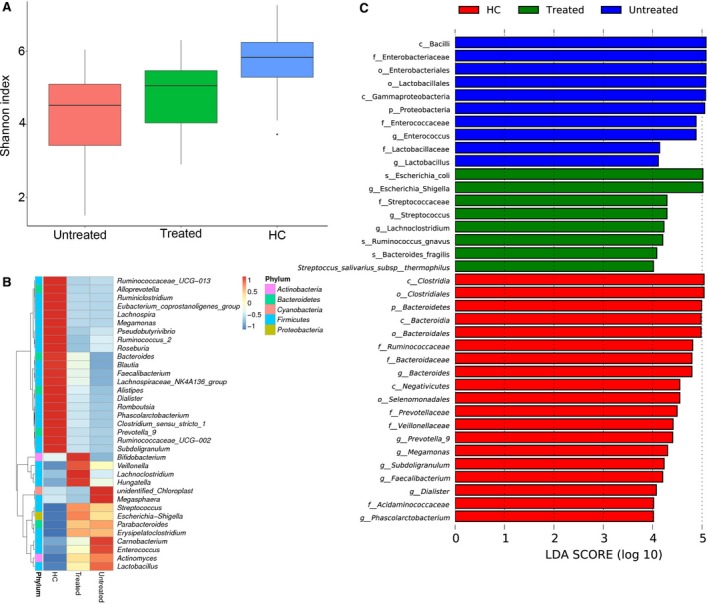
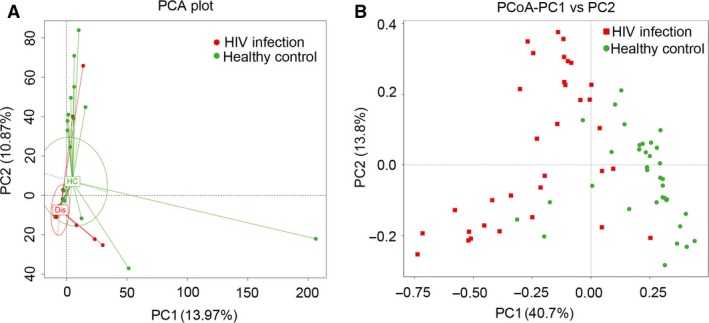
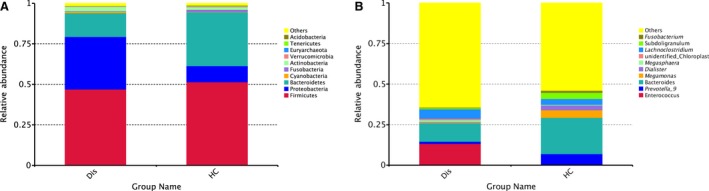
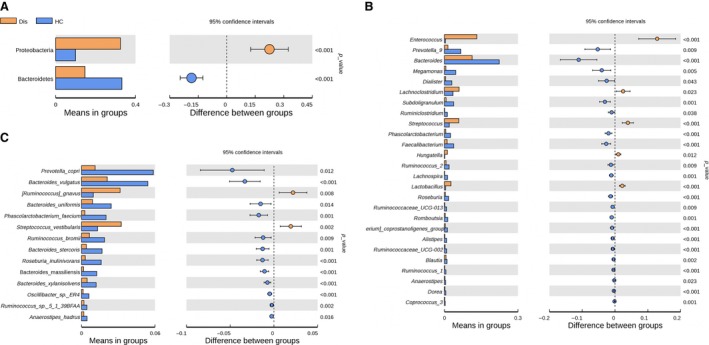
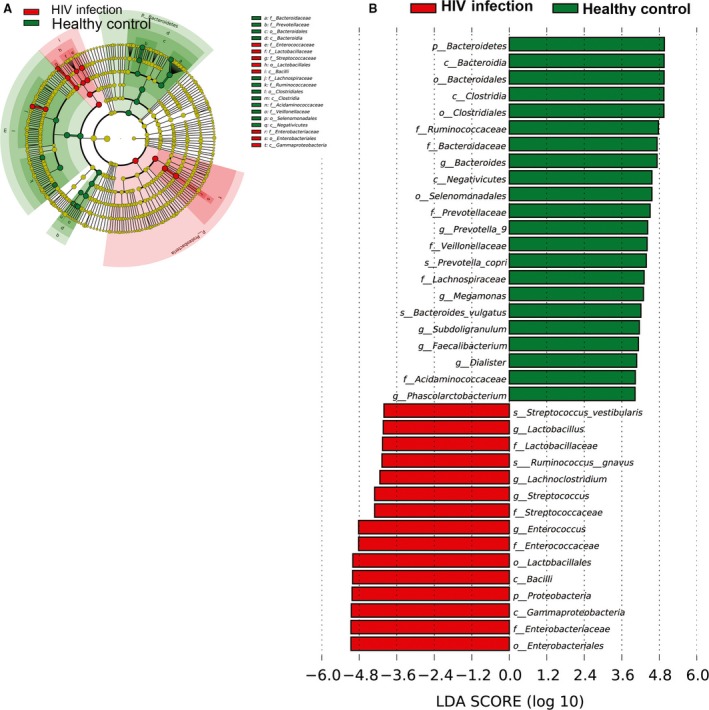
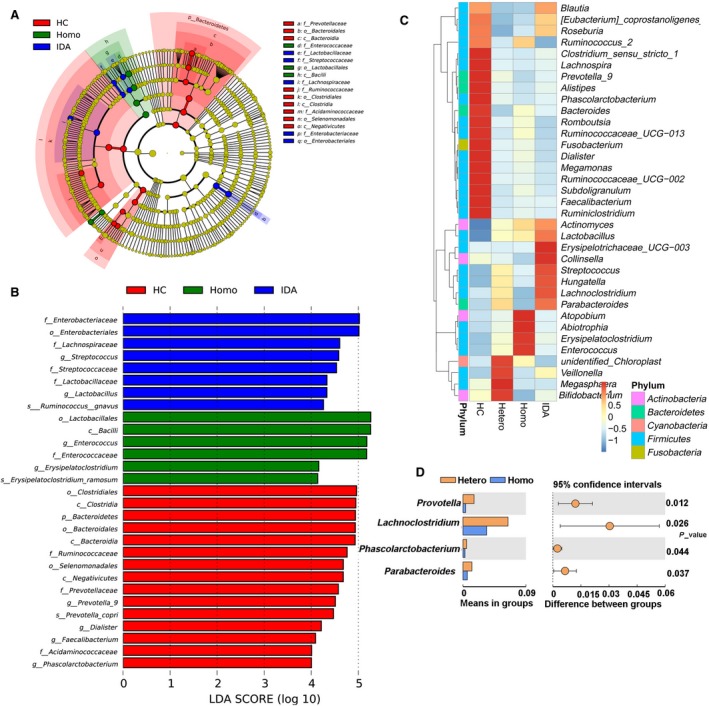
Acquired immune deficiency syndrome (AIDS), caused by infection with human immunodeficiency virus (HIV), is associated with gastrointestinal disease, systemic immune activation and changes in the gut microbiota. Here, we aim to investigate the gut microbiota patterns of HIV-infected individuals and HIV-uninfected individuals in populations from South China. We enrolled 33 patients with HIV (14 participants treated with highly active antiretroviral therapy [HAART] for more than 3 months; the remaining 19 individuals had not received treatment) and 35 healthy controls (HC) for a cross-sectional comparison of gut microbiota using stool samples. Gut microbial communities were profiled by sequencing the bacterial 16S rRNA genes. Dysbiosis was more common among patients with AIDS compared with healthy individuals. Dysbiosis was characterized by decreased α-diversity, low mean counts of Bacteroidetes, Faecalibacterium, Prevotella, Bacteroides vulgatus, Dialister and Roseburia inulnivorans, and high mean counts of Proteobacteria, Enterococcus, Streptococcus, Lactobacillus, Lachnociostridium, Ruminococcus gnavus and Streptococcus vestibularis. Increased abundance of Bacilli was observed in homosexual patients. Proteobacteria were higher among heterosexual patients with HIV infections. Tenericutes were higher among patients with history of intravenous drug abuse. Restoration of gut microbiota diversity and a significant increase in abundance of Faecalibacterium, Blautia and Bacteroides were found in patients receiving HAART compared to those who did not receive. HIV infection-associated dysbiosis is characterized by decreased levels of α-diversity and Bacteroidetes, increased levels of Proteobacteria and the alterations of gut microbiota correlate with the route of HIV transmission. The imbalanced faecal microbiota of HIV infection is partially restored after therapy.
获得性免疫缺陷综合征(AIDS),由人类免疫缺陷病毒(HIV)感染引起,与胃肠道疾病、全身免疫激活和肠道微生物群变化有关。在这里,我们旨在研究中国南方人群中 HIV 感染者和未感染者的肠道微生物群模式。我们招募了 33 名 HIV 感染者(14 名参与者接受高效抗逆转录病毒治疗 [HAART] 超过 3 个月;其余 19 名未接受治疗)和 35 名健康对照者(HC),通过粪便样本进行肠道微生物群的横断面比较。肠道微生物群落通过测序细菌 16S rRNA 基因进行分析。与健康个体相比,艾滋病患者的肠道菌群失调更为常见。菌群失调的特征是 α-多样性降低,厚壁菌门、粪杆菌、普雷沃氏菌、脆弱拟杆菌、粪球菌和玫瑰色瘤胃菌的平均丰度降低,变形菌门、肠球菌、链球菌、乳杆菌、毛螺菌科、罗氏菌和前庭链球菌的平均丰度升高。同性恋患者中观察到杆菌丰度增加。HIV 感染的异性恋患者中变形菌门较高。静脉吸毒史患者中厚壁菌门较高。与未接受治疗的患者相比,接受 HAART 的患者肠道微生物多样性恢复,粪杆菌、布劳特氏菌和拟杆菌丰度显著增加。与 HIV 传播途径相关,HIV 感染相关的菌群失调表现为 α-多样性和拟杆菌门降低,变形菌门增加,肠道微生物群的改变。HIV 感染的失衡粪便微生物群在治疗后部分恢复。