Ankolekar Anshu, Eppings Lisanne, Bottari Fabio, Pinho Inês Freitas, Howard Kit, Baker Rebecca, Nan Yang, Xing Xiaodan, Walsh Simon Lf, Vos Wim, Yang Guang, Lambin Philippe
Department of Precision Medicine, GROW School for Oncology, Maastricht University Medical Centre+, Maastricht, the Netherlands.
Radiomics (Oncoradiomics SA), Liege, Belgium.
Comput Struct Biotechnol J. 2024 May 17;24:412-419. doi: 10.1016/j.csbj.2024.05.014. eCollection 2024 Dec.
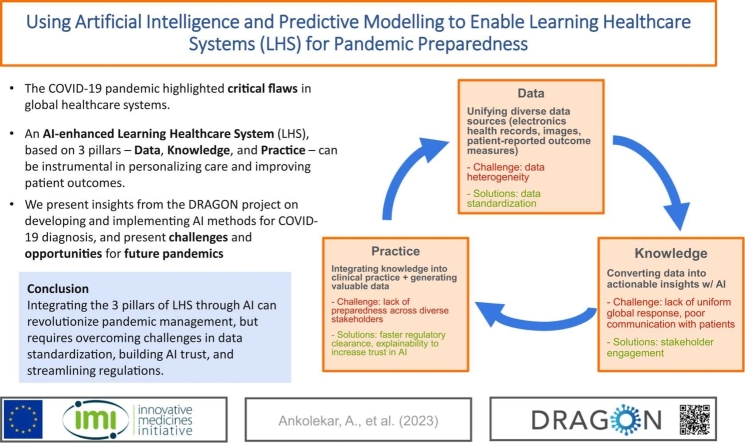
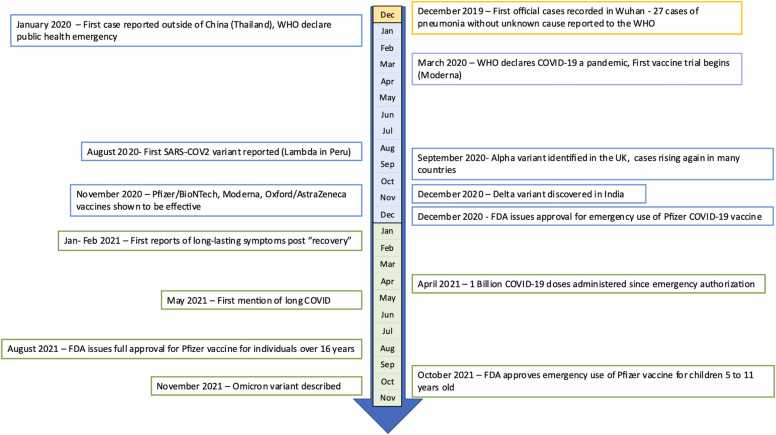
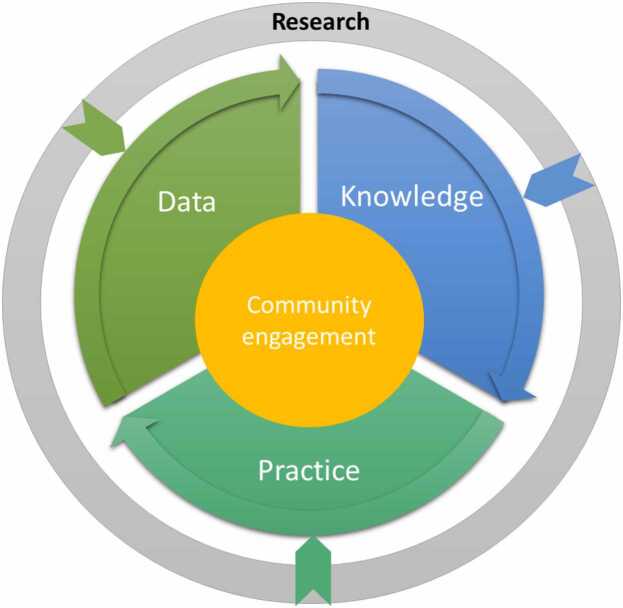
In anticipation of potential future pandemics, we examined the challenges and opportunities presented by the COVID-19 outbreak. This analysis highlights how artificial intelligence (AI) and predictive models can support both patients and clinicians in managing subsequent infectious diseases, and how legislators and policymakers could support these efforts, to bring learning healthcare system (LHS) from guidelines to real-world implementation. This report chronicles the trajectory of the COVID-19 pandemic, emphasizing the diverse data sets generated throughout its course. We propose strategies for harnessing this data via AI and predictive modelling to enhance the functioning of LHS. The challenges faced by patients and healthcare systems around the world during this unprecedented crisis could have been mitigated with an informed and timely adoption of the three pillars of the LHS: Knowledge, Data and Practice. By harnessing AI and predictive analytics, we can develop tools that not only detect potential pandemic-prone diseases early on but also assist in patient management, provide decision support, offer treatment recommendations, deliver patient outcome triage, predict post-recovery long-term disease impacts, monitor viral mutations and variant emergence, and assess vaccine and treatment efficacy in real-time. A patient-centric approach remains paramount, ensuring patients are both informed and actively involved in disease mitigation strategies.
为应对未来可能出现的大流行,我们研究了新冠疫情带来的挑战与机遇。本分析突出了人工智能(AI)和预测模型如何能够在管理后续传染病方面为患者和临床医生提供支持,以及立法者和政策制定者如何能够支持这些努力,从而将学习型医疗系统(LHS)从指南转化为实际应用。本报告记录了新冠疫情的发展轨迹,强调了在其整个过程中产生的各种数据集。我们提出了通过人工智能和预测建模利用这些数据的策略,以增强学习型医疗系统的功能。在这场前所未有的危机中,世界各地的患者和医疗系统所面临的挑战,本可通过明智且及时地采用学习型医疗系统的三大支柱:知识、数据和实践来缓解。通过利用人工智能和预测分析,我们可以开发出不仅能早期检测出潜在的易引发大流行疾病,还能协助患者管理、提供决策支持、给出治疗建议、进行患者预后分类、预测康复后长期疾病影响、监测病毒突变和变种出现,并实时评估疫苗和治疗效果的工具。以患者为中心的方法始终至关重要,要确保患者了解情况并积极参与疾病缓解策略。