
基于轻量级G-PPW-VGG11模型的大田小麦品种分类
Classification of field wheat varieties based on a lightweight G-PPW-VGG11 model.
作者信息
Pan Yu, Yu Xun, Dong Jihua, Zhao Yonghang, Li Shuanming, Jin Xiuliang
机构信息
College of Mechanical and Electrical Engineering, Shihezi University, Shihezi, China.
Institute of Crop Sciences, Chinese Academy of Agricultural Sciences, Beijing, China.
出版信息
Front Plant Sci. 2024 May 14;15:1375245. doi: 10.3389/fpls.2024.1375245. eCollection 2024.
INTRODUCTION
In agriculture, especially wheat cultivation, farmers often use multi-variety planting strategies to reduce monoculture-related harvest risks. However, the subtle morphological differences among wheat varieties make accurate discrimination technically challenging. Traditional variety classification methods, reliant on expert knowledge, are inefficient for modern intelligent agricultural management. Numerous existing classification models are computationally complex, memory-intensive, and difficult to deploy on mobile devices effectively. This study introduces G-PPW-VGG11, an innovative lightweight convolutional neural network model, to address these issues.
METHODS
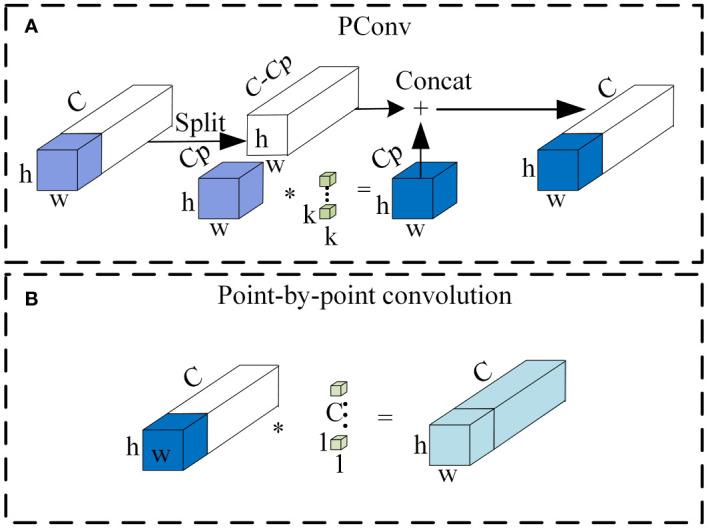
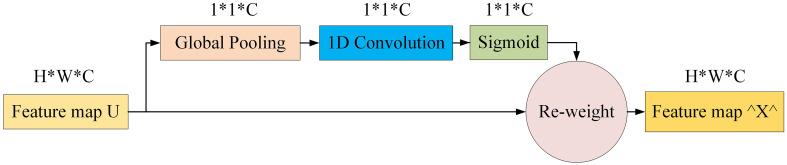
G-PPW-VGG11 ingeniously combines partial convolution (PConv) and partially mixed depthwise separable convolution (PMConv), reducing computational complexity and feature redundancy. Simultaneously, incorporating ECANet, an efficient channel attention mechanism, enables precise leaf information capture and effective background noise suppression. Additionally, G-PPW-VGG11 replaces traditional VGG11's fully connected layers with two pointwise convolutional layers and a global average pooling layer, significantly reducing memory footprint and enhancing nonlinear expressiveness and training efficiency.
RESULTS
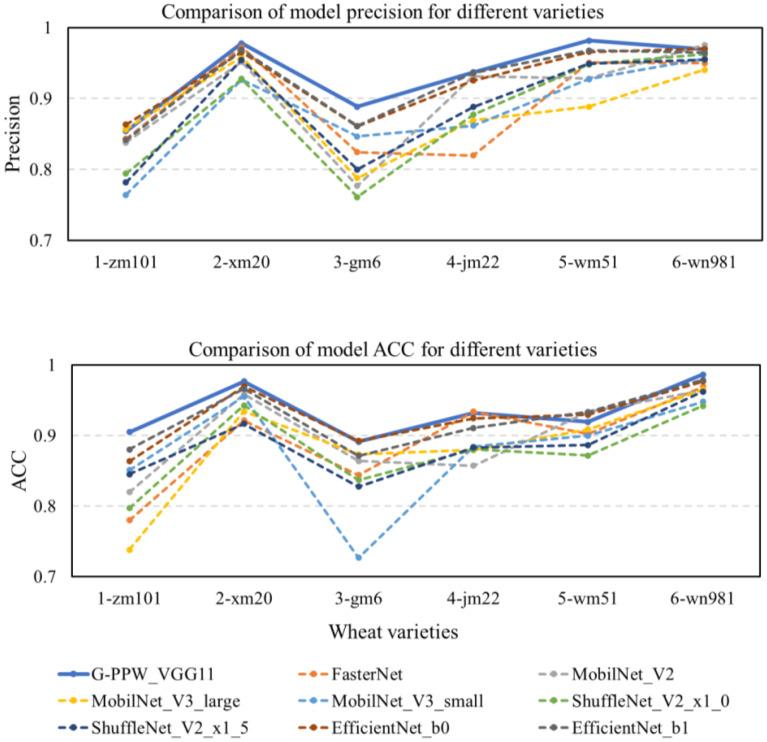
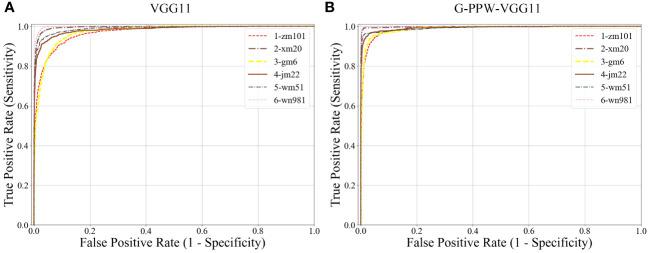
Rigorous testing showed G-PPW-VGG11's superior performance, with an impressive 93.52% classification accuracy and only 1.79MB memory usage. Compared to VGG11, G-PPW-VGG11 showed a 5.89% increase in accuracy, 35.44% faster inference, and a 99.64% reduction in memory usage. G-PPW-VGG11 also surpasses traditional lightweight networks in classification accuracy and inference speed. Notably, G-PPW-VGG11 was successfully deployed on Android and its performance evaluated in real-world settings. The results showed an 84.67% classification accuracy with an average time of 291.04ms per image.
DISCUSSION
This validates the model's feasibility for practical agricultural wheat variety classification, establishing a foundation for intelligent management. For future research, the trained model and complete dataset are made publicly available.
引言
在农业领域,尤其是小麦种植中,农民常常采用多品种种植策略来降低与单一栽培相关的收获风险。然而,小麦品种之间细微的形态差异使得在技术上进行准确鉴别具有挑战性。依赖专家知识的传统品种分类方法,对于现代智能农业管理而言效率低下。众多现有的分类模型计算复杂、内存占用量大,且难以有效部署在移动设备上。本研究引入了G-PPW-VGG11这一创新的轻量级卷积神经网络模型来解决这些问题。
方法
G-PPW-VGG11巧妙地结合了局部卷积(PConv)和部分混合深度可分离卷积(PMConv),降低了计算复杂度和特征冗余。同时,融入高效通道注意力机制ECANet,能够精确捕捉叶片信息并有效抑制背景噪声。此外,G-PPW-VGG11用两个逐点卷积层和一个全局平均池化层取代了传统VGG11的全连接层,显著减少了内存占用,增强了非线性表达能力和训练效率。
结果
严格测试表明G-PPW-VGG11性能卓越,分类准确率高达93.52%,内存使用量仅为1.79MB。与VGG11相比,G-PPW-VGG11的准确率提高了5.89%,推理速度快35.44%,内存使用量减少了99.64%。G-PPW-VGG11在分类准确率和推理速度方面也超越了传统的轻量级网络。值得注意的是,G-PPW-VGG11成功部署在安卓系统上,并在实际场景中进行了性能评估。结果显示分类准确率为84.67%,每张图像平均处理时间为291.04毫秒。
讨论
这验证了该模型在实际农业小麦品种分类中的可行性,为智能管理奠定了基础。对于未来的研究,训练好的模型和完整数据集将公开提供。





 Zotero 插件