Inositol Signaling Group, Signal Transduction Laboratory, National Institute of Environmental, Health Sciences, Research Triangle Park, NC 27709, USA.
Center for Integrative Chemical Biology and Drug Discovery, Division of Chemical Biology and Medicinal Chemistry, Eshelman School of Pharmacy, University of North Carolina at Chapel Hill, Chapel Hill, NC 27599, USA.
Cell Rep. 2024 Jun 25;43(6):114316. doi: 10.1016/j.celrep.2024.114316. Epub 2024 Jun 2.
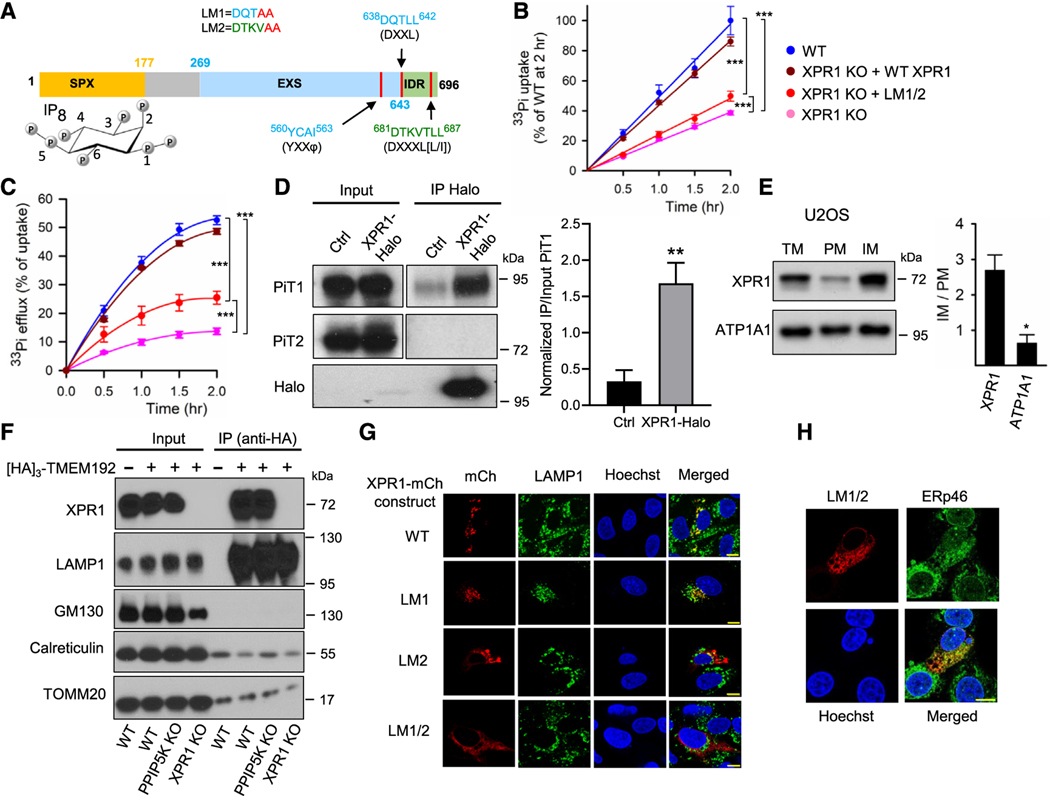
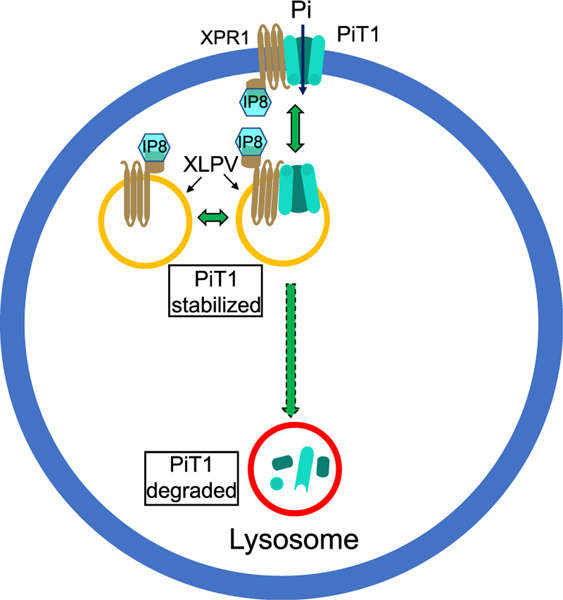
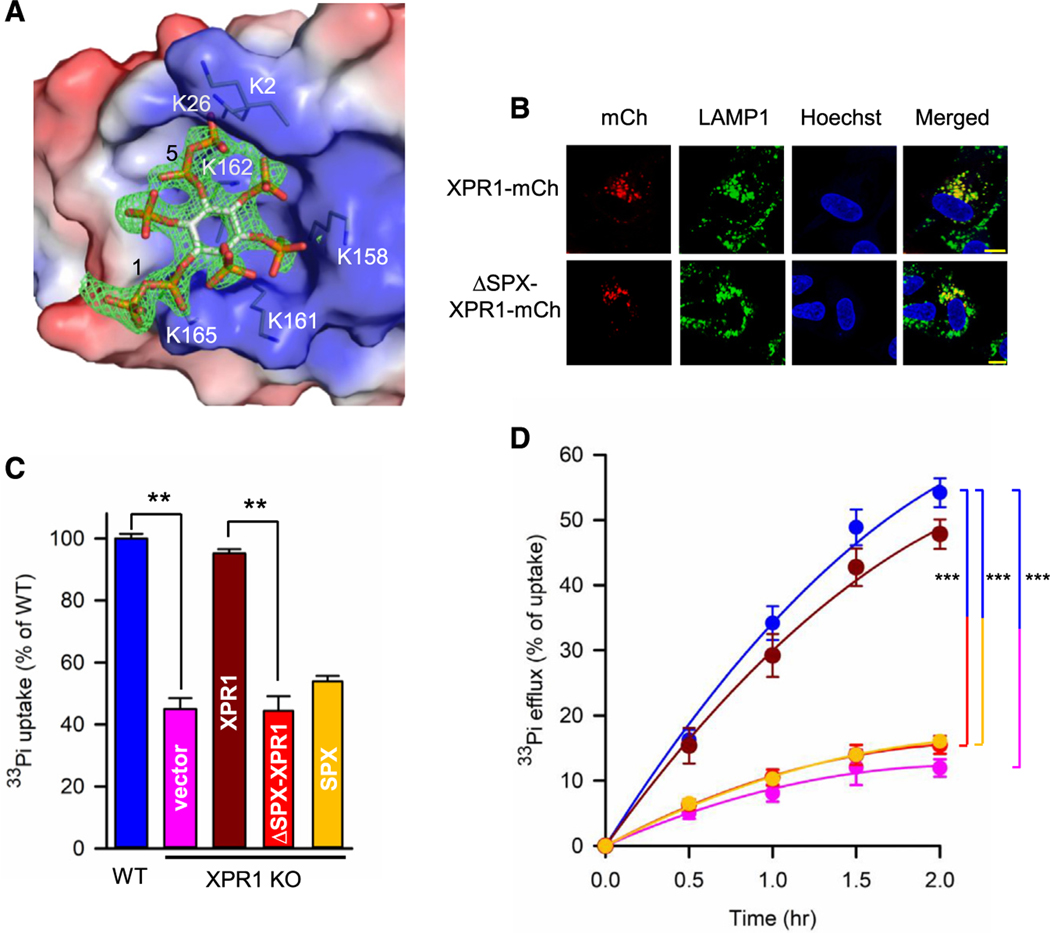
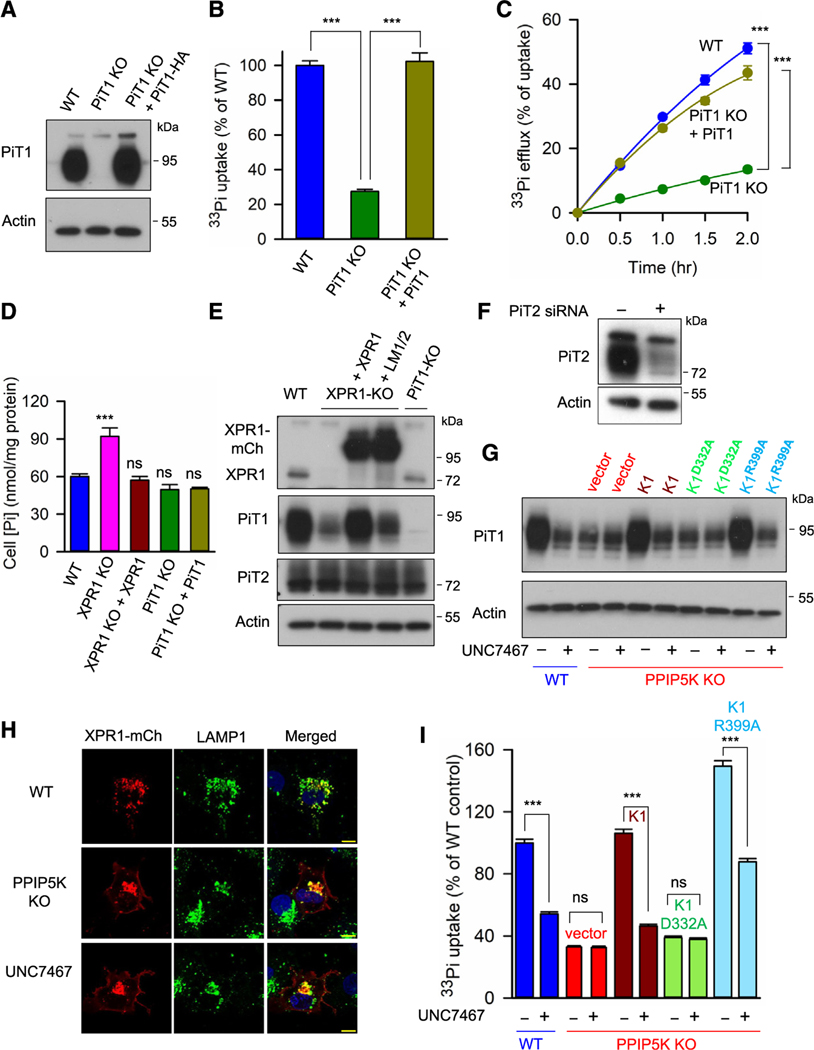
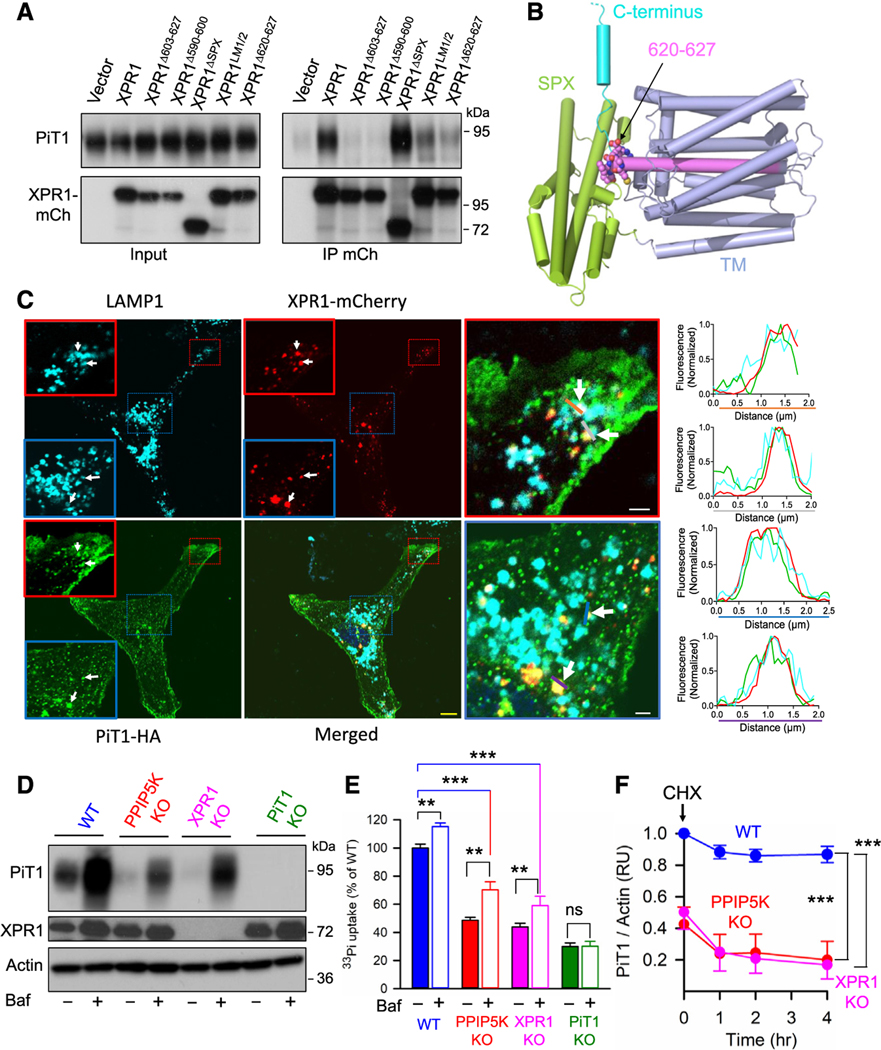
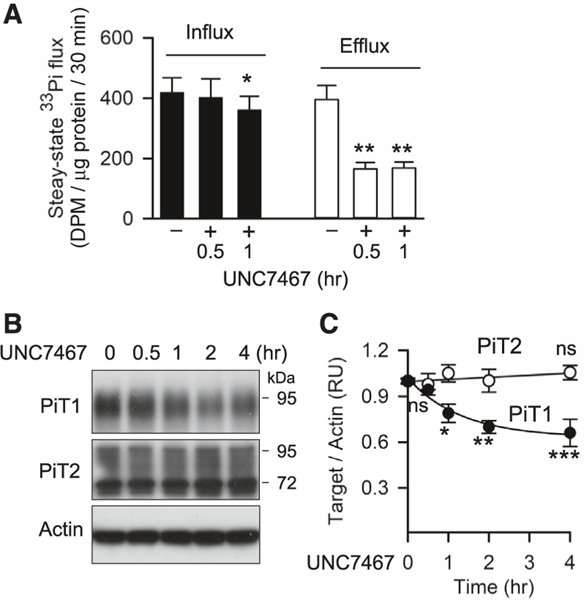
Phosphate (Pi) serves countless metabolic pathways and is involved in macromolecule synthesis, energy storage, cellular signaling, and bone maintenance. Herein, we describe the coordination of Pi uptake and efflux pathways to maintain mammalian cell Pi homeostasis. We discover that XPR1, the presumed Pi efflux transporter, separately supervises rates of Pi uptake. This direct, regulatory interplay arises from XPR1 being a binding partner for the Pi uptake transporter PiT1, involving a predicted transmembrane helix/extramembrane loop in XPR1, and its hitherto unknown localization in a subset of intracellular LAMP1-positive puncta (named "XLPVs"). A pharmacological mimic of Pi homeostatic challenge is sensed by the inositol pyrophosphate IP, which functionalizes XPR1 to respond in a temporally hierarchal manner, initially adjusting the rate of Pi efflux, followed subsequently by independent modulation of PiT1 turnover to reset the rate of Pi uptake. These observations generate a unifying model of mammalian cellular Pi homeostasis, expanding opportunities for therapeutic intervention.
磷酸盐(Pi)参与无数代谢途径,参与大分子合成、能量储存、细胞信号转导和骨骼维持。本文描述了 Pi 摄取和外排途径的协调,以维持哺乳动物细胞 Pi 动态平衡。我们发现,假定的 Pi 外排转运蛋白 XPR1 分别监督 Pi 摄取的速率。这种直接的、调节性的相互作用源于 XPR1 是 Pi 摄取转运蛋白 PiT1 的结合伴侣,涉及 XPR1 中的预测跨膜螺旋/胞外环,以及其在细胞内 LAMP1 阳性点状结构(称为“XLPVs”)中的未知定位。Pi 动态平衡挑战的药理学模拟物被肌醇焦磷酸 IP 感知,IP 使 XPR1 具有功能化,以时间层次的方式做出响应,最初调整 Pi 外排的速率,随后独立调节 PiT1 周转率以重置 Pi 摄取的速率。这些观察结果为哺乳动物细胞 Pi 动态平衡提供了一个统一的模型,为治疗干预提供了机会。