Kadhim Ilham H, Oluremi Adeolu S, Chhetri Bijay P, Ghosh Anindya, Ali Nawab
Department of Biology, Donaghey College of Science, Engineering, Technology, and Mathematics, University of Arkansas at Little Rock, 2801 South University Avenue, Little Rock, AR 72204, USA.
Department of Chemistry, Donaghey College of Science, Engineering, Technology, and Mathematics, University of Arkansas at Little Rock, 2801 South University Avenue, Little Rock, AR 72204, USA.
Bioengineering (Basel). 2024 Sep 17;11(9):931. doi: 10.3390/bioengineering11090931.
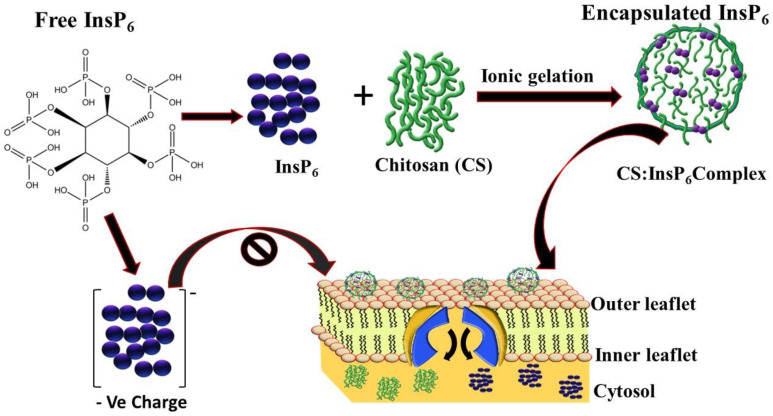
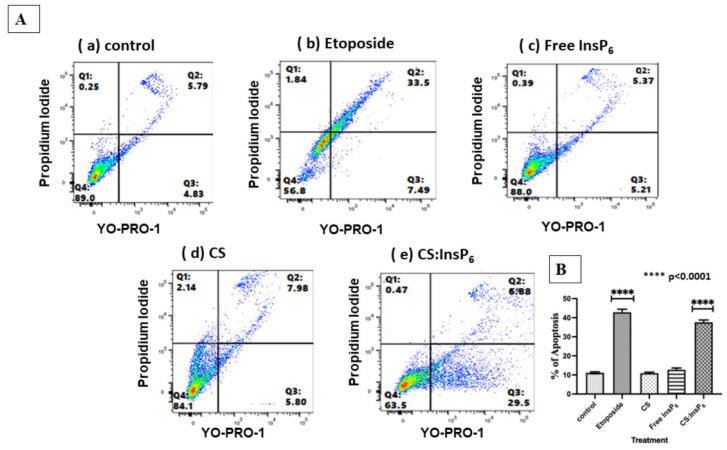
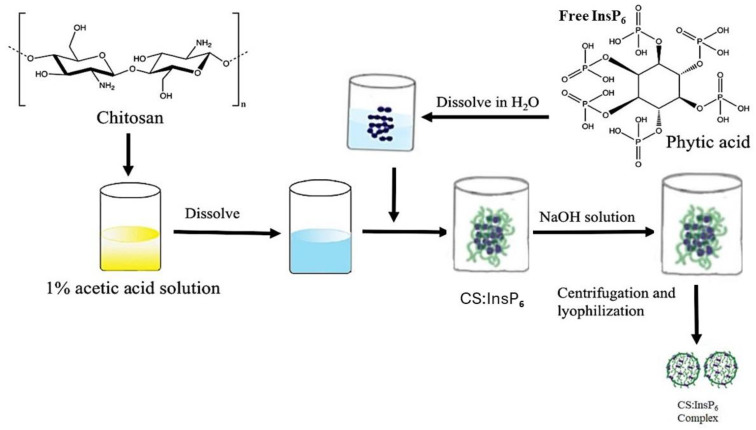
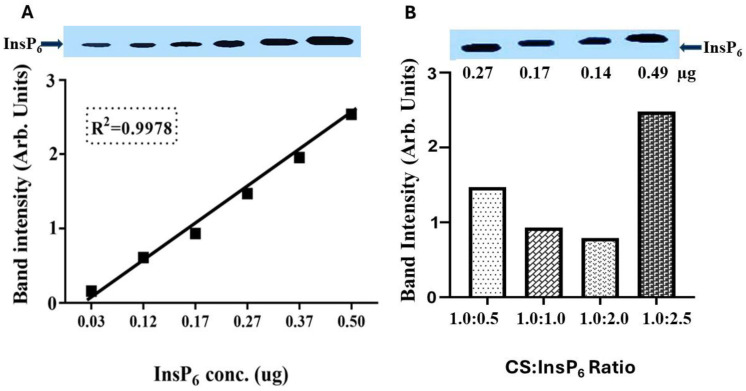
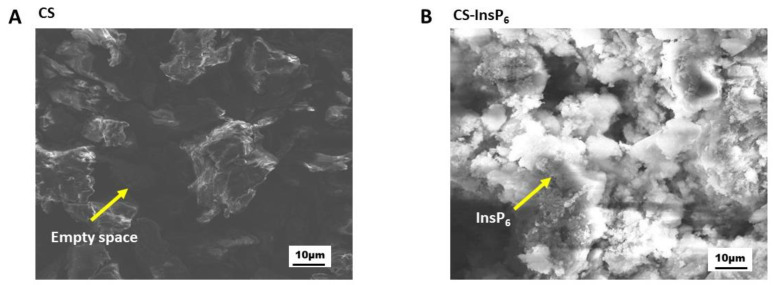
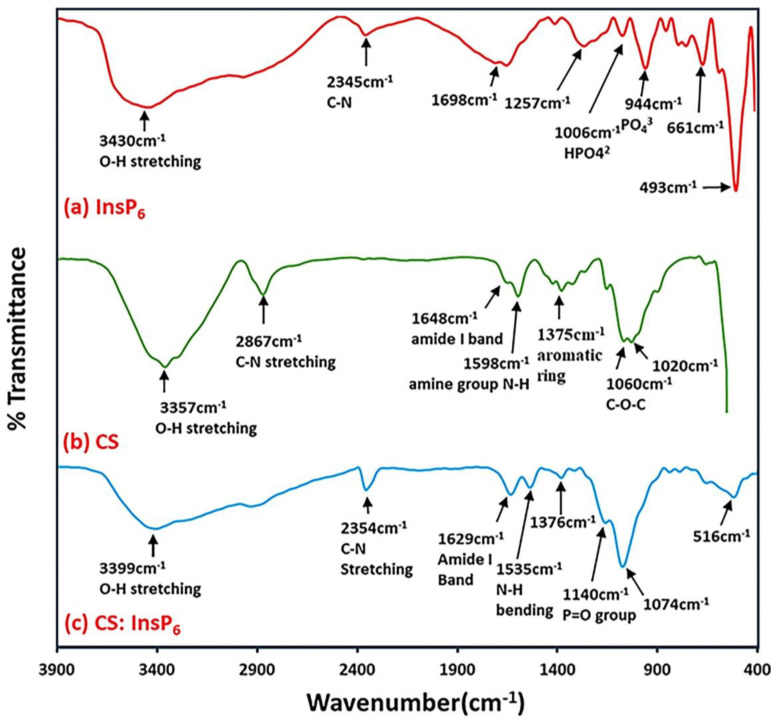
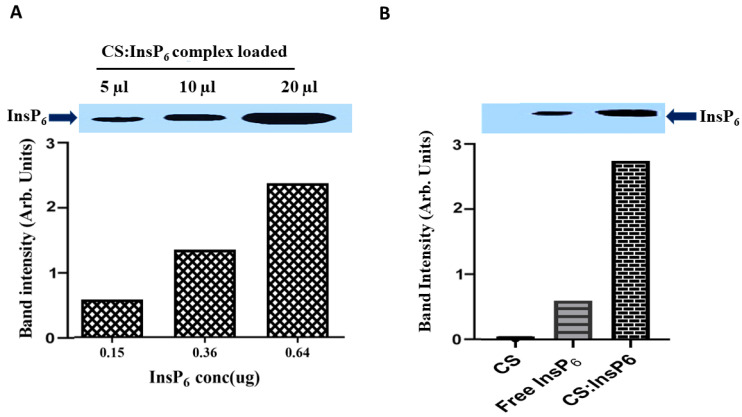
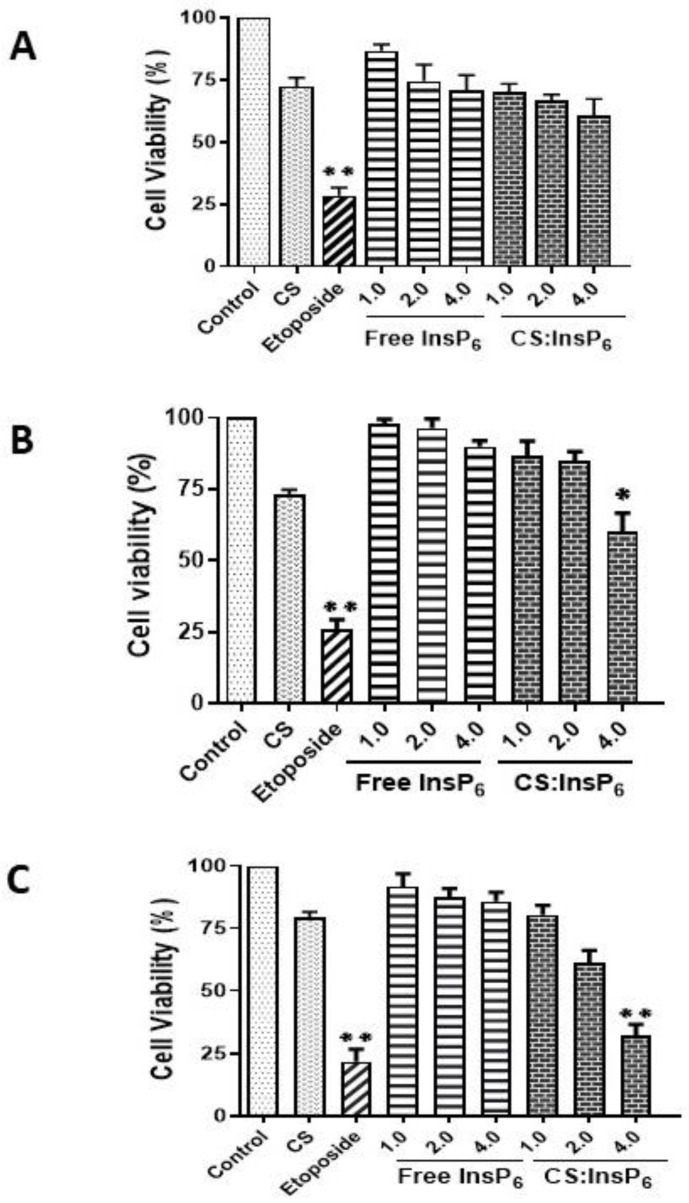
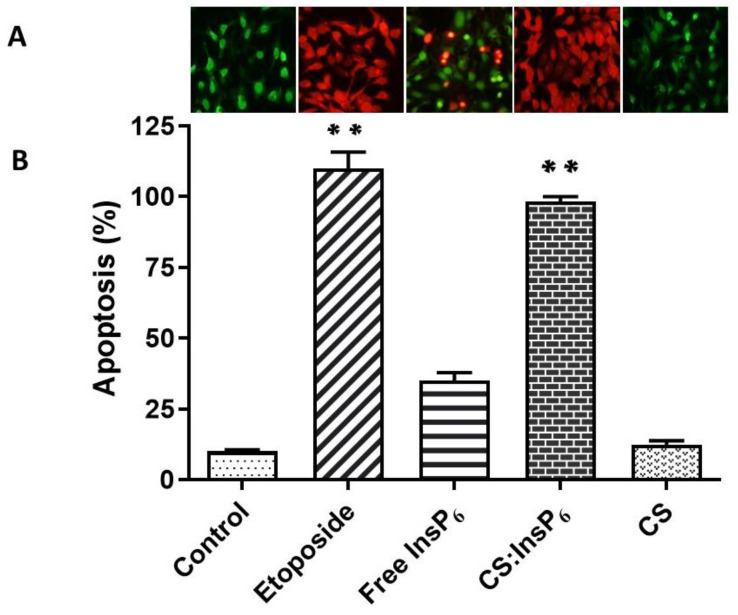
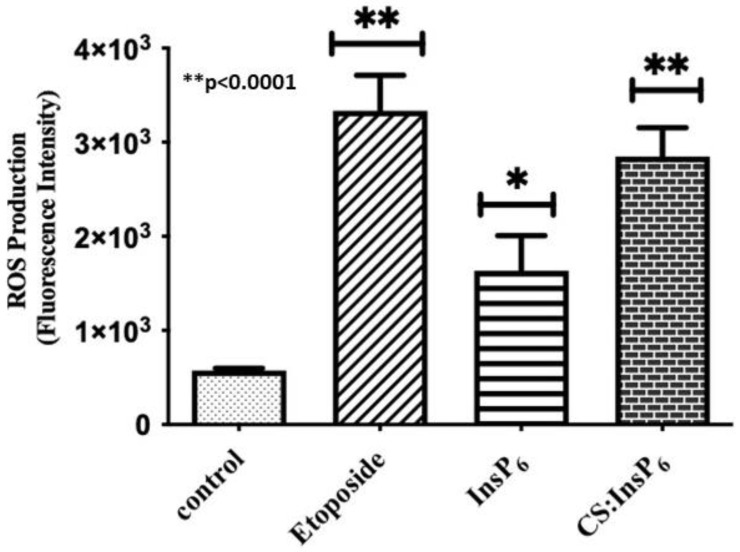
Inositol hexakisphosphate (InsP) is the most abundant inositol polyphosphate both in plant and animal cells. Exogenous InsP is known to inhibit cell proliferation and induce apoptosis in cancerous cells. However, cellular entry of exogenous InsP is hindered due to the presence of highly negative charge on this molecule. Therefore, to enhance the cellular delivery of InsP in cancerous cells, InsP was encapsulated by chitosan (CS), a natural polysaccharide, via the ionic gelation method. Our hypothesis is that encapsulated InsP will enter the cell more efficiently to trigger its apoptotic effects. The incorporation of InsP into CS was optimized by varying the ratios of the two and confirmed by InsP analysis via polyacrylamide gel electrophoresis (PAGE) and atomic absorption spectrophotometry (AAS). The complex was further characterized by Scanning Electron Microscopy (SEM) and Fourier Transform Infrared Spectroscopy (FTIR) for physicochemical changes. The data indicated morphological changes and changes in the spectral properties of the complex upon encapsulation. The encapsulated InsP enters human breast cancer MCF-7 cells more efficiently than free InsP and triggers apoptosis via a mechanism involving the production of reactive oxygen species (ROS). This work has potential for developing cancer therapeutic applications utilizing natural compounds that are likely to overcome the severe toxic effects associated with synthetic chemotherapeutic drugs.
肌醇六磷酸(InsP)是植物和动物细胞中含量最丰富的肌醇多磷酸。已知外源性InsP可抑制癌细胞增殖并诱导其凋亡。然而,由于该分子带有高度负电荷,外源性InsP进入细胞受到阻碍。因此,为了增强InsP在癌细胞中的细胞递送,通过离子凝胶法将InsP用天然多糖壳聚糖(CS)包封。我们的假设是,包封的InsP将更有效地进入细胞以触发其凋亡效应。通过改变两者的比例优化InsP在CS中的掺入,并通过聚丙烯酰胺凝胶电泳(PAGE)和原子吸收分光光度法(AAS)进行InsP分析来确认。通过扫描电子显微镜(SEM)和傅里叶变换红外光谱(FTIR)进一步表征该复合物的物理化学变化。数据表明包封后复合物的形态变化和光谱性质变化。包封的InsP比游离InsP更有效地进入人乳腺癌MCF-7细胞,并通过涉及活性氧(ROS)产生的机制触发凋亡。这项工作有潜力利用天然化合物开发癌症治疗应用,这些天然化合物可能克服与合成化疗药物相关的严重毒性作用。