Fauser A A, Kanz L, Löhr G W
Proc Natl Acad Sci U S A. 1985 Feb;82(3):883-5. doi: 10.1073/pnas.82.3.883.
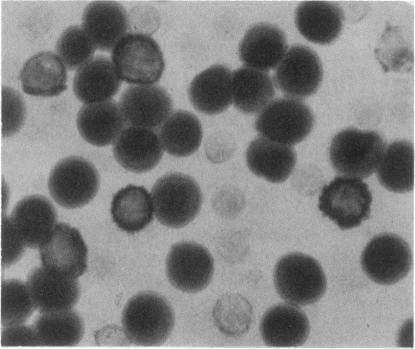
Pluripotent stem cells from human bone marrow can be identified in culture by their ability to form multilineage hematopoietic colonies containing different myeloid lineages and T cells of different phenotypes. The observation of a common progenitor of myeloid and lymphoid cells in normal and disturbed hematopoiesis prompted the question of whether B cells are part of the differentiation program of stem cells. The availability of hybridomas of azaguanine-resistant T-cell lines secreting monoclonal growth factors for B cells and clinical conditions that are considered to originate from malignant B cells might facilitate this investigation. We were able to identify surface immunoglobulin and B-cell-associated antigen-positive cells within such colonies, indicating that B cells are generated from a myelolymphopoietic stem cell. This report describes the presence of B cells in these colonies derived from bone marrow cells of patients with non-Hodgkin lymphoma.
人骨髓中的多能干细胞在培养中可通过其形成包含不同髓系谱系和不同表型T细胞的多谱系造血集落的能力来鉴定。在正常和紊乱的造血过程中观察到髓系和淋巴系细胞的共同祖细胞,引发了关于B细胞是否是干细胞分化程序一部分的问题。分泌B细胞单克隆生长因子的对氮杂鸟嘌呤耐药的T细胞系杂交瘤的可得性以及被认为源自恶性B细胞的临床病症可能有助于这项研究。我们能够在这些集落中鉴定出表面免疫球蛋白和B细胞相关抗原阳性细胞,表明B细胞由骨髓淋巴细胞干细胞产生。本报告描述了这些源自非霍奇金淋巴瘤患者骨髓细胞的集落中存在B细胞。