School of Social Sciences, Humanitarian and Development Research Initiative (HADRI), Western Sydney University, Sydney, NSW, 2751, Australia.
Discipline of Psychiatry and Mental Health, School of Clinical Medicine, University of New South Wales, Sydney, NSW, 2052, Australia.
Int J Obes (Lond). 2024 Aug;48(8):1065-1079. doi: 10.1038/s41366-024-01545-z. Epub 2024 Jun 4.
Participants' recruitment and retention into community-based interventions can be challenging, especially in research involving ethnic minorities and migrants. Despite known challenges, there are limited reviews that probe recruitment and retention strategies involving ethnic minorities and migrants in the Organisation for Economic Cooperation and Development (OECD) countries. This systematic review aimed to measure recruitment and retention rates and identify the barriers and facilitators to effective recruitment and retention of ethnic minorities and migrants in community-based obesity prevention Randomised Control Trials (RCTs) in OECD countries.
This review was conducted according to the Preferred Reporting Items for Systematic Reviews and Meta-Analyses (PRISMA) guidelines. Five databases (CINAHL, Cochrane, Embase, Medline and PsychInfo) were searched from January 2000 to March 2022, in addition to Google and Google Scholar. Methodological quality and risk of bias were assessed, and pooled analysis and meta-ethnographic analysis were conducted on the included studies.
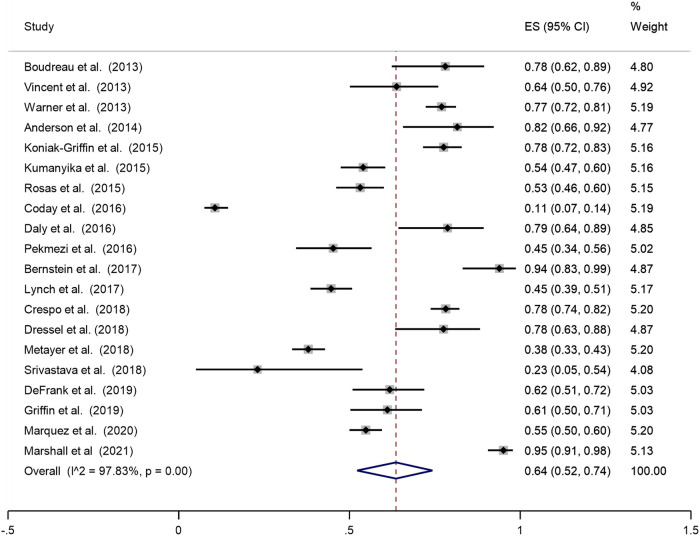
Twenty-five studies were included in the review. The pooled analysis found a 64% rate of recruitment of ethnic minorities in RCTs, with a retention rate of 71%. Key facilitators identified were-use of multiple communication channels, incentives, recruiting community champions, participant convenience and employing culturally sensitive strategies. Key barriers to participation were limited access to study sites, time constraints, limited trust, perceived fear, and anxiety.
Findings suggest the importance of undertaking culturally appropriate recruitment and retention strategies to minimise barriers and facilitate effective recruitment and retention of low-income ethnic minorities and migrants in community-based research.
参与者招募和保留到基于社区的干预中可能具有挑战性,特别是在涉及少数民族和移民的研究中。尽管存在已知的挑战,但在经合组织国家中,涉及少数民族和移民的招募和保留策略的审查有限。本系统评价旨在衡量经合组织国家中基于社区的肥胖预防随机对照试验(RCT)中招募和保留少数民族和移民的比例,并确定有效招募和保留少数民族和移民的障碍和促进因素。
本评价按照系统评价和荟萃分析的首选报告项目(PRISMA)指南进行。从 2000 年 1 月到 2022 年 3 月,除了 Google 和 Google Scholar 外,还在 CINAHL、Cochrane、Embase、Medline 和 PsychInfo 五个数据库中进行了检索。对纳入的研究进行了方法学质量和偏倚风险评估,并进行了汇总分析和元人种学分析。
本评价纳入了 25 项研究。汇总分析发现,RCT 中少数民族的招募比例为 64%,保留率为 71%。确定的主要促进因素包括使用多种沟通渠道、激励措施、招募社区拥护者、方便参与者以及采用文化敏感策略。参与的主要障碍包括难以获得研究场所、时间限制、有限的信任、感知恐惧和焦虑。
研究结果表明,在基于社区的研究中,需要采取文化上适当的招募和保留策略,以尽量减少障碍,并有效招募和保留低收入少数民族和移民。