da Silva Sofia M, Amaral Catarina, Malta-Luís Cláudia, Grilo Diana, Duarte Américo G, Morais Inês, Afonso Gonçalo, Faria Nuno, Antunes Wilson, Gomes Inês, Sá-Leão Raquel, Miragaia Maria, Serrano Mónica, Pimentel Catarina
Instituto de Tecnologia Química e Biológica António Xavier, Universidade Nova de Lisboa, Oeiras, 2780-157, Portugal.
Centro de Investigação da Academia Militar (CINAMIL), Unidade Militar Laboratorial de Defesa Biológica e Química (UMLDBQ), Av. Dr Alfredo Bensaúde, Lisboa, 1849-012, Portugal.
Biol Methods Protoc. 2024 May 22;9(1):bpae035. doi: 10.1093/biomethods/bpae035. eCollection 2024.
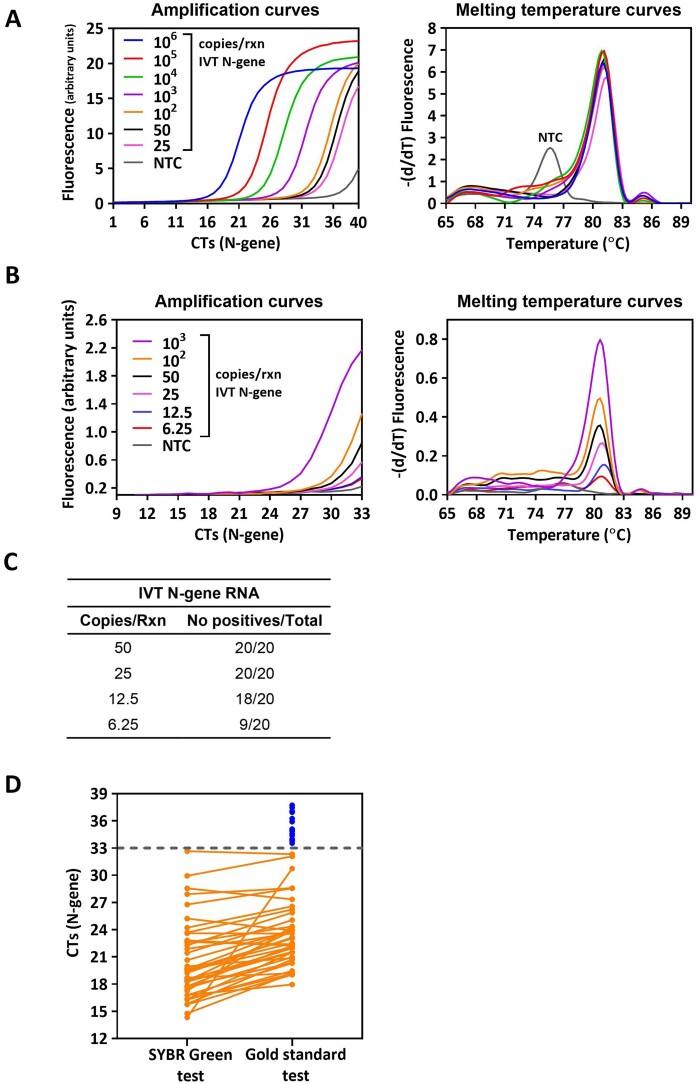
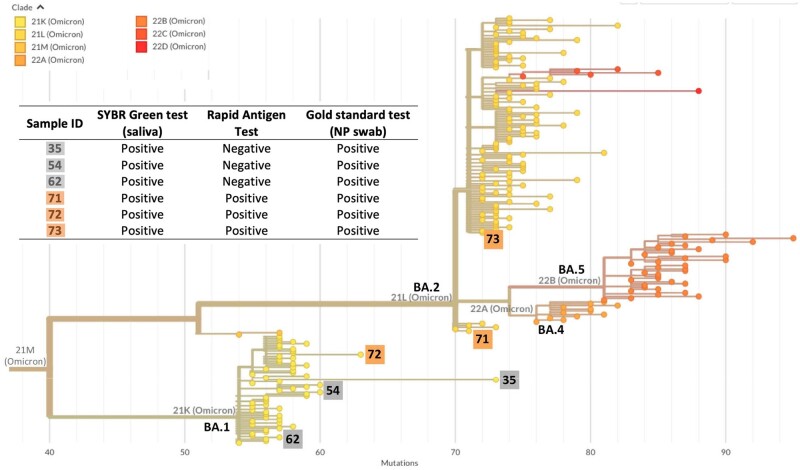
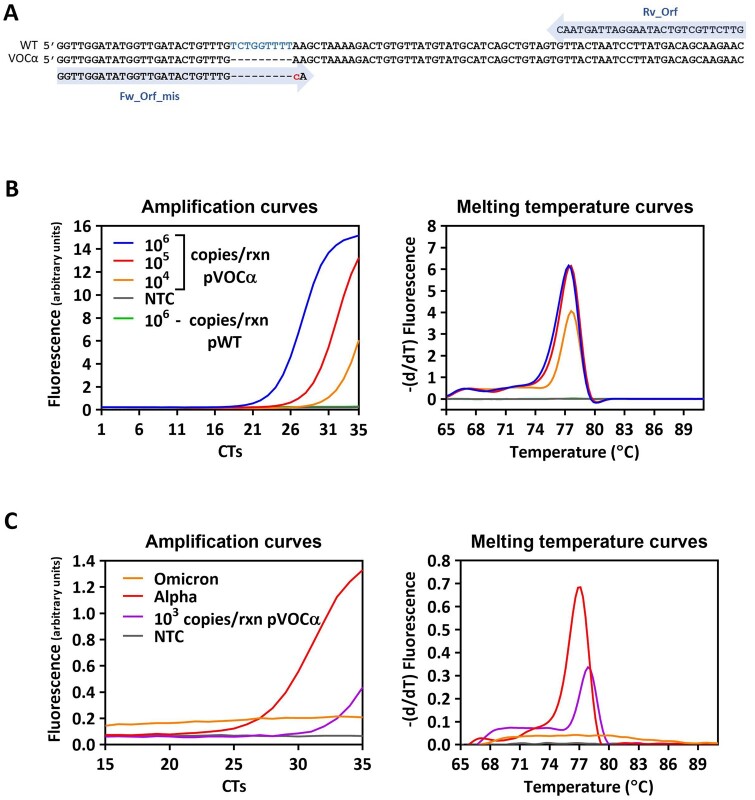
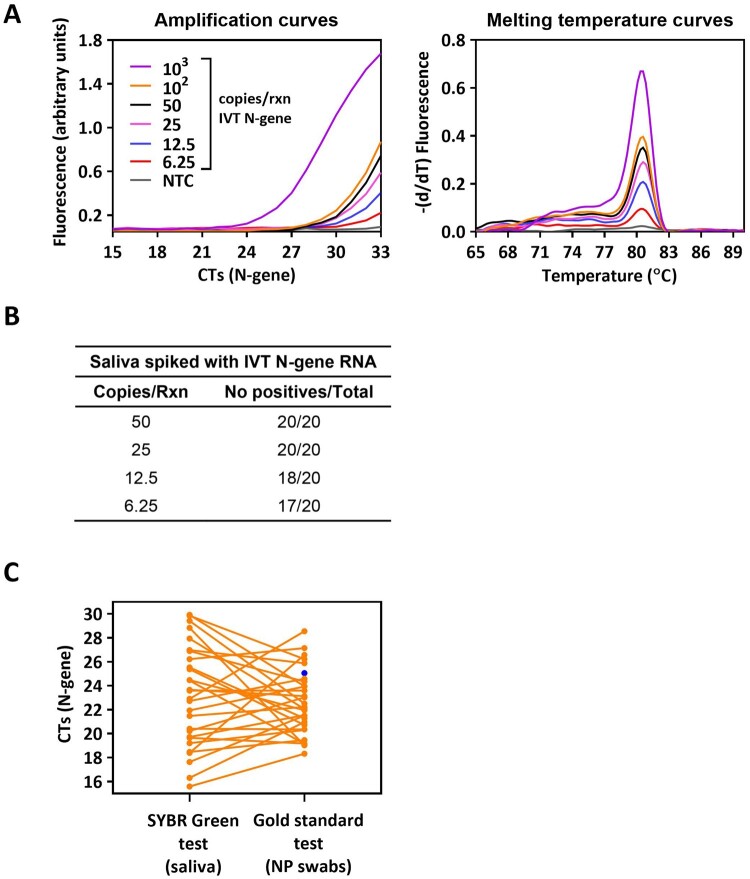
The gold standard for coronavirus disease 2019 diagnostic testing relies on RNA extraction from naso/oropharyngeal swab followed by amplification through reverse transcription-polymerase chain reaction (RT-PCR) with fluorogenic probes. While the test is extremely sensitive and specific, its high cost and the potential discomfort associated with specimen collection made it suboptimal for public health screening purposes. In this study, we developed an equally reliable, but cheaper and less invasive alternative test based on a one-step RT-PCR with the DNA-intercalating dye SYBR Green, which enables the detection of severe acute respiratory syndrome coronavirus 2 (SARS-CoV-2) directly from saliva samples or RNA isolated from nasopharyngeal (NP) swabs. Importantly, we found that this type of testing can be fine-tuned to discriminate SARS-CoV-2 variants of concern. The saliva RT-PCR SYBR Green test was successfully used in a mass-screening initiative targeting nearly 4500 asymptomatic children under the age of 12. Testing was performed at a reasonable cost, and in some cases, the saliva test outperformed NP rapid antigen tests in identifying infected children. Whole genome sequencing revealed that the antigen testing failure could not be attributed to a specific lineage of SARS-CoV-2. Overall, this work strongly supports the view that RT-PCR saliva tests based on DNA-intercalating dyes represent a powerful strategy for community screening of SARS-CoV-2. The tests can be easily applied to other infectious agents and, therefore, constitute a powerful resource for an effective response to future pandemics.
2019冠状病毒病诊断检测的金标准依赖于从鼻/咽拭子中提取RNA,然后通过带有荧光探针的逆转录-聚合酶链反应(RT-PCR)进行扩增。虽然该检测极其灵敏且特异,但其高成本以及与样本采集相关的潜在不适使其在公共卫生筛查方面并非最佳选择。在本研究中,我们基于使用DNA嵌入染料SYBR Green的一步法RT-PCR开发了一种同样可靠但更便宜且侵入性更小的替代检测方法,该方法能够直接从唾液样本或从鼻咽(NP)拭子中分离的RNA检测严重急性呼吸综合征冠状病毒2(SARS-CoV-2)。重要的是,我们发现这种类型的检测可以进行微调以区分令人关注的SARS-CoV-2变体。唾液RT-PCR SYBR Green检测已成功用于一项针对近4500名12岁以下无症状儿童的大规模筛查倡议。检测以合理的成本进行,并且在某些情况下,唾液检测在识别感染儿童方面优于NP快速抗原检测。全基因组测序显示,抗原检测失败不能归因于SARS-CoV-2的特定谱系。总体而言,这项工作有力地支持了这样一种观点,即基于DNA嵌入染料的RT-PCR唾液检测是SARS-CoV-2社区筛查的有力策略。这些检测可以轻松应用于其他传染病原体,因此构成了有效应对未来大流行的有力资源。