Haferlach Claudia, Ott German, Hörst Katharina, Kühn Constanze, Haferlach Torsten, Siebert Reiner
MLL - Munich Leukemia Laboratory Munich Germany.
Robert-Bosch-Hospital Department for Clinical Pathology Stuttgart Germany.
Med Genet. 2024 Mar 6;36(1):3-11. doi: 10.1515/medgen-2024-2008. eCollection 2024 Apr.
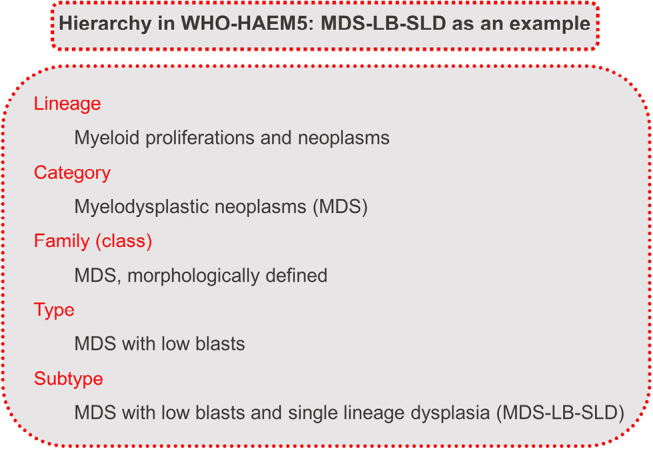
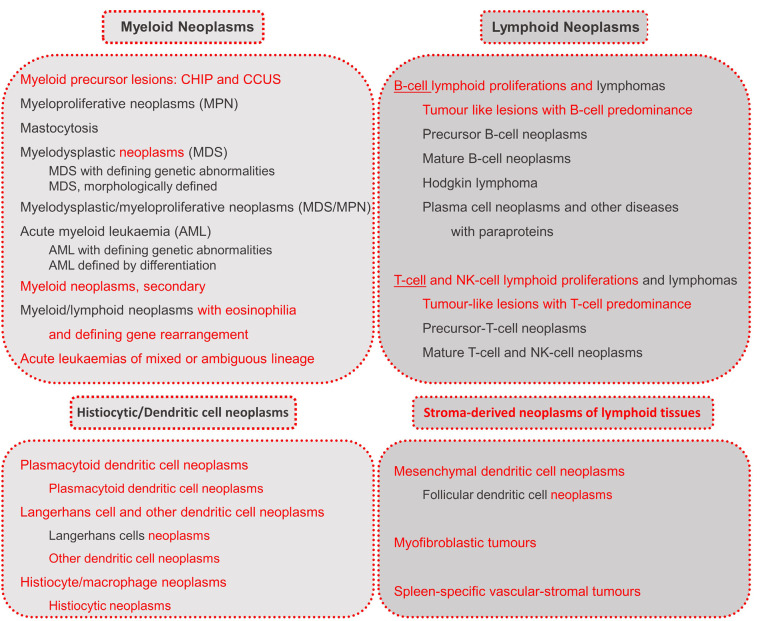
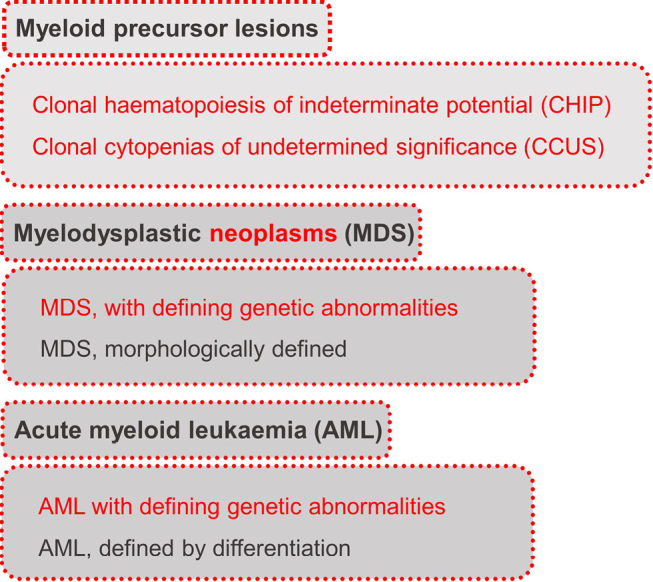
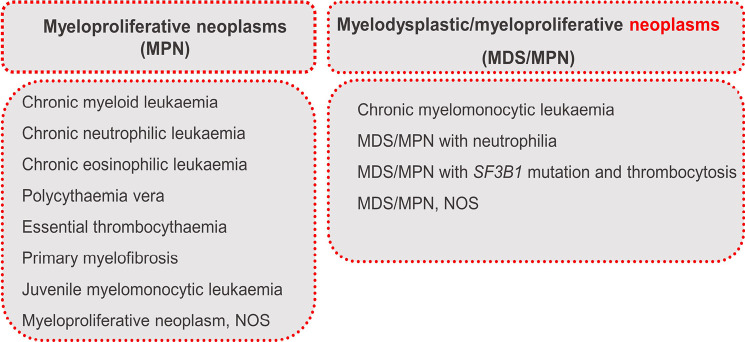
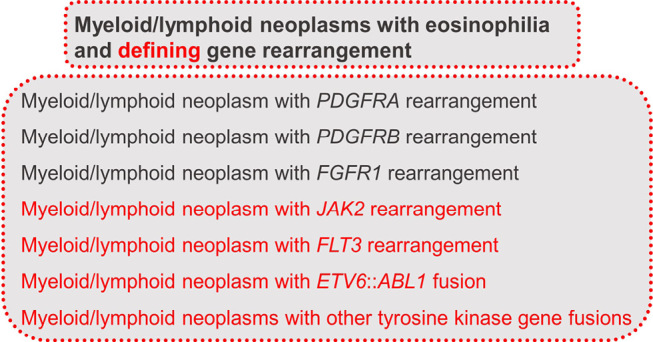
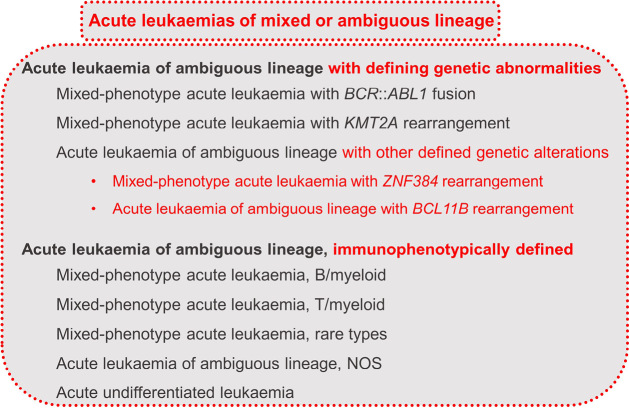
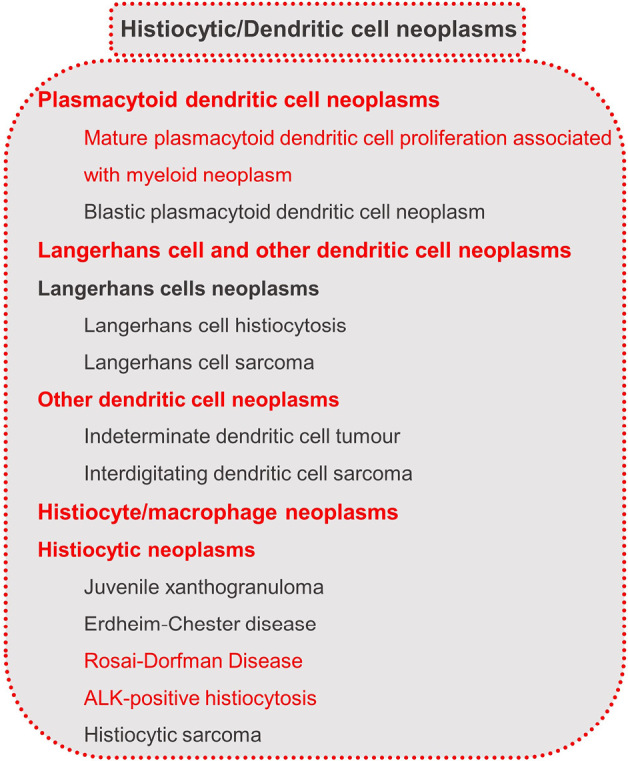
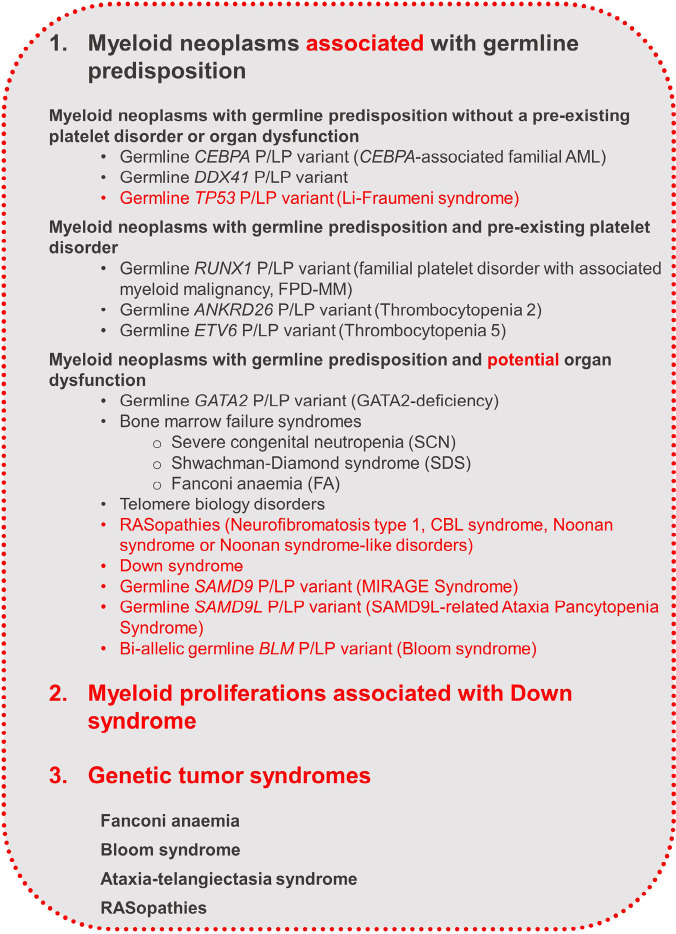
The landscape of haematological malignancies is constantly evolving, driven by advances in our understanding of their genetic basis. This has cumulated within the 5 Edition of the World Health Organization (WHO) Classification of Haematolymphoid Tumours published in short form in 2022 [1, 2] and being available in full length both as "Blue Book" (in print expected early 2024) as well as web-based classification (see: https://tumourclassification.iarc.who.int/welcome/). Similarly, the importance of genetic alterations for the classification is highlighted in other classification systems related to haematologic neoplasms [3-5]. In this special issue of the Medizinische Genetik, we present a comprehensive overview of the genetic alterations contributing to the classification of haematolymphoid neoplasms in the 5 Edition of the WHO classification (WHO-HAEM5) and its diagnostic relevance in the context of various haematological malignancies.
在我们对血液系统恶性肿瘤遗传基础认识的进步推动下,血液系统恶性肿瘤的格局在不断演变。这一成果汇总于2022年以简版形式发布的世界卫生组织(WHO)《血液淋巴肿瘤分类》第5版[1, 2],该版本完整内容可作为“蓝皮书”获取(预计2024年初出版印刷版),也可通过网络分类获取(见:https://tumourclassification.iarc.who.int/welcome/)。同样,基因改变在分类中的重要性在其他与血液系统肿瘤相关的分类系统中也得到了强调[3 - 5]。在本期《医学遗传学》特刊中,我们全面概述了促成WHO分类第5版(WHO - HAEM5)中血液淋巴肿瘤分类的基因改变及其在各种血液系统恶性肿瘤背景下的诊断相关性。