Department of General Psychology, University of Padova, Padova, Italy.
Plant Signal Behav. 2024 Dec 31;19(1):2355739. doi: 10.1080/15592324.2024.2355739. Epub 2024 Jun 5.
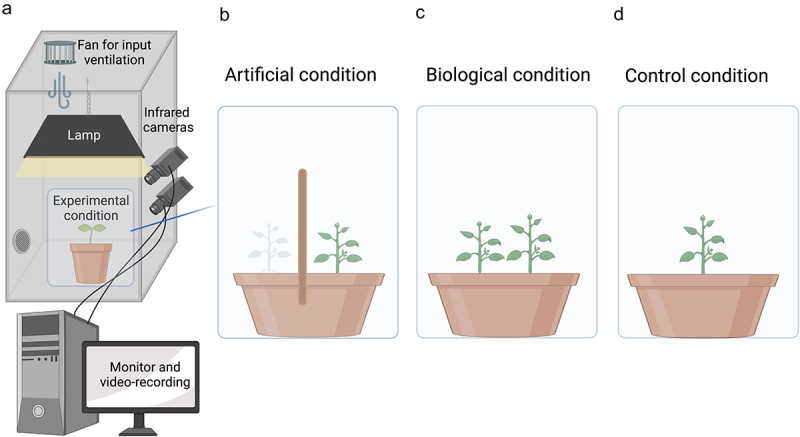
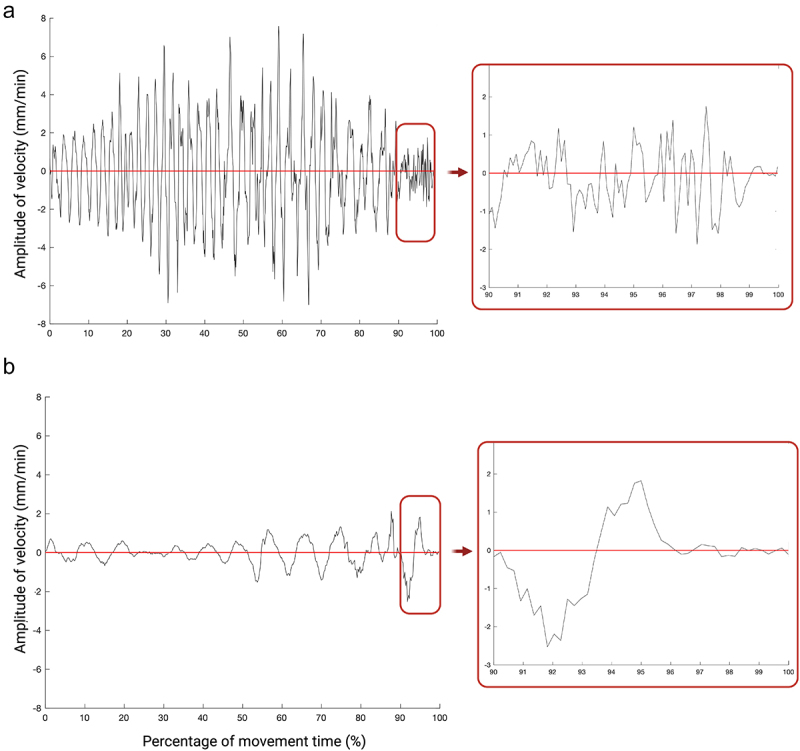
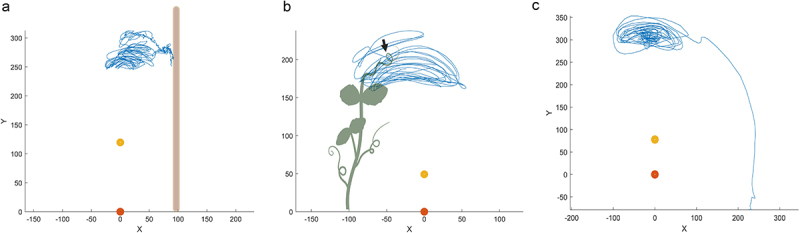
Previous studies on the kinematics of pea plants' ascent and attach behavior have demonstrated that the signature of their movement varies depending on the kind of support. So far, these studies have been confined to artificial supports (e.g. wooden sticks). Little is known regarding the conditions under which pea plants could rely on biological supports (e.g. neighboring plants) for climbing toward the light. In this study, we capitalize on the 3D kinematic analysis of movement to ascertain whether pea plants scale their kinematics differently depending on whether they aim for artificial or biological support. Results suggest that biological support determines a smoother and more accurate behavior than that elicited by the artificial one. These results shed light on pea plants' ability to detect and classify the properties of objects and implement a movement plan attuned to the very nature of the support. We contend that such differences depend on the augmented multisensory experience elicited by the biological support.
先前关于豌豆植物上升和附着行为的运动学研究表明,它们的运动特征取决于支撑物的类型。到目前为止,这些研究仅限于人工支撑物(例如木枝)。对于豌豆植物在何种条件下可以依靠生物支撑物(例如邻近的植物)来向光攀爬,人们知之甚少。在这项研究中,我们利用运动的 3D 运动学分析来确定豌豆植物是否根据其目标是人工支撑物还是生物支撑物而以不同的方式调整其运动学。结果表明,生物支撑物决定了更平滑和更准确的行为,而不是由人工支撑物引起的行为。这些结果揭示了豌豆植物检测和分类物体属性以及实施与支撑物性质相适应的运动计划的能力。我们认为,这种差异取决于生物支撑物引起的增强的多感觉体验。