ILIAS Biologics Inc., Daejeon 34014, Korea.
Department of Ecological Science, College of Ecology and Environment, Kyungpook National University, Sangju 37224, Korea.
Stem Cells Transl Med. 2024 Jul 15;13(7):637-647. doi: 10.1093/stcltm/szae027.
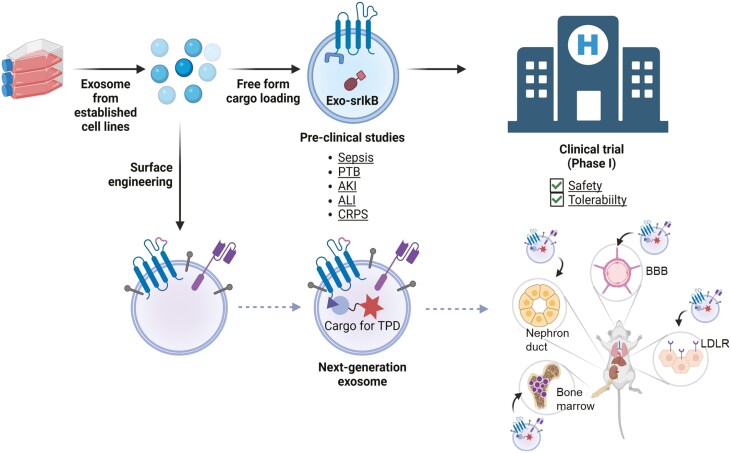
Extracellular vesicles, particularly exosomes, have emerged as promising drug delivery systems owing to their unique advantages, such as biocompatibility, immune tolerability, and target specificity. Various engineering strategies have been implemented to harness these innate qualities, with a focus on enhancing the pharmacokinetic and pharmacodynamic properties of exosomes via payload loading and surface engineering for active targeting. This concise review outlines the challenges in the development of exosomes as drug carriers and offers insights into strategies for their effective clinical translation. We also highlight preclinical studies that have successfully employed anti-inflammatory exosomes and suggest future directions for exosome therapeutics. These advancements underscore the potential for integrating exosome-based therapies into clinical practice, heralding promise for future medical interventions.
细胞外囊泡,特别是外泌体,由于其独特的优势,如生物相容性、免疫耐受性和靶向特异性,已成为有前途的药物传递系统。已经实施了各种工程策略来利用这些固有特性,重点是通过有效载荷加载和表面工程来增强外泌体的药代动力学和药效学特性,以实现主动靶向。这篇简明的综述概述了将外泌体作为药物载体开发所面临的挑战,并提供了有关其有效临床转化策略的见解。我们还强调了成功应用抗炎性外泌体的临床前研究,并提出了外泌体治疗的未来方向。这些进展突显了将基于外泌体的疗法整合到临床实践中的潜力,为未来的医学干预带来了希望。